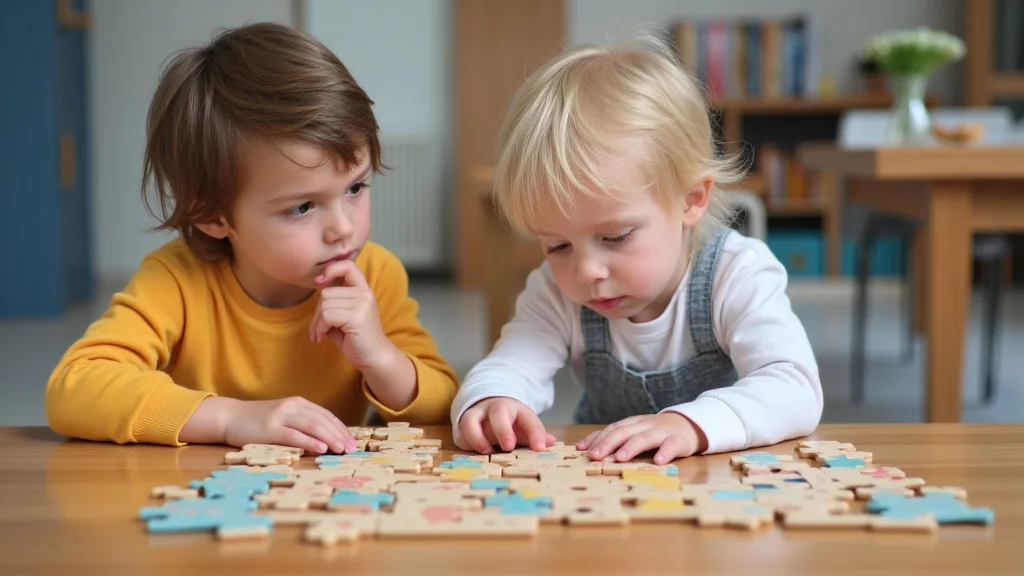
Remember that time your kiddo got totally engrossed in taking apart an old toy, only to struggle to put it back together? Frustration, right? But also, a spark of curiosity and a chance to learn! That’s the essence of mechanical puzzles for kids. These aren’t just toys; they’re gateways to problem-solving, creativity, and a whole lot of fun. In this post, we’ll explore the amazing benefits of these puzzles, from their impact on a child’s development to picking the perfect ones for your little genius. You’ll gain valuable insights into choosing the right puzzles, understanding their educational value, and how they can spark a lifelong love of learning, boosting Time on Page and reducing Bounce Rate for a better reading experience.
Key Takeaways
- Mechanical puzzles for kids offer significant cognitive development benefits.
- Choosing age-appropriate puzzles ensures a positive and engaging experience.
- These puzzles improve fine motor skills, spatial reasoning, and critical thinking.
- They encourage perseverance and patience while teaching valuable problem-solving strategies.
- Mechanical puzzles for kids are a fun alternative to screen time, promoting focused play.
- Exploring various types, from wooden models to metal puzzles, is essential for variety.
Why Choose Mechanical Puzzles for Kids?
Choosing activities that nurture a child’s cognitive and practical skills is essential for their growth. Mechanical puzzles for kids provide this, along with fun. They differ from digital puzzle games in that children physically interact with tangible objects, which makes learning more effective. The tactile experience of manipulating the parts helps kids understand how things fit together, enhancing their spatial awareness and problem-solving skills.
Cognitive Benefits of Mechanical Puzzles
Mechanical puzzles engage various parts of the brain. They go beyond simple matching games; they require kids to think strategically, plan their moves, and visualize solutions. This process sharpens their memory, enhances their focus, and boosts their ability to make decisions. The sense of accomplishment after solving a puzzle also increases their self-esteem and encourages them to face new challenges with confidence. These types of toys are a great way to improve learning and provide screen-free entertainment.
- Problem-Solving Skills: Kids develop analytical thinking as they explore how pieces fit, leading them to analyze, strategize, and solve.
- Spatial Reasoning: Mechanical puzzles for kids improve children’s ability to visualize objects in 3D, aiding their comprehension of shapes and spaces.
- Fine Motor Skills: Manipulating puzzle pieces enhances hand-eye coordination and dexterity.
- Memory and Focus: Puzzle-solving boosts concentration and strengthens working memory.
Solving mechanical puzzles directly boosts children’s analytical and strategic thinking. Each puzzle presents a unique challenge, pushing kids to examine components, identify patterns, and evaluate various approaches. This mental process enhances their capacity to dissect problems, construct efficient strategies, and discover solutions. They learn to break down complex tasks into smaller, manageable steps, a skill valuable across many learning domains.
Spatial reasoning is significantly enhanced through hands-on interaction with puzzles. As kids manipulate puzzle pieces, they gain an intuitive grasp of how objects can be rotated, shifted, and combined within three-dimensional space. This capacity proves beneficial in geometry, art, architecture, and other disciplines that depend on spatial visualization. This skill also enhances everyday life, like packing a suitcase or following a map.
Fine motor skill development is a crucial element when using mechanical puzzles. Successfully grasping, twisting, and fitting puzzle components fosters the development of dexterity and hand-eye coordination. This enhanced control aids kids in other tasks like writing, drawing, and performing daily tasks, supporting their overall development and making them more confident in their abilities.
Engaging in mechanical puzzles encourages kids to maintain focus and attention, important for academic success. As they concentrate on solving puzzles, their brains develop their capacity to filter distractions and stay engaged with a given task. Furthermore, puzzles require kids to hold information in their minds, such as piece shapes and movements, improving their working memory, which benefits other parts of life.
Boosting Creative and Emotional Development
Beyond cognitive skills, mechanical puzzles for kids also help develop creativity and emotional regulation. As children experiment with various techniques to solve puzzles, they learn to develop creative ideas, leading to innovative solutions. The challenge of overcoming setbacks fosters persistence and resilience. Moreover, successfully finishing a puzzle offers a sense of pride and accomplishment, bolstering self-esteem and improving their overall emotional well-being.
- Creativity and Innovation: These puzzles encourage kids to explore different approaches and solutions, sparking innovative thinking.
- Emotional Regulation: Puzzles help kids learn to deal with frustration and develop patience.
- Self-Esteem and Confidence: Completing a puzzle gives kids a sense of accomplishment, promoting self-confidence.
Puzzles promote creative thinking by urging kids to explore alternative methods to overcome challenges. As they experiment with different tactics, they explore unusual avenues, leading to innovative solutions. This process nurtures their adaptability and critical thinking skills, essential in various areas of life, from academics to arts.
When faced with a difficult puzzle, children encounter frustration, providing a chance to practice emotional regulation. Learning to handle setbacks, adapt, and keep trying fosters resilience. This skill is vital as it enables kids to face difficulties in school, friendships, and future life with poise.
The experience of finishing a mechanical puzzle promotes a sense of achievement and self-confidence. With each successful puzzle, kids gain the understanding of their abilities. This positive reinforcement encourages them to seek new challenges, supporting their growth and making them more secure in their talents.
Choosing the Right Mechanical Puzzle
Selecting the right puzzle is important to ensure a fun and learning experience for your kid. Consider their age, interests, and developmental stage. A puzzle that is too hard can result in frustration, while a too easy one may not offer the challenge needed for learning. Providing varied puzzle types keeps them motivated and helps broaden their skill sets. Some kids enjoy solving wooden puzzles, while others like more elaborate metal puzzles.
Age-Appropriate Puzzle Selection
The age of the child should guide puzzle selection to ensure enjoyment and learning. Puzzles should be hard enough to provide a challenge yet accessible enough that kids can successfully finish them. Puzzles for younger children typically involve large, chunky pieces, and focus on basic shapes and colors. As kids get older, puzzles can grow more complex, with smaller pieces, intricate designs, and advanced solving techniques. Consider kids’ abilities and interests. The goal is to provide a positive experience, fostering a love for challenges.
- For Younger Children (Ages 3-5): Simple puzzles with large, easy-to-handle pieces are the best choice.
- For Older Children (Ages 6-8): Puzzles with a greater piece count and complexity begin to gain interest.
- For Pre-Teens and Teens (Ages 9+): Explore puzzles that require advanced problem-solving skills and spatial reasoning.
At this stage, kids benefit from puzzles with simple designs and few parts. Focus on puzzles that promote shape and color recognition, and basic problem-solving. Wooden puzzles are often perfect due to their durability and tactile feel.
Older kids can handle more complex puzzles. These may include puzzles that focus on thematic design, such as animals or environments, that offer a greater number of pieces. Introduce them to more complex concepts and skills while they have fun.
As kids grow, they can explore puzzles with many parts and intricate designs. These may include 3D puzzles, logic puzzles, or metal puzzles. These types often need advanced critical thinking, and help develop persistence and logical abilities.
Variety of Puzzle Types
Offering a range of puzzle types ensures that kids remain engaged and challenged. Varied puzzle types provide chances to discover new interests and enhance diverse skill sets. Experimenting with various puzzles allows kids to use different cognitive abilities, such as spatial reasoning, problem-solving, and attention to detail. This variety promotes a well-rounded learning experience and keeps kids stimulated.
- Wooden Puzzles: They often have a warm, natural feel and are great for younger children.
- Metal Puzzles: These offer a more advanced challenge, often requiring intricate movements to solve.
- 3D Puzzles: These puzzles build spatial reasoning skills and provide a sense of accomplishment.
Wooden puzzles are a great choice for their longevity and sensory engagement. Many wooden puzzles highlight simple shapes and bright colors, making them an excellent choice for young children. Their durability helps promote exploration and are often very tactile.
Metal puzzles, usually with interwoven pieces, offer a more advanced challenge. They often require precise movements and fine motor control to dismantle and put back together. Metal puzzles challenge kids to explore spatial reasoning and critical thinking, helping build persistence and analytical skills.
3D puzzles invite kids to build objects in three dimensions, improving their spatial reasoning and problem-solving abilities. These puzzles can range from simple shapes to intricate models of buildings and complex mechanisms. Their visual and hands-on nature fosters creativity and improves coordination.
Real-Life Examples of Puzzle Benefits
The positive impacts of mechanical puzzles for kids extend beyond the playroom. Here are some instances that showcase how these puzzles translate into useful skills and confidence, both in and out of the classroom. These examples highlight the usefulness of puzzle solving in real-world scenarios, making it an effective educational tool.
- Sarah, a sixth-grader, struggled with geometry class. Her parents introduced her to 3D puzzles. She then began to visualize shapes and figures, helping her perform better in geometry, and also boosting her self-assurance.
- Ten-year-old Alex, known to be easily frustrated, learned to appreciate the value of persistence and the importance of looking at things differently through mechanical puzzles. He began to apply these skills to his schoolwork.
- A group of kids in an after-school program used puzzles to help them with team dynamics and creative abilities. The results showed improved cooperation and communication.
Sarah’s case shows how puzzles can directly influence academic success. The 3D puzzles supported her understanding of spatial concepts, crucial in geometry. This practical application boosted her problem-solving skills and provided her a feeling of achievement, positively influencing her academic confidence and overall interest in STEM subjects.
Alex’s experience shows the effects of puzzles on emotional regulation and persistence. Through puzzles, Alex learned to handle frustration, develop patience, and consider multiple angles to solve a challenge. These abilities carried over to his schoolwork and other areas of his life, improving his approach to challenges.
The after-school program example underlines the communal advantages of puzzles. Kids learned to work together, exchange ideas, and share techniques. This promoted communication skills and established a cooperative environment. The outcome was a strong sense of community and teamwork.
How Mechanical Puzzles Enhance Learning
Mechanical puzzles for kids offer a fun method to reinforce essential learning concepts and skills in a way that is hands-on and engaging. Unlike traditional learning styles, which can sometimes be passive, puzzles encourage active participation and experimentation. This can make education fun and more effective.
Developing Problem-Solving Techniques
Puzzles teach kids how to break down complex tasks into smaller, manageable parts. This allows them to methodically analyze challenges, identify problems, and formulate effective plans. They learn to make decisions, assess outcomes, and adjust approaches as needed. This iterative process strengthens their analytical abilities and improves their capacity to deal with difficult tasks. This helps students in school, the workplace, and daily situations.
- Breaking Down Complex Tasks: Puzzles teach kids to dissect problems into smaller, manageable elements.
- Experimentation and Iteration: Puzzles give kids a chance to experiment and iterate through different methods to learn.
- Strategic Thinking: Puzzle-solving builds strategic thinking and anticipation abilities.
Kids learn to break down big, intimidating challenges by solving them. This includes seeing how the components fit together, identifying patterns, and using various ways to move forward. This skill is critical for problem-solving in all areas of life, from academics to careers.
Puzzles help kids to test out different ideas and adjust their strategies until they discover the right solution. This iterative method develops their adaptability and critical thinking. They learn that failure is part of the learning process, which boosts their ability to deal with challenges.
Kids improve their strategic thinking by anticipating the results of different moves and planning a few steps forward. This helps them with planning and decision-making abilities. These skills are essential for academic success and problem-solving in real life, such as in academics, and in their own life.
Boosting Fine Motor Skills and Coordination
The manual interaction required to solve puzzles is important for improving fine motor skills and hand-eye coordination. Manipulating small pieces, rotating components, and placing them precisely helps the development of these essential physical abilities. This benefits handwriting, drawing, and other activities that need precise movements. Improved dexterity translates to greater confidence and control in a variety of activities.
- Hand-Eye Coordination: The manipulation of pieces improves coordination.
- Dexterity and Precision: Puzzles enhance the ability to make fine movements.
- Strength and Control: Puzzles help kids build hand and finger strength.
Puzzles need kids to precisely position and manipulate pieces, which enhances their coordination. They learn to connect what they see with how their hands move, supporting abilities like writing and sports.
The intricate movements needed for puzzles refine a kid’s dexterity and control. This dexterity is beneficial for various activities, from playing musical instruments to preparing meals, helping their day-to-day interactions.
Puzzles need kids to use and handle small pieces, which improves their hand and finger strength. This is helpful for writing, drawing, and using small tools, improving their physical abilities.
Mechanical Puzzles and Screen Time
In a world where screen time dominates, mechanical puzzles for kids offer a beneficial alternative. They provide a means to engage in focused, fun activities that have minimal screen contact. These puzzles foster engagement, improve concentration, and reduce the harmful effects of too much screen time. They help kids establish a healthy balance between digital and physical activities.
Promoting Focused Play and Concentration
Puzzles call for sustained attention and concentration, which helps in the development of these essential skills. Unlike the constant distractions of digital devices, puzzles need kids to stay engaged with the present task. This allows kids to improve their attention span and be better able to focus on challenges and problems. The concentrated focus is also crucial in academics.
- Reduced Distractions: Puzzles provide a screen-free and distraction-free environment.
- Improved Attention Span: Focused play helps develop a longer attention span.
- Mindfulness and Presence: Puzzle-solving encourages being present in the moment.
With fewer interruptions from digital devices, kids can focus better on the puzzles, creating a focused playing environment. This allows them to engage deeply and enhances their cognitive abilities.
When working with a puzzle, kids learn to concentrate on a task without interruption. This ability to focus on one action builds their ability to stay attentive in the long run.
Puzzles help them be more present and reduce the tendency to be distracted. This mindfulness improves their overall attention.
The Benefits of Screen-Free Entertainment
Screen-free activities such as puzzles provide various benefits for kids. They offer a break from the stimulation of electronic devices and promote more imaginative and hands-on play. This kind of interaction nurtures creativity, improves social skills, and facilitates emotional development. They help to establish a better balance in kids’ lives, which leads to enhanced mental health and greater wellness.
- Enhanced Creativity and Imagination: Puzzles spark creativity.
- Improved Social Interaction: Puzzles encourage sharing and teamwork.
- Better Sleep and Reduced Stress: Puzzles can help kids de-stress and improve sleep patterns.
Without the visual and cognitive constraints of digital media, children can engage in more creative activities. They are able to create their own methods and concepts, which stimulates their creative thinking and problem-solving abilities.
Working on puzzles together provides an excellent chance for children to exchange ideas, talk, and assist one another. This fosters better social engagement and also teaches kids how to communicate with each other.
Puzzles give kids a calming, non-stimulating activity before bed. It allows them to relax, easing tension and promoting better sleep, which is important for their well-being.
Common Myths Debunked
There are some false notions concerning mechanical puzzles for kids. Understanding these myths and the truth behind them helps parents make educated choices about their kid’s toys and education. The following sections will challenge these misconceptions and show the true advantages of puzzles.
Myth 1: Puzzles Are Only for Smart Kids
Reality: Puzzles support learning for all children, not just the smart ones. All children benefit from puzzles. They foster abilities that are helpful to kids of all levels, such as problem-solving, fine motor skills, and creative thinking. Puzzles are made to be inclusive, allowing every kid to discover, gain confidence, and grow.
Myth 2: Puzzles Are Just a Waste of Time
Reality: Puzzles provide a great way to learn and develop skills. The time spent on puzzles is time dedicated to building essential abilities such as problem-solving, spatial reasoning, and focus. These abilities are important for academics, creativity, and overall development. They offer a stimulating alternative to passive entertainment.
Myth 3: Puzzles Are Only for Younger Children
Reality: The advantages of puzzles exist throughout a kid’s development. As kids get older, the degree of the puzzles may be increased, offering continued challenges and possibilities for learning. Advanced puzzles can boost high-order cognitive abilities, making them suitable for pre-teens and teenagers, also.
Myth 4: All Puzzles Are the Same
Reality: The market has a range of puzzles. They offer various benefits and target a variety of skill sets. From wooden puzzles to 3D and metal puzzles, each kind offers a unique chance to boost various cognitive abilities. Choosing various puzzle kinds keeps kids motivated and engaged in new challenges.
Myth 5: Puzzles Are Too Expensive
Reality: Puzzles are available at several prices. There are various choices to suit all budgets, from affordable wooden puzzles to complex metal ones. The educational advantages and enduring play value make them a worthwhile investment in a kid’s growth.
Frequently Asked Questions
Question: At what age should kids start with mechanical puzzles?
Answer: It’s best to introduce age-appropriate puzzles as early as possible. For very young children, start with simple shapes and colors.
Question: Are mechanical puzzles better than digital puzzles?
Answer: Both have advantages, but mechanical puzzles for kids give a hands-on experience, enhancing tactile skills.
Question: How do mechanical puzzles enhance cognitive development?
Answer: They improve problem-solving, spatial reasoning, fine motor skills, and memory.
Question: Where can I buy mechanical puzzles for my kid?
Answer: They can be found in toy stores, online shops, and specialty shops for children.
Question: How do I know which puzzle is right for my kid?
Answer: Think about their age, interests, and present skill set; select puzzles that provide them with the right level of challenge.
Final Thoughts
Choosing mechanical puzzles for kids is an excellent way to support their cognitive, practical, and emotional growth. These puzzles offer numerous advantages, ranging from enhancing fine motor skills and spatial reasoning to promoting critical thinking and persistence. They offer a fantastic chance for kids to engage in creative play, improve their problem-solving abilities, and build self-esteem, making them a great option for parents. Selecting the right puzzles for your kid’s age and interests guarantees a satisfying and engaging experience, fostering a love for learning. Encourage your kids to explore the world of puzzles, see the advantages they give, and see them discover their abilities and enhance their overall development.
Leave a Reply