Category: Mechanical Puzzles

  • Discovering the Joy of Mechanical Wood Puzzles for Adults

    Discovering the Joy of Mechanical Wood Puzzles for Adults

    Remember that feeling of accomplishment after finally solving a puzzle as a kid? Now, imagine that feeling, amplified! I recently stumbled upon a mechanical wood puzzle for adults and was immediately hooked. The intricate designs, the satisfying click of the pieces, and the sheer challenge of it all kept me engaged for hours. This experience made me realize the incredible benefits of these types of puzzles. In this post, we’ll explore the fascinating world of mechanical wood puzzles for adults, providing you with everything you need to know to get started and appreciate these captivating creations. You’ll gain a deeper appreciation for the craftsmanship, discover the cognitive benefits, and learn how to find the perfect puzzle for you, improving your Time on Page and reducing your Bounce Rate.

    Key Takeaways

    • Mechanical wood puzzles offer a unique blend of artistry, engineering, and problem-solving.
    • They provide a fantastic screen-free activity that stimulates cognitive functions.
    • Building these puzzles helps improve focus, patience, and fine motor skills.
    • There are various levels of difficulty, ensuring there’s a puzzle for everyone.
    • These puzzles make excellent gifts and are enjoyable for solo or group activities.
    • Understanding the different types of mechanisms is crucial to selecting the right puzzle.

    Unveiling the Appeal of Mechanical Wood Puzzles

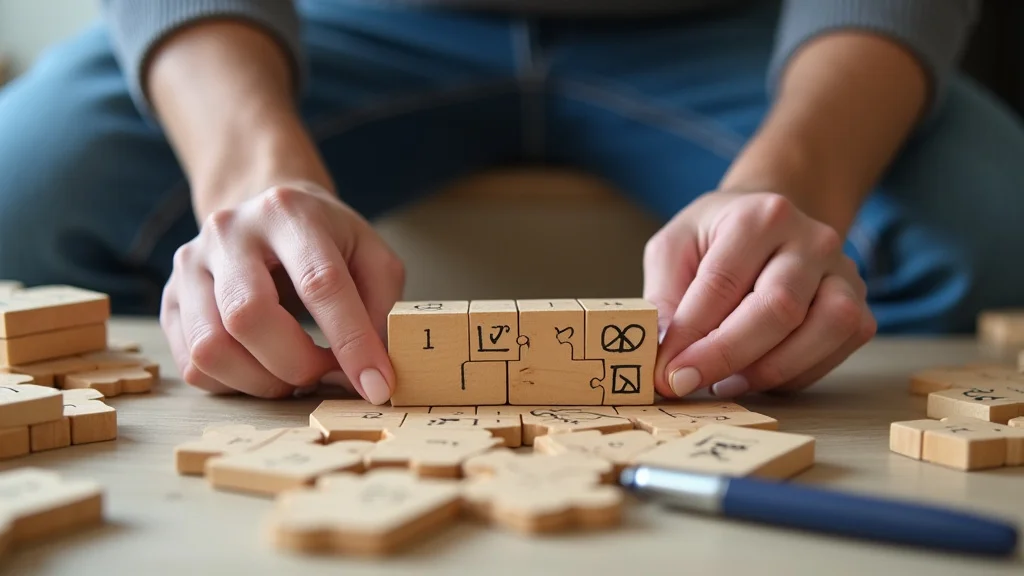
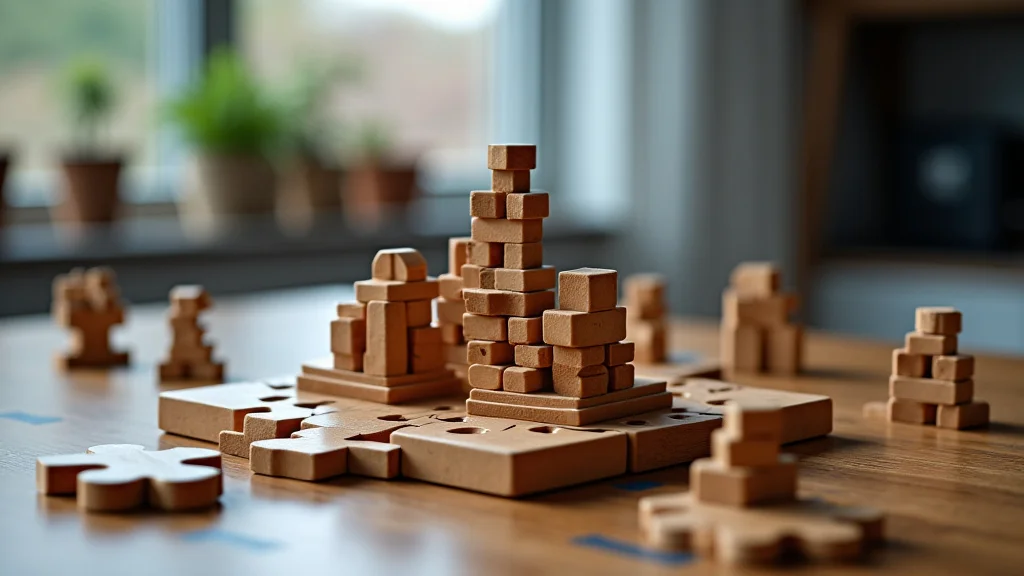
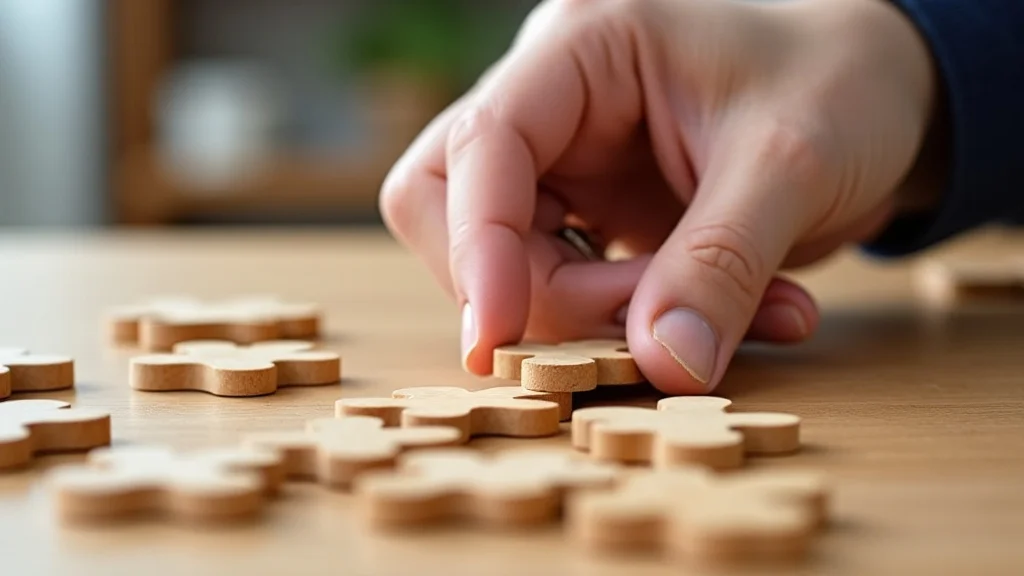
    Mechanical wood puzzles provide a stimulating experience that combines art and engineering. These puzzles, crafted from carefully cut wooden pieces, require you to assemble them to create functioning objects. From intricate music boxes to complex gears, the variety available is vast and provides endless entertainment. The process of putting them together is as enjoyable as the finished product. These puzzles offer a tangible, rewarding experience away from screens and provide a creative outlet that keeps the mind engaged. The satisfaction comes from building something with your own hands, seeing the mechanisms work, and appreciating the beauty of the design.

    The Art of Design and Craftsmanship

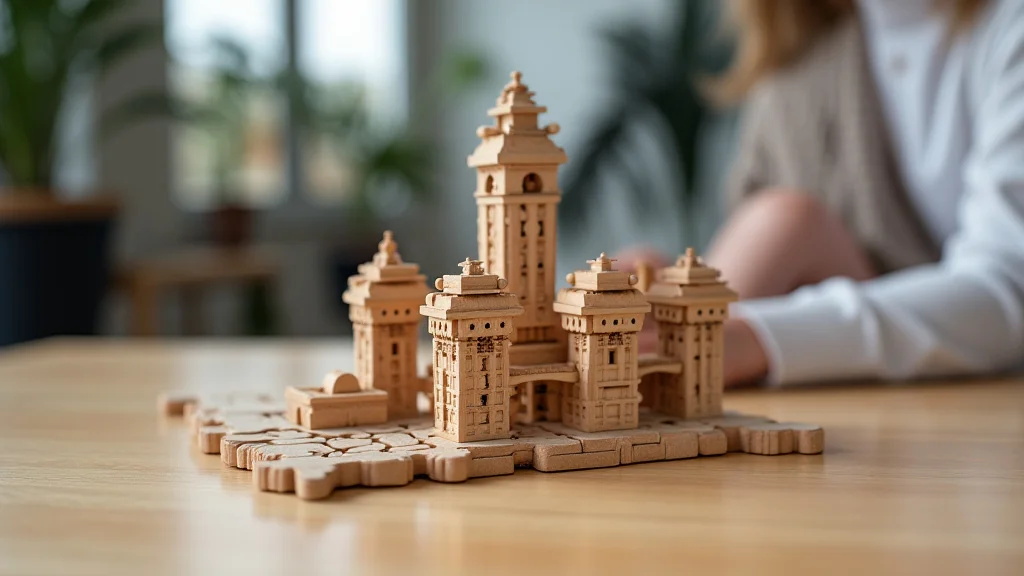
    The beauty of mechanical wood puzzles for adults lies in the exquisite artistry and craftsmanship. Every puzzle is a work of art, with pieces intricately designed to fit together perfectly. The quality of the wood, the precision of the cuts, and the overall aesthetic appeal are all carefully considered. These aren’t just puzzles; they’re miniature sculptures and functional pieces of art. The designers pay close attention to detail, resulting in puzzles that are not only challenging but also visually stunning. The visual aspects are a significant part of the experience, making them enjoyable to build and admire once completed. Each puzzle tells a story, a testament to the creator’s skills and the materials used.

    • Laser Cutting: Many puzzles use laser cutting for high precision. A laser beam is used to cut the wood with exceptional accuracy, ensuring that all pieces fit seamlessly. This allows for intricate designs that would be difficult to create using traditional methods.
    • Wood Types: Different woods such as plywood, basswood, and birch are utilized based on their properties. Some are chosen for their strength, while others are selected for their flexibility or aesthetic qualities. The wood’s grain and color also contribute to the final appearance of the puzzle.
    • Design Complexity: The complexity can vary. Some puzzles are simple and easy to assemble, while others are incredibly complex, taking many hours or days to complete. The design complexity determines the challenge level and the overall experience.

    Mechanical Mechanisms and Their Wonders

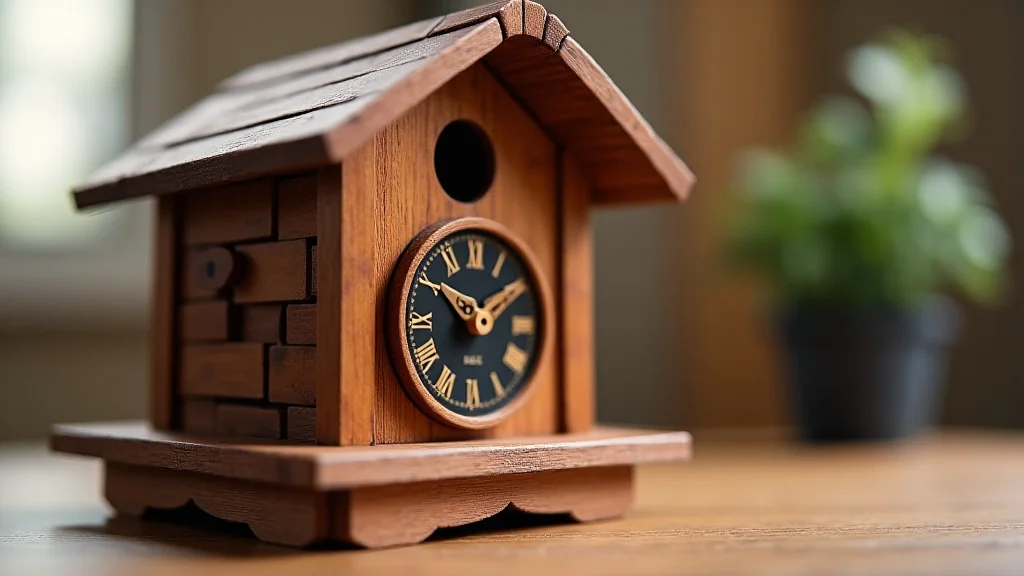
    At the heart of every mechanical wood puzzle for adults is a series of intricate mechanisms. These mechanisms, when correctly assembled, create movement and function. From simple levers and gears to more complex systems like cams and cranks, the inner workings of these puzzles are fascinating. Learning about these mechanisms is like taking a mini-engineering lesson. As you assemble the pieces, you begin to see how each part contributes to the overall function. This knowledge makes the puzzle even more enjoyable and gives you a greater appreciation for the design and the mechanics at play.

    • Gears: Gears are fundamental in many mechanical puzzles, used to transmit rotational motion. Different gear ratios change the speed and force of the movement. Understanding how gears work is key to solving puzzles with complex movements.
    • Cams: Cams convert rotational motion into linear motion. They are typically used to drive levers and other components. Cams are often found in puzzles that create complex movements.
    • Crank and Levers: Cranks and levers are simple machines that are used to amplify force or change the direction of motion. Cranks convert rotational motion to linear motion, and levers use a pivot point to move an object.

    The Cognitive Benefits of Puzzle Solving

    Beyond being fun, solving mechanical wood puzzles offers significant cognitive benefits. These puzzles are brain-training tools that enhance various mental skills. The act of planning, analyzing, and executing the build engages the brain in ways that contribute to improved cognitive function. They offer a break from digital activities and stimulate creativity and focus. The act of solving a puzzle and the challenges they present help in training the mind. The ability to recognize patterns, visualize spatial relationships, and think strategically all contribute to the overall cognitive health and well-being that these puzzles provide.

    Improving Focus and Concentration

    One of the most immediate benefits of working on mechanical wood puzzles for adults is the improvement in focus and concentration. The nature of these puzzles demands complete attention. The intricate designs and small pieces require the solver to be present. As you immerse yourself in the puzzle, you naturally shut out distractions. This focused state helps to sharpen your attention span and reduce mental fatigue. The experience of working on a puzzle can be a form of mindfulness. The constant focus on the task at hand helps to quiet the mind and reduce stress.

    • Eliminating Distractions: Finding a quiet space without distractions is a good starting point. This might involve turning off notifications, informing others of your “puzzle time,” and creating a comfortable workspace.
    • Breaking Down the Task: When a puzzle seems overwhelming, break it down into smaller, manageable steps. Focus on assembling a specific section or mechanism at a time, making the overall task less daunting.
    • Regular Breaks: To maintain concentration, take breaks. Step away from the puzzle for a few minutes every hour to rest your eyes and clear your head. Then, return to the puzzle with renewed focus.

    Enhancing Problem-Solving Skills

    Mechanical wood puzzles are an excellent way to improve problem-solving skills. Each puzzle presents a unique challenge, requiring you to think critically and approach problems logically. You need to analyze the design, plan the steps, and experiment with different methods to find the solution. Each time you solve a puzzle, you build your ability to approach problems in a structured manner. This skill is invaluable in many areas of life, from professional settings to everyday tasks. These puzzles help you develop a systematic approach to problem-solving, enhancing your cognitive skills.

    1. Analyzing the Design: Carefully study the puzzle’s structure and the way the pieces fit together before starting the build. This analysis will give you a good grasp of the mechanism and how it functions.
    2. Planning the Steps: Plan the steps to approach the puzzle systematically. Start with easier sections or mechanisms, then move to more complex areas. Planning helps in breaking down the challenge into smaller parts.
    3. Experimenting with Different Methods: If a certain section is proving difficult, experiment with various approaches. Try different arrangements and configurations to see what works. The trial-and-error approach will help you understand the dynamics of the puzzle and will increase your problem-solving capabilities.

    Choosing the Right Mechanical Wood Puzzle

    Finding the right mechanical wood puzzles for adults requires considering several factors. The first is difficulty level; there are puzzles for all skill levels, from beginners to experienced puzzle solvers. The second is the type of mechanism you’re interested in; some people like puzzles with gears, while others are fascinated by levers and cranks. The third factor is the design and aesthetic appeal. The more you know about what you like, the easier it will be to find the right puzzle. By focusing on your preferences, you’ll ensure that you have an enjoyable experience, making the process of selection part of the fun.

    Assessing Difficulty Levels

    Puzzles are categorized by difficulty levels. Choosing the right one is essential for an enjoyable experience. Beginners should start with easier puzzles with fewer pieces and simple mechanisms. As you become more skilled, you can progress to more complex puzzles with more intricate designs and mechanics. Some puzzles come with a rating system that indicates the difficulty. Always read reviews and descriptions. By knowing your skill level, you can ensure that you’re challenging yourself without feeling overwhelmed. This approach helps you build confidence and makes the puzzle-solving experience more fun and rewarding.

    • Beginner Puzzles: These puzzles usually have fewer pieces, typically under 100, and involve basic mechanisms like simple gears or levers. The goal is to get familiar with the basic concepts.
    • Intermediate Puzzles: These puzzles introduce more complex mechanisms and can have 100-300 pieces. They often involve a combination of gears, levers, and cams. The challenge is in the greater variety of moving parts and more elaborate designs.
    • Advanced Puzzles: Advanced puzzles can have hundreds of pieces, even thousands, and feature incredibly complex mechanisms. These puzzles may include detailed designs, intricate movements, and multiple functions. They’re best suited for experienced puzzle enthusiasts.

    Exploring Different Mechanism Types

    Mechanical wood puzzles for adults come with a wide range of mechanisms, each of which provides a unique experience. Some people enjoy the simplicity of a lever, while others are fascinated by complex gear systems. Knowing the types of mechanisms helps you choose a puzzle that matches your interests and increases your enjoyment. Before purchasing, it’s wise to research the features of each mechanism type. This research can save you time and money and will improve your puzzle-solving experience. With a little research, you can quickly find puzzles that match your preferences and enjoy the challenge of building them.

    • Gear Mechanisms: Gear-based puzzles utilize interlocking gears to transmit rotational motion. Gears can change the speed, direction, and force of the movement. Gear mechanisms are fun to see in action.
    • Crank Mechanisms: Crank mechanisms typically involve turning a crank to drive a lever or cam. These can create a variety of movements, from linear to rotational. Crank mechanisms are often used in music box puzzles and other automated designs.
    • Lever Mechanisms: Lever-based puzzles utilize levers to amplify force or change direction. Levers are simple and effective, and puzzles utilizing levers are an excellent choice for a beginner.

    Real-Life Examples and Case Studies

    The impact of mechanical wood puzzles for adults extends beyond a fun hobby, as evidenced by real-life examples and case studies. Many people find that these puzzles help improve their problem-solving and focus skills. They also provide a satisfying creative outlet that can lead to increased confidence. Real-world examples show that the skills acquired from solving these puzzles are helpful in various fields, from engineering to creative pursuits. These cases highlight the broad benefits these puzzles offer and how they can change lives.

    One example involves a retired engineer who used mechanical wood puzzles to maintain his cognitive function. Before he started solving these puzzles, he struggled to engage in any activity. The puzzles, with their complex designs, kept him mentally stimulated and reduced his feeling of isolation. His daughter noted that her father’s puzzle-solving made him feel like he was back in his element. The experience gave him a new purpose, and he began to spend hours each week working on new puzzles.

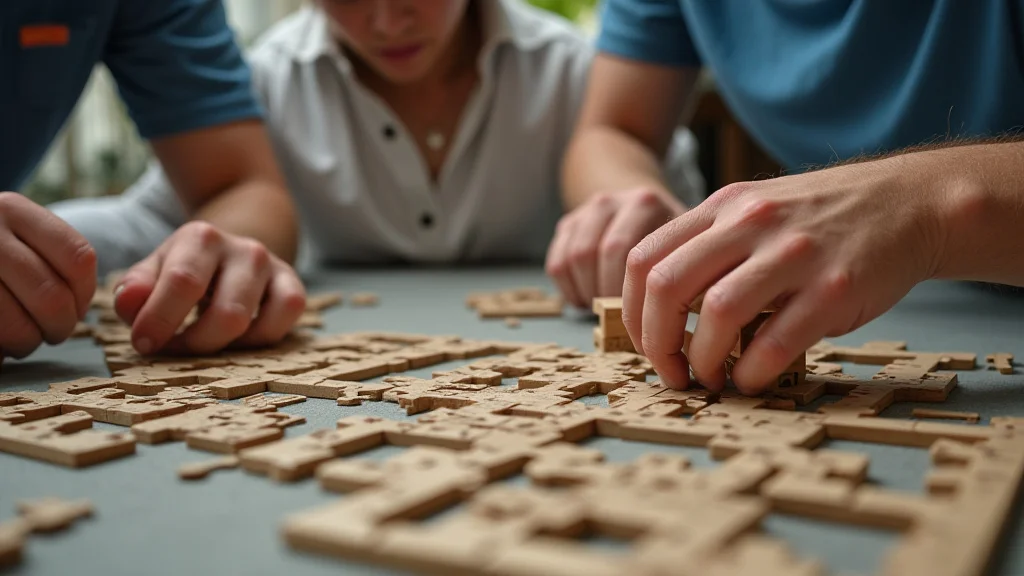
    In another case, a teacher used mechanical wood puzzles as a part of her lessons in her middle school classroom. She found that the puzzles helped the students develop patience and learn spatial reasoning skills. Students who were struggling with other subjects, such as math and science, found that the puzzles helped them improve their understanding. The students were also encouraged to collaborate and work together to solve the puzzles. As a result, the puzzles improved their ability to think creatively and solve problems.

    Case Study Results
    Retired Engineer Improved cognitive function, reduced isolation, and increased sense of purpose
    Middle School Teacher Enhanced problem-solving, patience, and spatial reasoning in students
    Professional Architect Improved creative thinking and design approach

    Common Myths Debunked

    There are some misconceptions related to mechanical wood puzzles for adults. Some believe they are too complicated for beginners, while others assume they are only for those with technical skills. Let’s explore and debunk some myths:

    Myth 1: Mechanical Wood Puzzles Are Only for Engineers

    False! While some puzzles may appeal to engineers due to their technical nature, mechanical wood puzzles are made for people of all backgrounds. They are designed for anyone who loves problem-solving and enjoys a hands-on activity. With varying difficulty levels, anyone can begin and have fun.

    Myth 2: They Take Too Much Time to Complete

    False! The completion time depends on the complexity of the puzzle and how much time you choose to spend on it. Some puzzles can be assembled in a few hours, while others may take days or even weeks. It’s up to you, and the time spent is part of the enjoyment.

    Myth 3: Mechanical Wood Puzzles are Only for Those Good with Their Hands

    False! While dexterity helps, the emphasis is on problem-solving, not just manual skills. The puzzles require patience, critical thinking, and the ability to visualize how pieces fit together. They can help build those skills.

    Myth 4: The Instructions Are Too Difficult

    False! Most puzzles come with clear, easy-to-follow instructions. The illustrations and diagrams are very helpful. The instructions explain how each piece should fit, and you can always look up online tutorials if needed.

    Myth 5: They Are Not Very Durable

    False! These puzzles are made from high-quality wood and are designed to last if handled properly. They are built to be assembled and disassembled many times. With a little care, they can endure years of enjoyment.

    Frequently Asked Questions

    Question: Are mechanical wood puzzles difficult to assemble?

    Answer: The difficulty varies based on the puzzle. Beginners should start with easier puzzles, and gradually work their way up to the more complex designs. There are options for all skill levels.

    Question: What tools do I need to assemble a mechanical wood puzzle?

    Answer: Usually, you don’t need many tools. Most puzzles come with everything you need, like sandpaper, wax, and small tools. However, having a good pair of tweezers and a sharp knife can be helpful for intricate parts.

    Question: Can I disassemble and reassemble the puzzle?

    Answer: Yes, most mechanical wood puzzles can be disassembled and reassembled multiple times, so you can enjoy building them again and again. Some parts, however, might be fragile.

    Question: Are there online resources if I get stuck?

    Answer: Yes, there are plenty of online resources, including videos and forums. You can look up tutorials on YouTube and find assistance from other puzzle enthusiasts. Many manufacturers provide support too.

    Question: Are mechanical wood puzzles a good gift idea?

    Answer: Absolutely! Mechanical wood puzzles make fantastic gifts for adults of all ages, offering a thoughtful, engaging, and screen-free experience. They’re both fun to build and aesthetically pleasing.

    Final Thoughts

    Mechanical wood puzzles for adults provide a remarkable opportunity to engage your mind, enjoy the craft, and create something unique. They offer a refreshing break from the digital world and give you a chance to engage in hands-on activities. From the intricate designs to the functioning mechanisms, each puzzle is a testament to the skill of the creators and the satisfaction of building something yourself. They’re a perfect way to improve focus, enhance problem-solving skills, and enjoy a fulfilling hobby. So, start exploring the world of mechanical wood puzzles. Choose a puzzle that appeals to you, get started, and enjoy the adventure. Each completed puzzle is a reminder of the power of creativity and dedication.

  • Mechanical Puzzles for Kids: Brain-Boosting Fun and Learning

    Mechanical Puzzles for Kids: Brain-Boosting Fun and Learning

    Remember that time your kiddo got totally engrossed in taking apart an old toy, only to struggle to put it back together? Frustration, right? But also, a spark of curiosity and a chance to learn! That’s the essence of mechanical puzzles for kids. These aren’t just toys; they’re gateways to problem-solving, creativity, and a whole lot of fun. In this post, we’ll explore the amazing benefits of these puzzles, from their impact on a child’s development to picking the perfect ones for your little genius. You’ll gain valuable insights into choosing the right puzzles, understanding their educational value, and how they can spark a lifelong love of learning, boosting Time on Page and reducing Bounce Rate for a better reading experience.

    Key Takeaways

    • Mechanical puzzles for kids offer significant cognitive development benefits.
    • Choosing age-appropriate puzzles ensures a positive and engaging experience.
    • These puzzles improve fine motor skills, spatial reasoning, and critical thinking.
    • They encourage perseverance and patience while teaching valuable problem-solving strategies.
    • Mechanical puzzles for kids are a fun alternative to screen time, promoting focused play.
    • Exploring various types, from wooden models to metal puzzles, is essential for variety.

    Why Choose Mechanical Puzzles for Kids?

    Choosing activities that nurture a child’s cognitive and practical skills is essential for their growth. Mechanical puzzles for kids provide this, along with fun. They differ from digital puzzle games in that children physically interact with tangible objects, which makes learning more effective. The tactile experience of manipulating the parts helps kids understand how things fit together, enhancing their spatial awareness and problem-solving skills.

    Cognitive Benefits of Mechanical Puzzles

    Mechanical puzzles engage various parts of the brain. They go beyond simple matching games; they require kids to think strategically, plan their moves, and visualize solutions. This process sharpens their memory, enhances their focus, and boosts their ability to make decisions. The sense of accomplishment after solving a puzzle also increases their self-esteem and encourages them to face new challenges with confidence. These types of toys are a great way to improve learning and provide screen-free entertainment.

    • Problem-Solving Skills: Kids develop analytical thinking as they explore how pieces fit, leading them to analyze, strategize, and solve.
    • Solving mechanical puzzles directly boosts children’s analytical and strategic thinking. Each puzzle presents a unique challenge, pushing kids to examine components, identify patterns, and evaluate various approaches. This mental process enhances their capacity to dissect problems, construct efficient strategies, and discover solutions. They learn to break down complex tasks into smaller, manageable steps, a skill valuable across many learning domains.

    • Spatial Reasoning: Mechanical puzzles for kids improve children’s ability to visualize objects in 3D, aiding their comprehension of shapes and spaces.
    • Spatial reasoning is significantly enhanced through hands-on interaction with puzzles. As kids manipulate puzzle pieces, they gain an intuitive grasp of how objects can be rotated, shifted, and combined within three-dimensional space. This capacity proves beneficial in geometry, art, architecture, and other disciplines that depend on spatial visualization. This skill also enhances everyday life, like packing a suitcase or following a map.

    • Fine Motor Skills: Manipulating puzzle pieces enhances hand-eye coordination and dexterity.
    • Fine motor skill development is a crucial element when using mechanical puzzles. Successfully grasping, twisting, and fitting puzzle components fosters the development of dexterity and hand-eye coordination. This enhanced control aids kids in other tasks like writing, drawing, and performing daily tasks, supporting their overall development and making them more confident in their abilities.

    • Memory and Focus: Puzzle-solving boosts concentration and strengthens working memory.
    • Engaging in mechanical puzzles encourages kids to maintain focus and attention, important for academic success. As they concentrate on solving puzzles, their brains develop their capacity to filter distractions and stay engaged with a given task. Furthermore, puzzles require kids to hold information in their minds, such as piece shapes and movements, improving their working memory, which benefits other parts of life.

    Boosting Creative and Emotional Development

    Beyond cognitive skills, mechanical puzzles for kids also help develop creativity and emotional regulation. As children experiment with various techniques to solve puzzles, they learn to develop creative ideas, leading to innovative solutions. The challenge of overcoming setbacks fosters persistence and resilience. Moreover, successfully finishing a puzzle offers a sense of pride and accomplishment, bolstering self-esteem and improving their overall emotional well-being.

    • Creativity and Innovation: These puzzles encourage kids to explore different approaches and solutions, sparking innovative thinking.
    • Puzzles promote creative thinking by urging kids to explore alternative methods to overcome challenges. As they experiment with different tactics, they explore unusual avenues, leading to innovative solutions. This process nurtures their adaptability and critical thinking skills, essential in various areas of life, from academics to arts.

    • Emotional Regulation: Puzzles help kids learn to deal with frustration and develop patience.
    • When faced with a difficult puzzle, children encounter frustration, providing a chance to practice emotional regulation. Learning to handle setbacks, adapt, and keep trying fosters resilience. This skill is vital as it enables kids to face difficulties in school, friendships, and future life with poise.

    • Self-Esteem and Confidence: Completing a puzzle gives kids a sense of accomplishment, promoting self-confidence.
    • The experience of finishing a mechanical puzzle promotes a sense of achievement and self-confidence. With each successful puzzle, kids gain the understanding of their abilities. This positive reinforcement encourages them to seek new challenges, supporting their growth and making them more secure in their talents.

    Choosing the Right Mechanical Puzzle

    Selecting the right puzzle is important to ensure a fun and learning experience for your kid. Consider their age, interests, and developmental stage. A puzzle that is too hard can result in frustration, while a too easy one may not offer the challenge needed for learning. Providing varied puzzle types keeps them motivated and helps broaden their skill sets. Some kids enjoy solving wooden puzzles, while others like more elaborate metal puzzles.

    Age-Appropriate Puzzle Selection

    The age of the child should guide puzzle selection to ensure enjoyment and learning. Puzzles should be hard enough to provide a challenge yet accessible enough that kids can successfully finish them. Puzzles for younger children typically involve large, chunky pieces, and focus on basic shapes and colors. As kids get older, puzzles can grow more complex, with smaller pieces, intricate designs, and advanced solving techniques. Consider kids’ abilities and interests. The goal is to provide a positive experience, fostering a love for challenges.

    • For Younger Children (Ages 3-5): Simple puzzles with large, easy-to-handle pieces are the best choice.
    • At this stage, kids benefit from puzzles with simple designs and few parts. Focus on puzzles that promote shape and color recognition, and basic problem-solving. Wooden puzzles are often perfect due to their durability and tactile feel.

    • For Older Children (Ages 6-8): Puzzles with a greater piece count and complexity begin to gain interest.
    • Older kids can handle more complex puzzles. These may include puzzles that focus on thematic design, such as animals or environments, that offer a greater number of pieces. Introduce them to more complex concepts and skills while they have fun.

    • For Pre-Teens and Teens (Ages 9+): Explore puzzles that require advanced problem-solving skills and spatial reasoning.
    • As kids grow, they can explore puzzles with many parts and intricate designs. These may include 3D puzzles, logic puzzles, or metal puzzles. These types often need advanced critical thinking, and help develop persistence and logical abilities.

    Variety of Puzzle Types

    Offering a range of puzzle types ensures that kids remain engaged and challenged. Varied puzzle types provide chances to discover new interests and enhance diverse skill sets. Experimenting with various puzzles allows kids to use different cognitive abilities, such as spatial reasoning, problem-solving, and attention to detail. This variety promotes a well-rounded learning experience and keeps kids stimulated.

    • Wooden Puzzles: They often have a warm, natural feel and are great for younger children.
    • Wooden puzzles are a great choice for their longevity and sensory engagement. Many wooden puzzles highlight simple shapes and bright colors, making them an excellent choice for young children. Their durability helps promote exploration and are often very tactile.

    • Metal Puzzles: These offer a more advanced challenge, often requiring intricate movements to solve.
    • Metal puzzles, usually with interwoven pieces, offer a more advanced challenge. They often require precise movements and fine motor control to dismantle and put back together. Metal puzzles challenge kids to explore spatial reasoning and critical thinking, helping build persistence and analytical skills.

    • 3D Puzzles: These puzzles build spatial reasoning skills and provide a sense of accomplishment.
    • 3D puzzles invite kids to build objects in three dimensions, improving their spatial reasoning and problem-solving abilities. These puzzles can range from simple shapes to intricate models of buildings and complex mechanisms. Their visual and hands-on nature fosters creativity and improves coordination.

    Real-Life Examples of Puzzle Benefits

    The positive impacts of mechanical puzzles for kids extend beyond the playroom. Here are some instances that showcase how these puzzles translate into useful skills and confidence, both in and out of the classroom. These examples highlight the usefulness of puzzle solving in real-world scenarios, making it an effective educational tool.

    1. Sarah, a sixth-grader, struggled with geometry class. Her parents introduced her to 3D puzzles. She then began to visualize shapes and figures, helping her perform better in geometry, and also boosting her self-assurance.
    2. Sarah’s case shows how puzzles can directly influence academic success. The 3D puzzles supported her understanding of spatial concepts, crucial in geometry. This practical application boosted her problem-solving skills and provided her a feeling of achievement, positively influencing her academic confidence and overall interest in STEM subjects.

    3. Ten-year-old Alex, known to be easily frustrated, learned to appreciate the value of persistence and the importance of looking at things differently through mechanical puzzles. He began to apply these skills to his schoolwork.
    4. Alex’s experience shows the effects of puzzles on emotional regulation and persistence. Through puzzles, Alex learned to handle frustration, develop patience, and consider multiple angles to solve a challenge. These abilities carried over to his schoolwork and other areas of his life, improving his approach to challenges.

    5. A group of kids in an after-school program used puzzles to help them with team dynamics and creative abilities. The results showed improved cooperation and communication.
    6. The after-school program example underlines the communal advantages of puzzles. Kids learned to work together, exchange ideas, and share techniques. This promoted communication skills and established a cooperative environment. The outcome was a strong sense of community and teamwork.

    How Mechanical Puzzles Enhance Learning

    Mechanical puzzles for kids offer a fun method to reinforce essential learning concepts and skills in a way that is hands-on and engaging. Unlike traditional learning styles, which can sometimes be passive, puzzles encourage active participation and experimentation. This can make education fun and more effective.

    Developing Problem-Solving Techniques

    Puzzles teach kids how to break down complex tasks into smaller, manageable parts. This allows them to methodically analyze challenges, identify problems, and formulate effective plans. They learn to make decisions, assess outcomes, and adjust approaches as needed. This iterative process strengthens their analytical abilities and improves their capacity to deal with difficult tasks. This helps students in school, the workplace, and daily situations.

    • Breaking Down Complex Tasks: Puzzles teach kids to dissect problems into smaller, manageable elements.
    • Kids learn to break down big, intimidating challenges by solving them. This includes seeing how the components fit together, identifying patterns, and using various ways to move forward. This skill is critical for problem-solving in all areas of life, from academics to careers.

    • Experimentation and Iteration: Puzzles give kids a chance to experiment and iterate through different methods to learn.
    • Puzzles help kids to test out different ideas and adjust their strategies until they discover the right solution. This iterative method develops their adaptability and critical thinking. They learn that failure is part of the learning process, which boosts their ability to deal with challenges.

    • Strategic Thinking: Puzzle-solving builds strategic thinking and anticipation abilities.
    • Kids improve their strategic thinking by anticipating the results of different moves and planning a few steps forward. This helps them with planning and decision-making abilities. These skills are essential for academic success and problem-solving in real life, such as in academics, and in their own life.

    Boosting Fine Motor Skills and Coordination

    The manual interaction required to solve puzzles is important for improving fine motor skills and hand-eye coordination. Manipulating small pieces, rotating components, and placing them precisely helps the development of these essential physical abilities. This benefits handwriting, drawing, and other activities that need precise movements. Improved dexterity translates to greater confidence and control in a variety of activities.

    • Hand-Eye Coordination: The manipulation of pieces improves coordination.
    • Puzzles need kids to precisely position and manipulate pieces, which enhances their coordination. They learn to connect what they see with how their hands move, supporting abilities like writing and sports.

    • Dexterity and Precision: Puzzles enhance the ability to make fine movements.
    • The intricate movements needed for puzzles refine a kid’s dexterity and control. This dexterity is beneficial for various activities, from playing musical instruments to preparing meals, helping their day-to-day interactions.

    • Strength and Control: Puzzles help kids build hand and finger strength.
    • Puzzles need kids to use and handle small pieces, which improves their hand and finger strength. This is helpful for writing, drawing, and using small tools, improving their physical abilities.

    Mechanical Puzzles and Screen Time

    In a world where screen time dominates, mechanical puzzles for kids offer a beneficial alternative. They provide a means to engage in focused, fun activities that have minimal screen contact. These puzzles foster engagement, improve concentration, and reduce the harmful effects of too much screen time. They help kids establish a healthy balance between digital and physical activities.

    Promoting Focused Play and Concentration

    Puzzles call for sustained attention and concentration, which helps in the development of these essential skills. Unlike the constant distractions of digital devices, puzzles need kids to stay engaged with the present task. This allows kids to improve their attention span and be better able to focus on challenges and problems. The concentrated focus is also crucial in academics.

    • Reduced Distractions: Puzzles provide a screen-free and distraction-free environment.
    • With fewer interruptions from digital devices, kids can focus better on the puzzles, creating a focused playing environment. This allows them to engage deeply and enhances their cognitive abilities.

    • Improved Attention Span: Focused play helps develop a longer attention span.
    • When working with a puzzle, kids learn to concentrate on a task without interruption. This ability to focus on one action builds their ability to stay attentive in the long run.

    • Mindfulness and Presence: Puzzle-solving encourages being present in the moment.
    • Puzzles help them be more present and reduce the tendency to be distracted. This mindfulness improves their overall attention.

    The Benefits of Screen-Free Entertainment

    Screen-free activities such as puzzles provide various benefits for kids. They offer a break from the stimulation of electronic devices and promote more imaginative and hands-on play. This kind of interaction nurtures creativity, improves social skills, and facilitates emotional development. They help to establish a better balance in kids’ lives, which leads to enhanced mental health and greater wellness.

    • Enhanced Creativity and Imagination: Puzzles spark creativity.
    • Without the visual and cognitive constraints of digital media, children can engage in more creative activities. They are able to create their own methods and concepts, which stimulates their creative thinking and problem-solving abilities.

    • Improved Social Interaction: Puzzles encourage sharing and teamwork.
    • Working on puzzles together provides an excellent chance for children to exchange ideas, talk, and assist one another. This fosters better social engagement and also teaches kids how to communicate with each other.

    • Better Sleep and Reduced Stress: Puzzles can help kids de-stress and improve sleep patterns.
    • Puzzles give kids a calming, non-stimulating activity before bed. It allows them to relax, easing tension and promoting better sleep, which is important for their well-being.

    Common Myths Debunked

    There are some false notions concerning mechanical puzzles for kids. Understanding these myths and the truth behind them helps parents make educated choices about their kid’s toys and education. The following sections will challenge these misconceptions and show the true advantages of puzzles.

    Myth 1: Puzzles Are Only for Smart Kids

    Reality: Puzzles support learning for all children, not just the smart ones. All children benefit from puzzles. They foster abilities that are helpful to kids of all levels, such as problem-solving, fine motor skills, and creative thinking. Puzzles are made to be inclusive, allowing every kid to discover, gain confidence, and grow.

    Myth 2: Puzzles Are Just a Waste of Time

    Reality: Puzzles provide a great way to learn and develop skills. The time spent on puzzles is time dedicated to building essential abilities such as problem-solving, spatial reasoning, and focus. These abilities are important for academics, creativity, and overall development. They offer a stimulating alternative to passive entertainment.

    Myth 3: Puzzles Are Only for Younger Children

    Reality: The advantages of puzzles exist throughout a kid’s development. As kids get older, the degree of the puzzles may be increased, offering continued challenges and possibilities for learning. Advanced puzzles can boost high-order cognitive abilities, making them suitable for pre-teens and teenagers, also.

    Myth 4: All Puzzles Are the Same

    Reality: The market has a range of puzzles. They offer various benefits and target a variety of skill sets. From wooden puzzles to 3D and metal puzzles, each kind offers a unique chance to boost various cognitive abilities. Choosing various puzzle kinds keeps kids motivated and engaged in new challenges.

    Myth 5: Puzzles Are Too Expensive

    Reality: Puzzles are available at several prices. There are various choices to suit all budgets, from affordable wooden puzzles to complex metal ones. The educational advantages and enduring play value make them a worthwhile investment in a kid’s growth.

    Frequently Asked Questions

    Question: At what age should kids start with mechanical puzzles?

    Answer: It’s best to introduce age-appropriate puzzles as early as possible. For very young children, start with simple shapes and colors.

    Question: Are mechanical puzzles better than digital puzzles?

    Answer: Both have advantages, but mechanical puzzles for kids give a hands-on experience, enhancing tactile skills.

    Question: How do mechanical puzzles enhance cognitive development?

    Answer: They improve problem-solving, spatial reasoning, fine motor skills, and memory.

    Question: Where can I buy mechanical puzzles for my kid?

    Answer: They can be found in toy stores, online shops, and specialty shops for children.

    Question: How do I know which puzzle is right for my kid?

    Answer: Think about their age, interests, and present skill set; select puzzles that provide them with the right level of challenge.

    Final Thoughts

    Choosing mechanical puzzles for kids is an excellent way to support their cognitive, practical, and emotional growth. These puzzles offer numerous advantages, ranging from enhancing fine motor skills and spatial reasoning to promoting critical thinking and persistence. They offer a fantastic chance for kids to engage in creative play, improve their problem-solving abilities, and build self-esteem, making them a great option for parents. Selecting the right puzzles for your kid’s age and interests guarantees a satisfying and engaging experience, fostering a love for learning. Encourage your kids to explore the world of puzzles, see the advantages they give, and see them discover their abilities and enhance their overall development.

  • Unraveling the Mysteries of the Mechanical Puzzle Box

    Unraveling the Mysteries of the Mechanical Puzzle Box

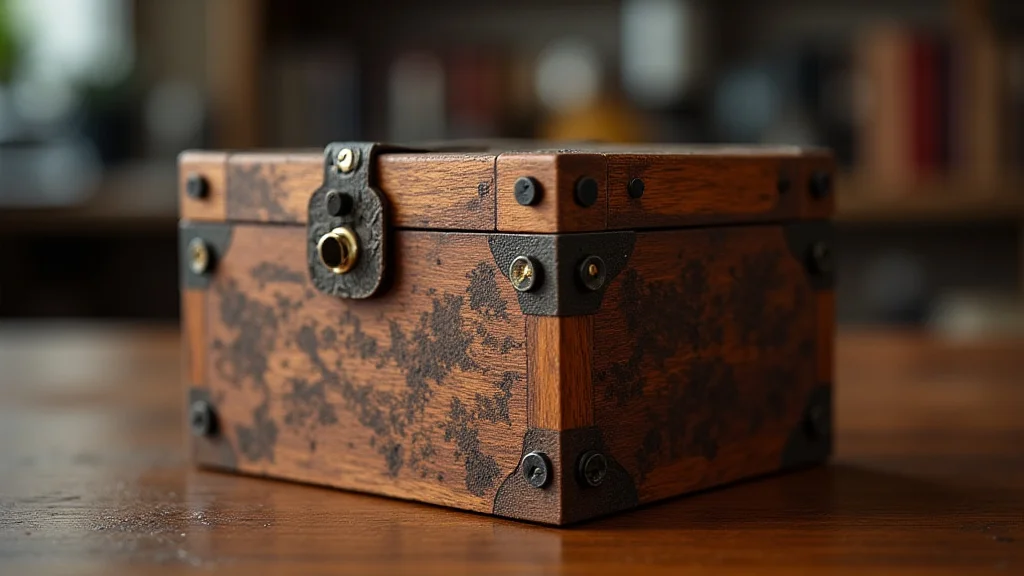
    Remember that feeling of frustration, staring at a Rubik’s Cube, willing it to solve itself? Or that friend who always seemed to have the answer, effortlessly twisting and turning? A mechanical puzzle box taps into that same intrigue, offering a physical challenge that’s both captivating and rewarding. In this post, we’ll explore everything about these ingenious contraptions, from their history and the techniques needed to solve them, to the different types you can find. You’ll gain a deeper appreciation for the design and the satisfying feeling of accomplishment. Get ready to discover the secrets behind these brain-teasing boxes and learn tips for solving them.

    Key Takeaways

    • Discover the history and evolution of the mechanical puzzle box.
    • Learn about the different types of mechanical puzzle boxes and their mechanisms.
    • Explore the various skill sets required to open these puzzle boxes.
    • Find out about famous designers and manufacturers.
    • Explore techniques and strategies for solving puzzle boxes.
    • Find tips and tricks for improving your puzzle-solving skills.

    A History of Intrigue Unlocking the Mechanical Puzzle Box

    The allure of a puzzle box extends far back in time. These intricate objects aren’t just toys; they are testaments to human ingenuity. Before digital entertainment, they provided a tactile and engaging experience. Early examples were crafted from wood and metal, employing simple levers and hidden catches. They were prized possessions, often used to conceal valuable items or secret messages. The earliest examples can be traced back several centuries, with their popularity growing alongside advances in craftsmanship and mechanical engineering. These boxes were not mere trinkets; they were symbols of status and intellect, often found in the hands of royalty and the wealthy.

    Origins and Evolution

    The mechanical puzzle box has roots that stretch back through centuries, with evidence suggesting that similar devices existed as early as ancient civilizations. These early examples were often simple, using basic mechanisms to hide small treasures or secrets. The evolution of the puzzle box mirrors the progress of technology and craftsmanship. As metalworking improved, boxes became more complex, incorporating gears, springs, and intricate locking systems. This led to a surge in complexity and variety. They evolved from being simple containers to complex objects. The Victorian era saw a boom in their popularity, fueled by the rising middle class and the desire for intellectual pursuits.

    • Early forms of mechanical puzzles included trick locks and hidden compartments in furniture and other household items.
    • The development of precise machining techniques allowed for the creation of intricate internal mechanisms.
    • Puzzle box designs reflected the artistic styles and technological advancements of their time.
    • The rise of mass production made puzzle boxes more accessible to a wider audience, increasing their popularity.

    The Victorian era, with its focus on craftsmanship and intellectual pursuits, was a golden age for these boxes. Designers experimented with innovative mechanisms, resulting in a wide array of styles and difficulty levels. In the 20th and 21st centuries, technological advancements influenced their design, with some incorporating electronic components. These boxes evolved into collector’s items and sources of entertainment. Today, they remain a popular hobby, and the internet has fostered a vibrant community of enthusiasts who share ideas, tutorials, and puzzles.

    Famous Designers and Manufacturers

    Behind every ingenious mechanical puzzle box is a creative mind, and over time, certain designers and manufacturers have risen to prominence. Their creations represent the pinnacle of ingenuity and design. Names like Jean-Claude Constantin, known for his intricate wooden puzzles, and Oskar van Deventer, with his innovative 3D-printed designs, are well-known to puzzle enthusiasts. These individuals often combine artistic vision with engineering skills, resulting in unique and challenging puzzles. Their work ranges from simple wooden boxes to complex, multi-layered contraptions that can take hours to solve. The legacies of these designers continue to shape the industry, inspiring new generations of puzzle makers.

    • Jean-Claude Constantin is known for his intricate wooden puzzle designs.
    • Oskar van Deventer is a prominent designer of 3D-printed puzzles.
    • Several Japanese craftsmen have produced exceptionally intricate and high-quality puzzle boxes.
    • Some manufacturers specialize in replicating antique designs, keeping historical craftsmanship alive.

    The manufacturers, too, play a crucial role. Companies such as Hanayama and Siebenstein-Spiele have gained reputations for quality and innovative designs. These companies often collaborate with talented designers to create their products. They utilize advanced manufacturing techniques to produce puzzles that are both functional and visually stunning. Collectors and enthusiasts often seek out puzzles from these manufacturers, appreciating the quality of craftsmanship. As the hobby grows, more designers and manufacturers are joining the field, bringing fresh perspectives and innovative designs.

    Inside the Box Exploring Mechanisms of the Mechanical Puzzle Box

    The beauty of a mechanical puzzle box lies in its clever mechanisms. The puzzle’s challenge is figuring out how these mechanisms work together. The variety of designs keeps the hobby interesting. Understanding the internal workings is key to solving the puzzles, whether a simple slide or a complex system of gears and levers. The puzzle’s difficulty and enjoyment come from the interaction of these parts. From straightforward sliding panels to more intricate combinations of levers, gears, and magnetic locks, the inner workings are what make them fascinating. These systems require a careful approach to solve them. You need to identify the components and how they interact.

    Types of Mechanisms

    Puzzle boxes use various mechanisms, each presenting a different type of challenge. Some rely on simple movements, such as sliding panels or rotating discs, while others use more complex mechanics, including gears, springs, and magnetic systems. Many combine several mechanisms. The simpler designs often involve sliding panels or hidden catches. The more intricate boxes utilize a combination of gears, levers, and hidden compartments. Magnetic systems can add another layer of complexity, often requiring precise alignments or sequences of movements. These diverse mechanisms provide a variety of challenges, and discovering how each operates is a significant part of the fun.

    • Sliding panels are common, requiring the user to find the correct sequence to unlock the box.
    • Rotating discs often involve aligning markings or manipulating internal gears.
    • Gears and levers introduce a higher degree of complexity, relying on mechanical advantage and sequential actions.
    • Magnetic locks use magnets to hold parts in place or activate release mechanisms.
    • Springs are used to create pressure and movement, often involved in releasing hidden compartments.

    Each type of mechanism presents a different challenge, and a good puzzle box will often combine several. Learning how these mechanisms work is crucial for solving any puzzle box. It’s often helpful to take time to inspect the box and consider how each part interacts with the others. By observing how the parts move and interact, you can begin to identify the sequence required to open the box. Understanding the individual components of the mechanisms is essential for figuring out how the puzzle works.

    Materials and Construction

    The materials used to build a mechanical puzzle box directly affect its appearance, feel, and functionality. Wood, metal, and plastic are common, each offering unique properties. The type of material chosen influences the puzzle’s durability, aesthetic appeal, and the precision of its mechanisms. Wood provides a classic look and feel, and is often favored for its workability and natural beauty. Metal, known for its strength and precision, is often used in the more complex puzzle boxes. Plastic, versatile and inexpensive, is used in many modern designs. The choice of materials also affects the price. High-quality materials can make the puzzle box a more valuable and enjoyable object.

    • Wood offers a classic look and feel, often used in traditional puzzle boxes.
    • Metal provides strength and precision, essential for intricate mechanisms.
    • Plastic is versatile and cost-effective, often used in modern designs.
    • The quality of the materials affects the puzzle’s durability and aesthetic appeal.
    • The choice of materials affects the overall weight and the tactile experience.

    The construction quality also plays a role in the puzzle’s performance. Well-made boxes exhibit precise alignments, smooth movements, and durable joints. Good craftsmanship makes the puzzle more enjoyable to solve. The way the pieces fit together, the finish of the surfaces, and the overall feel of the box are all indicators of quality. A well-built box adds to the experience. High-quality construction ensures that the box will last for years. It will withstand repeated use without losing its functionality or aesthetic appeal. Well-made boxes provide a better experience. They contribute to the satisfaction of solving the puzzle.

    Cracking the Code Techniques for Opening a Mechanical Puzzle Box

    Opening a mechanical puzzle box is a blend of observation, logic, and persistence. There are certain techniques and strategies that will assist you in opening the box. The key is to break down the puzzle into smaller steps and learn how each mechanism works. This means observing how the parts move, identifying any clues, and experimenting with different sequences of actions. There is a sense of accomplishment when you solve a challenging puzzle. The process itself is part of the fun. These techniques are applicable to all puzzles. They are applicable, from the simplest to the most difficult.

    Observation and Analysis

    Careful observation is a crucial skill for solving any puzzle. Study the box. Pay close attention to its appearance. Look for any visible clues such as lines, markings, or hidden screws. Examine the box’s movements. Look for any parts that seem out of place. This detailed analysis should reveal the functions of various parts and how they relate. Turn the box over and look at all sides. You might find hidden details or marks. Consider all aspects of the box. Analyze the mechanisms, and you will begin to understand how the parts interact. By noting the movements and the interactions of various components, you’ll start to recognize patterns. This information guides you in the solving process.

    • Visually inspect the entire box for any obvious clues.
    • Identify and understand the movement of different parts.
    • Look for hidden screws, markings, or other indicators of mechanism function.
    • Take notes, sketching the movements and relationships between parts.
    • Recognize patterns in the design or operation of the puzzle.

    A good starting point is to handle the box. See how the parts move. Note any clicks, resistance, or other tactile sensations. Try to understand the interactions of all components. Keep in mind that patience is vital. Don’t force anything. Forcing parts may damage the puzzle. Start with simple actions and gradually move to more complex sequences. Make a habit of observing how each part reacts to your actions. Taking notes and sketching movements will help you track your progress. Keep a log. This helps you develop strategies and remember what you have tried. It will improve your ability to solve future puzzles.

    Trial and Error and Logical Deduction

    Solving a mechanical puzzle box often requires a combination of trial and error and logical deduction. As you test different sequences of movements, you’ll learn which actions lead to progress and which do not. This will provide you with information. You can use it to exclude incorrect actions. Logical deduction involves applying what you observe to a system. It requires using the clues and information to determine the correct solution. It’s often necessary to go back and retry your ideas. Be methodical and systematic in your approach. Record your actions and the results. This will help you identify patterns and remove incorrect options. This will help you narrow down the possibilities and get closer to finding the solution.

    • Experiment with different sequences of movements to see what happens.
    • Keep track of actions taken and their results.
    • Use your observations to eliminate incorrect actions.
    • Apply logical deduction to determine the correct sequence or solution.
    • Combine experimentation and deduction to guide your problem-solving.

    If you’re stuck, step away and come back to the puzzle later. A fresh perspective can often help you notice something you missed. When trying different sequences, take your time and pay attention to what happens. Does a specific movement cause a click, a shift, or a change in the box? These details can be significant clues. Always combine these experiments with logical reasoning. Ask yourself why a particular action worked or did not work. Using both trial and error and logical deduction is the most effective way. These two work together to help you solve puzzle boxes. Remember that these puzzles are made to be solved. Keep trying and enjoy the process.

    Finding and Using Clues

    Puzzle boxes often contain clues to help you find the solution. Clues can be anything from a simple marking on the box to a hidden compartment. Learn to look closely for these cues. They may point you towards the correct action. You can often discover clues when you start to experiment. These will help you find the right sequence to open the box. Look for visual cues. Lines, arrows, or different colors may show the way. Check for hidden markings on the bottom or inside the box. These marks might direct you to the solution. The presence of a clue will give you a big advantage. Sometimes the clue is a simple change in the box’s appearance or how it feels. Learning to identify and decipher clues is vital.

    • Look for any visual clues, such as lines, markings, or arrows.
    • Check for hidden compartments or secret openings.
    • Examine the box for any tactile clues, such as clicks or resistance.
    • Study the materials and construction for any design clues.
    • Keep an open mind and be ready to reinterpret clues as you progress.

    When you encounter a clue, take the time to figure out what it means. It can offer you a shortcut. Often, clues will show the direction of movement. Some clues might indicate the order of steps or the correct action to take. Don’t ignore any details that seem unusual. These may be the key. Be patient and explore all possible interpretations of the clues. Sometimes, the most helpful clue is a change in the box’s appearance. You might notice a panel moving slightly or a catch releasing. Use the clues and build a map of your progress. Use the clues to help identify how the box works. With experience, you’ll become better at recognizing and interpreting clues. These will help you solve more challenging puzzles.

    Refining Your Skills Enhancing Your Mechanical Puzzle Box Skills

    Improving your mechanical puzzle box skills requires patience and practice. It involves honing a range of abilities, from observation and logic to fine motor skills. Start with easier puzzles. Then gradually increase the difficulty. This will improve your confidence. The more puzzles you solve, the better you become at recognizing patterns and deciphering mechanisms. You also improve your fine motor skills. Regularly attempting puzzles, and practicing various techniques, will improve your skills. Embrace the challenge. View each failure as a learning opportunity. This will boost your enjoyment and improve your puzzle-solving ability. The most enjoyable part is the feeling of accomplishment.

    Practice and Persistence

    The key to improving your skills is consistent practice. The more puzzles you solve, the more familiar you become with their mechanisms and the techniques required to open them. Dedicate time each day or week to working on puzzles. Start with puzzles that match your current skill. Then, gradually work your way up to more difficult boxes. Don’t be discouraged by initial failures. They are an essential part of the learning process. You will soon realize that persistence is vital. When you fail, don’t give up. Instead, take a break and come back with a fresh perspective. Each attempt teaches you something new. Every solved puzzle will build your skill set.

    • Practice solving puzzles regularly to familiarize yourself with mechanisms.
    • Start with simpler puzzles and work your way up to more complex ones.
    • Don’t be discouraged by initial failures; persistence is key.
    • Take breaks and revisit puzzles with a fresh perspective.
    • Learn from your mistakes, identifying what went wrong and how to improve.

    Record your attempts and the outcome. This can help you identify patterns in your successes and failures. Analyzing past approaches will teach you what works and what does not. The more you practice, the more quickly you will recognize the patterns. It’s also important to vary the types of puzzles. Try solving different kinds of puzzles. This will expand your knowledge. You can find many different kinds of puzzles online. Explore diverse designs. This helps develop adaptability. With each puzzle you solve, you’ll feel a sense of accomplishment. This will motivate you to keep going. Learning from your mistakes will help you to hone your skills.

    Improving Your Observation Skills

    Sharp observation skills are critical. To improve your abilities, start by paying close attention to detail. This involves carefully examining every aspect of a puzzle. Consider all the features of the box, from the way it looks to the way it feels. Take a closer look at the mechanisms. Look for clues that might provide a solution. Practice visual acuity. Train your brain to notice the smaller details. This includes observing subtle changes, such as the position of a panel or how parts align. By practicing observation, you will be able to notice clues that you might otherwise miss. Being able to spot the small details is important.

    • Pay close attention to detail, carefully examining every aspect of the puzzle box.
    • Train your brain to recognize subtle changes and patterns.
    • Practice visual acuity.
    • Observe how the pieces move and interact.
    • Document your findings.

    A good exercise is to try to describe a puzzle in detail. Then, compare your description to a friend’s. You can also analyze pictures and videos of puzzle boxes. These are available online. This is an effective way to train your ability. Examine how other people are handling and opening the puzzles. Note the specific actions, movements, and steps. Identify how others use observation to guide their puzzle-solving. When you start solving a new puzzle, take your time. Before you start, observe it carefully. Take notes, make sketches, and document the various elements. By paying more attention, you will improve your observation skills. This can help you to solve any mechanical puzzle box.

    Developing Logic and Problem-Solving Skills

    Alongside observation, logic and problem-solving are crucial. Improve your abilities by working on logical thinking exercises. These can include Sudoku, crosswords, and other puzzles. They can improve your logic. Approach puzzles systematically. Break the puzzle down into smaller, manageable steps. Develop strategies. Test them and refine your approaches as you learn. Practice working with a variety of puzzle types. This will help you learn the different problem-solving methods. Approach problems in a systematic way. This also improves your skills. Analyze your mistakes and seek alternative solutions. This can refine your skill set. Keep an open mind when you approach a puzzle. You will find solving mechanical puzzle boxes more satisfying.

    • Practice logical thinking exercises, like Sudoku or crosswords.
    • Approach puzzles systematically, breaking them down into smaller steps.
    • Develop strategies and refine them as you learn.
    • Vary the types of puzzles you work on.
    • Analyze your mistakes and seek alternative solutions.

    When you encounter a challenge, avoid acting without planning. Test each step. Consider the outcome. Document your progress. This will allow you to analyze your work. Look for patterns in your results. This will help you with future puzzles. Read about various puzzle techniques. Research puzzle box designs. By learning more, you will be better equipped to deal with challenges. Many online resources provide details. When you solve a puzzle, analyze your strategies. Did your approach work? Was there a more efficient way? This will refine your skills. You will improve your ability to solve all types of mechanical puzzle boxes.

    Common Myths Debunked

    Myth 1: Puzzle boxes are always made to be incredibly complicated.

    The reality is that while some mechanical puzzle boxes are highly complex, many are designed to be accessible to people of all skill levels. They range in difficulty from simple wooden boxes that require only a few steps to solve to intricate metal puzzles that may take hours. The key is to start with simpler puzzles and gradually increase the difficulty as you develop your skills and confidence. This way, you can build your problem-solving skills step by step.

    Myth 2: You need to be a genius to solve a mechanical puzzle box.

    The truth is that anyone can solve them with a little patience, practice, and the right approach. These are not about intelligence; they’re about observation, logic, and a systematic way of thinking. The ability to break down a problem into smaller steps is important. Persistence and a willingness to learn from your mistakes are much more important. Solving these boxes is about the process, not innate intellect.

    Myth 3: You have to know the history of puzzle boxes to solve them.

    While an interest in the history of puzzle boxes can be fascinating, it’s not a prerequisite for opening one. All you need are observation skills and a willingness to understand how the mechanisms work. The historical context can add to the enjoyment of the hobby. But the primary goal is not to understand history. Your focus is the mechanics of each puzzle. The key to success is in understanding the mechanical design, not the historical origin.

    Myth 4: The only way to solve a puzzle is to brute-force your way through it.

    This is incorrect. Trying different combinations will not always work. Patience and attention to detail are important. The best way is to carefully observe the box and analyze its mechanisms. Understanding how the parts interact is the core of solving them. This approach is more effective and rewarding. Brute-forcing often leads to frustration and may even damage the box. By analyzing the mechanisms, you can discover hidden clues.

    Myth 5: All mechanical puzzle boxes are made of wood.

    This is not true. While wood is a common material, puzzle boxes are made from a range of materials. Metals like steel and aluminum provide strength and the ability to create precise mechanisms. Plastics are also used for their versatility. Materials depend on their function and design. The choice of materials affects the puzzle’s appearance and the tactile experience. There is a wide variety of puzzle box materials.

    Frequently Asked Questions

    Question: How can I tell how difficult a puzzle box is before I buy it?

    Answer: Most puzzle boxes are rated by difficulty. You can also research reviews and watch videos of people solving the puzzle. This will give you an idea of the complexity.

    Question: Can I damage the puzzle box if I force it?

    Answer: Yes, excessive force can damage the mechanisms. Always take your time, observe how the parts move, and never force anything. Gentle exploration is key.

    Question: Are there any online resources to help me solve a mechanical puzzle box?

    Answer: There are many online resources. Websites, forums, and YouTube channels offer tutorials, tips, and videos of people solving the puzzles. These can be helpful.

    Question: What do I do if I get stuck and can’t open a puzzle?

    Answer: Step away from the puzzle. Come back later with a fresh perspective. You can also consult online resources. Sometimes, simply taking a break can help you find the solution.

    Question: Are mechanical puzzle boxes a good gift?

    Answer: Yes, puzzle boxes make great gifts. They’re engaging, fun, and provide a sense of accomplishment. They can entertain people of all ages. Make sure the difficulty matches the recipient’s ability.

    Final Thoughts

    Exploring the world of the mechanical puzzle box is a rewarding experience, filled with challenging puzzles and the satisfaction of uncovering their secrets. From simple wooden boxes to intricate, multi-layered contraptions, these puzzles provide a unique combination of intellectual and tactile engagement. Whether you’re a seasoned puzzle enthusiast or a curious beginner, the key is to approach each puzzle with patience, observation, and a willingness to learn. Break down each puzzle into manageable steps, observe the mechanisms, and carefully analyze the movements of the parts. Embrace the process of trial and error and use logical deduction to find the correct solutions. Remember that failures are a part of the journey. Take a break if you need to, and come back with a fresh perspective. The feeling of accomplishment when you finally open a challenging puzzle is genuinely satisfying. With consistent practice and the right approach, you’ll enhance your puzzle-solving skills. So, grab a puzzle box, dive in, and start exploring!

  • Mechanical Puzzles for Adults: A Mind-Bending Hobby Guide

    Mechanical Puzzles for Adults: A Mind-Bending Hobby Guide

    Remember that feeling of accomplishment when you finally solved a particularly tricky puzzle as a kid? Now, imagine that feeling, amplified. Many adults find themselves looking for hobbies that provide mental stimulation, a break from screens, and a sense of tangible achievement. Enter the fascinating world of mechanical puzzles adults! From intricate locks to cleverly designed brain teasers, these puzzles offer a rewarding challenge and a fantastic way to sharpen your problem-solving skills. In this guide, we’ll explore the various types of mechanical puzzles, offering tips for beginners and insights for seasoned puzzle enthusiasts. You’ll discover the benefits of these challenging activities and learn how to choose the right puzzles to suit your interests. Get ready to enhance your cognitive abilities and enjoy the satisfying click of a puzzle solved!

    Key Takeaways

    • Discover the diverse types of mechanical puzzles available for adults.
    • Learn how mechanical puzzles can enhance your cognitive skills, memory, and focus.
    • Explore tips for choosing the right puzzles based on your skill level and preferences.
    • Understand the materials used in mechanical puzzles and their durability.
    • Find out where to purchase mechanical puzzles and the approximate cost.
    • Gain insights into the history and evolution of mechanical puzzles.

    Unlocking the Allure of Mechanical Puzzles

    Mechanical puzzles have a rich history, dating back centuries. They’ve captivated thinkers, inventors, and enthusiasts alike. Their appeal lies in their tangible nature, requiring hands-on interaction and offering a break from the digital world. The simple satisfaction of manipulating physical objects to achieve a specific outcome is incredibly gratifying. These puzzles are not just entertainment; they offer a challenging path to mental fitness, improving problem-solving abilities and spatial reasoning. The diversity is quite impressive, with puzzles crafted from various materials and designed for all skill levels.

    Origins and Evolution

    The earliest examples of mechanical puzzles can be traced back to ancient civilizations. These early puzzles, often made of wood or metal, served as both entertainment and tests of skill. The Industrial Revolution brought about new manufacturing techniques and materials, which significantly increased the production of mechanical puzzles. This period saw the rise of intricate designs and mass production, making these puzzles accessible to a wider audience. Today, the art of puzzle design has evolved, with modern puzzles utilizing advanced manufacturing processes and innovative designs.

    • Early examples can be found in Ancient Greece and Rome.
    • The Industrial Revolution propelled the mass production of puzzles.
    • Modern puzzles use advanced materials like metal, plastic, and wood.

    Types of Mechanical Puzzles

    There are numerous types of mechanical puzzles, each with its unique challenge. Some are designed to be simple, while others are incredibly complex, requiring hours of effort. You can explore a variety of materials and difficulty levels to suit your preferences. From the classic interlocking puzzles to more complex sequential movement puzzles, these brain teasers offer something for everyone. Puzzles often involve techniques like sliding, rotating, or manipulating parts to achieve a solution. The type of puzzle will determine the skills you exercise.

    • Interlocking Puzzles: These puzzles involve separating and reassembling pieces.
    • Disentanglement Puzzles: The goal is to separate one or more pieces from a fixed position or another piece.
    • Sequential Movement Puzzles: These require a series of moves to solve, such as the classic “burr” puzzles.
    • Assembly Puzzles: These puzzles require you to assemble the pieces into a specific form or structure.
    • Secret Opening Puzzles: These puzzles are often boxes or containers that open when a specific sequence of movements or adjustments is made.

    The Benefits of Mechanical Puzzles for Adults

    Engaging with mechanical puzzles offers a wealth of advantages. Regularly working on these puzzles can enhance cognitive skills, improve memory, and sharpen problem-solving abilities. The focus and concentration required to solve the puzzles can be a form of meditation, offering a break from daily distractions. Beyond the mental benefits, these puzzles provide a creative outlet and a tangible sense of achievement that is rewarding. Finding a new hobby that improves your mental health is a win-win.

    Cognitive Advantages

    Solving mechanical puzzles engages various parts of your brain. The act of thinking through the mechanics of the puzzle, planning moves, and evaluating solutions exercises critical thinking. Research shows that engaging in these types of activities can help maintain cognitive function and may even slow cognitive decline. Spatial reasoning, problem-solving skills, and memory are all improved by regular puzzle use. The mental workout from these brain teasers can have far-reaching benefits.

    • Enhances spatial reasoning skills, helping you visualize and manipulate objects in space.
    • Improves problem-solving abilities by encouraging you to break down problems into manageable parts.
    • Boosts memory by requiring you to remember the steps and positions of the pieces.
    • Increases focus and concentration, as puzzles demand sustained attention.

    Stress Relief and Mental Well-being

    In today’s fast-paced world, stress is a common issue. Mechanical puzzles provide a healthy distraction from daily pressures. The focused attention required to solve a puzzle can act as a form of meditation, allowing you to calm your mind and reduce stress levels. The feeling of accomplishment when a puzzle is solved can boost your mood and self-esteem. As a result, it leads to a more balanced and focused approach to life.

    • Offers a break from screens and digital distractions.
    • Provides a sense of accomplishment and boosts self-esteem upon completion.
    • Promotes relaxation and reduces stress levels through focused concentration.
    • Offers a creative outlet and a way to engage your mind in a satisfying and tangible way.

    Choosing Your First Mechanical Puzzle

    With such a broad selection available, choosing the right mechanical puzzle adults can feel tricky. Start by evaluating your existing skill level. Are you new to puzzles, or do you have experience with other kinds of brain teasers? Consider your interests: do you enjoy geometry, logic, or working with your hands? The material of the puzzle and its size might also be factors. Beginning with simpler puzzles can help you build your problem-solving skills and develop a sense of confidence.

    Difficulty Levels

    Mechanical puzzles adults are made in many levels of complexity. A beginner should start with puzzles that have fewer moves or that are easier to visually understand. Those with more experience might enjoy complex puzzles requiring numerous steps. Pay attention to the manufacturer’s suggested difficulty ratings, often indicated on the packaging. By starting with a suitable level, you will maximize your enjoyment and minimize any frustration.

    • Beginner: Simple interlocking puzzles with a small number of pieces or easy-to-understand movements.
    • Intermediate: Puzzles that involve more complex mechanisms or a higher number of moves.
    • Advanced: Complex puzzles requiring several hours or even days to solve.

    Materials and Quality

    The materials used in a mechanical puzzle directly affect its durability and feel. Many puzzles are made of wood, metal, or plastic. Wood puzzles often have a classic look and provide a tactile experience, but require more care to prevent damage. Metal puzzles are usually durable and offer a satisfying weight, though they might be more expensive. Plastic puzzles can be a cost-effective option, offering intricate designs. Consider what will last and what appeals to your senses.

    • Wood: Offers a classic feel and can be beautifully crafted. Look for solid hardwoods for greater durability.
    • Metal: Durable and offers a satisfying weight. Precision-cut metal puzzles can be incredibly intricate.
    • Plastic: A more cost-effective option, often used in complex designs and vibrant colors.

    Exploring Materials and Designs

    Understanding the materials and design elements helps you appreciate and select your puzzles. The design of a mechanical puzzle determines its function and the challenge it presents. From the aesthetic of a classic wooden puzzle to the precision of a metal puzzle, the materials can shape the experience. Examining the craftsmanship and materials of the puzzle can lead to an appreciation of the skill of the puzzle maker. This information allows you to identify puzzles that will be interesting and lasting.

    Materials Used in Mechanical Puzzles

    Mechanical puzzles are made using various materials, each offering different characteristics and challenges. From the natural warmth of wood to the strength of metal, the construction material impacts the puzzle’s feel, durability, and aesthetics. Plastic is often used for its versatility and allows for intricate and detailed designs. The choice of material may influence the experience and longevity of the puzzle. Consider the puzzle’s material as part of the overall experience.

    • Wood: Offers a natural feel and tactile experience. Wood puzzles come in many designs, from simple shapes to complex interlocking components.
    • Metal: Provides a durable and robust structure, suitable for complex designs that demand precision. Many metal puzzles require specific moves or sequences to solve.
    • Plastic: Versatile and lightweight, allowing for intricate designs and cost-effective production. Plastic puzzles often provide a range of colors and designs.

    Design Elements and Aesthetics

    The design of a mechanical puzzle greatly impacts its appeal and the challenge it provides. The design can range from geometric shapes and intricate patterns to realistic objects or abstract concepts. A well-designed puzzle should be visually appealing and pleasing to handle. Some puzzles are designed to test your problem-solving abilities, while others present a visual delight. The aesthetic aspect plays a part in the overall experience.

    • Geometric Shapes: Often designed to test spatial reasoning and pattern recognition.
    • Intricate Patterns: Offer visually complex and challenging puzzles.
    • Realistic Objects: Puzzles that mimic everyday objects, such as locks or boxes.
    • Abstract Concepts: Often feature a unique design that is abstract and artistic.

    Where to Find and Purchase Mechanical Puzzles

    Finding a suitable mechanical puzzle is easy with numerous options available. Numerous online stores offer a great selection, allowing you to compare prices and read reviews. Specialty puzzle shops often have a vast variety of puzzles and knowledgeable staff who can offer advice. Auctions and second-hand markets can sometimes uncover unique and vintage puzzles. Exploring these avenues will help you find the perfect mechanical puzzles adults to suit your preferences and budget. With some investigation, you’re sure to find a new favorite puzzle.

    Online Retailers

    Online retailers provide a wide selection of puzzles from various manufacturers. Platforms like Amazon, Etsy, and specialty puzzle websites enable you to explore a variety of puzzles at your convenience. This permits you to read reviews, compare prices, and often provides detailed images and descriptions. The convenience of online shopping makes it easy to find and order puzzles from all over. Online retailers usually provide quick shipping.

    • Amazon: Offers a wide selection of mechanical puzzles adults from various brands.
    • Etsy: A platform for handcrafted and unique puzzles from independent makers.
    • Specialty Puzzle Websites: Provide curated selections and detailed information on puzzles.

    Specialty Puzzle Shops and Local Stores

    Specialty shops are dedicated to mechanical puzzles and related items. These shops often have a variety of puzzles to try and knowledgeable staff who can give recommendations. The tactile experience of examining the puzzles and speaking with experts can be valuable when selecting your next puzzle. Local stores also offer a chance to support your local economy, which is a great benefit. Speaking with puzzle experts can improve your puzzle selection.

    • Specialty Puzzle Stores: Offer a curated selection of puzzles and expert advice.
    • Toy Stores: Many toy stores include a puzzle selection.
    • Local Gift Shops: Sometimes carry unique puzzles as part of their offerings.

    Common Myths Debunked

    Myth 1: Mechanical Puzzles Are Only for the Gifted

    The reality is that anyone can enjoy mechanical puzzles. While some puzzles are difficult, there are options for all skill levels. With patience and practice, anyone can learn to solve a puzzle. The focus is to choose the right puzzle level for your skillset. It is a fantastic way to stretch your mind and learn something new.

    Myth 2: You Need Special Skills to Solve Mechanical Puzzles

    You don’t need to be a math or engineering expert to enjoy mechanical puzzles. The beauty of these puzzles is that they depend on logic, problem-solving, and spatial reasoning, which anyone can develop. A love for challenges and a willingness to try is really all you need. You can always start with the simpler designs and work up from there.

    Myth 3: All Mechanical Puzzles Are the Same

    Mechanical puzzles cover a wide range of types, designs, and materials. Each puzzle provides a unique challenge, from interlocking pieces to secret boxes. There are puzzles made of wood, metal, and plastic. There are puzzles for beginners and advanced puzzlers. Exploring the different varieties allows you to discover your preferences.

    Myth 4: Mechanical Puzzles Are Just a Waste of Time

    Mechanical puzzles are far more than just a way to pass the time. They are a good mental workout that helps boost cognitive function, boost your focus and reduce stress. The mental benefits of puzzles make them a constructive activity to help you think better.

    Myth 5: You Have to Be a Kid to Enjoy Mechanical Puzzles

    Many adults are discovering the mental stimulation and gratification that puzzles offer. They provide a rewarding and enjoyable experience, especially when you solve a tricky puzzle. As an alternative to digital distractions, they can offer a healthy and fulfilling hobby. People of all ages can enjoy mechanical puzzles.

    Frequently Asked Questions

    Question: How do I get started with mechanical puzzles?

    Answer: Start by choosing a beginner-friendly puzzle made of wood or plastic, and read the instructions carefully. Approach it systematically, and take breaks if you get stuck.

    Question: How do I choose a puzzle for my skill level?

    Answer: Consider the number of moves needed to solve it, the level of complexity, and the material. Beginners should stick to easier designs, while advanced puzzlers might enjoy complex models.

    Question: Are mechanical puzzles good for the brain?

    Answer: Yes! Regularly working on mechanical puzzles can improve your problem-solving skills, enhance memory, and sharpen your focus.

    Question: What materials are used to make mechanical puzzles?

    Answer: Mechanical puzzles are commonly made from wood, metal, and plastic, each offering different characteristics and aesthetics.

    Question: Where can I buy mechanical puzzles?

    Answer: You can find mechanical puzzles at online retailers, specialty puzzle shops, toy stores, and some local gift shops.

    Final Thoughts

    Mechanical puzzles adults are an engaging and rewarding hobby that provides intellectual stimulation and a satisfying sense of accomplishment. They provide numerous benefits, including improvements in cognitive function and stress reduction. These puzzles come in many types, ranging from simple interlocking pieces to complex, multi-step designs. The options include puzzles made of wood, metal, or plastic, offering varied tactile experiences and visual appeal. From starting with simple puzzles to moving on to more complex designs, the options are broad. Whether you are looking for a break from screens, a way to boost your cognitive health, or a satisfying hobby, mechanical puzzles adults offer a wealth of benefits and enjoyment. Try it and see if a new hobby leads to a new and fun approach to relaxation and challenges.

  • Unlocking the Fun of Mechanical Puzzles for Adults

    Unlocking the Fun of Mechanical Puzzles for Adults

    Remember that feeling of accomplishment when you finally pieced together a challenging jigsaw puzzle? Now, imagine that satisfaction, but with gears, levers, and intricate designs. I recently stumbled upon a fascinating mechanical puzzle for adults and was instantly hooked. The tactile experience of manipulating the parts, the satisfying clicks and whirs, and the sheer challenge of solving it kept me engrossed for hours. This post will guide you through the exciting world of these brain-teasers, showing you why they’re a perfect hobby for adults and how they can benefit your mind. You’ll learn the different types, how to choose one, and why they’re a fantastic alternative to screen time. By the end, you’ll have a clear idea of what to look for and where to start your puzzle adventure. This will improve your Time on Page and reduce your Bounce Rate.

    Key Takeaways

    • Discover the different types of mechanical puzzles for adults available.
    • Learn about the cognitive benefits of solving them.
    • Understand how to choose a puzzle based on difficulty and interests.
    • Explore the materials and craftsmanship involved in their creation.
    • Find recommendations for popular puzzles and where to buy them.
    • Gain insights on how to foster a hobby that sharpens your mind.

    Exploring the World of Mechanical Puzzles

    Mechanical puzzles for adults represent a delightful blend of artistry, engineering, and problem-solving. They are more than just toys; they are intricate contraptions designed to challenge your spatial reasoning, critical thinking, and patience. Unlike digital puzzles, these offer a hands-on experience, involving physical interaction with components like gears, springs, and levers. This provides a tangible connection that can be profoundly satisfying. These puzzles are available in various forms, shapes, and materials, from simple disentanglement puzzles to complex lockboxes and automata.

    Types of Mechanical Puzzles

    The variety of mechanical puzzles is impressive, each with unique challenges. Different types test varied abilities, making it an excellent way to diversify your mental workout. Some require precise movements, while others focus on sequential problem-solving.

    • Disentanglement Puzzles: These puzzles often involve separating intertwined pieces, such as ropes and metal bars. They typically require twisting, turning, and manipulating the components until they come apart. These puzzles test spatial reasoning and attention to detail.
    • For example, a classic disentanglement puzzle might involve removing a ring from a complex metal structure. The challenge lies in figuring out the sequence of movements needed to free the ring without damaging the puzzle. They are usually easier to start with.

    • Locking Puzzles: These puzzles resemble intricate lockboxes, the goal being to open them. They often employ secret mechanisms, requiring the solver to discover hidden levers, buttons, or combinations. Solving these necessitates deductive reasoning and observational skills.
    • A well-crafted locking puzzle might have multiple stages, each requiring a different solution before the box can be opened. Some incorporate hidden compartments or secret passages, adding another layer of intrigue.

    • Sequential Movement Puzzles: These puzzles demand a specific sequence of actions to reach a goal. This might involve moving gears, sliding blocks, or assembling components in a certain order. The key is in pattern recognition and strategic planning.
    • A classic example is the Burr puzzle, where wooden pieces fit together to form a locked structure. Solving it involves identifying the sequence that frees the pieces. Another variation is a puzzle requiring the user to move a ball bearing through a series of obstacles.

    • Assembly Puzzles: With these, the goal is to construct a specific shape or structure using various parts. They are similar to 3D jigsaw puzzles, but frequently involve mechanical elements. They help develop spatial reasoning and a knack for design.
    • The pieces can range from simple geometric shapes to complex, intricately designed elements. The challenge lies in visualizing how the different parts fit together. Assembly puzzles come in many levels of complexity, allowing for progression.

    The Benefits of Mechanical Puzzles

    Engaging with mechanical puzzles for adults is about enjoyment and mental fitness. These activities provide a mental workout that sharpens various cognitive skills, making them a worthwhile hobby. Solving these puzzles can have a positive influence on your overall mental health. Unlike scrolling through social media or watching TV, these puzzles require active participation and focus.

    Cognitive Advantages

    The advantages of engaging with these puzzles reach beyond simple amusement. These activities provide a mental workout that sharpens various cognitive skills, making them a worthwhile hobby. Some of the skills they help improve include:

    • Problem-solving: Puzzles inherently require you to break down complex challenges into manageable parts. The more you work with puzzles, the better you become at assessing challenges and finding effective solutions.
    • Mechanical puzzles require you to analyze the mechanism, identify the problem, and create a step-by-step plan. This mirrors the process we use in everyday life when addressing difficult tasks.

    • Spatial Reasoning: Many mechanical puzzles, especially assembly puzzles, demand you to visualize objects in 3D. They challenge you to manipulate these objects in your mind and how they fit together.
    • Good spatial reasoning can improve the ability to visualize how things work, navigate your surroundings, and even enhance skills in fields such as engineering and architecture.

    • Patience and Perseverance: Solving a difficult puzzle can be frustrating, requiring persistence to achieve a solution. The satisfaction gained from completing a puzzle can be a significant motivator.
    • Each puzzle teaches you to deal with failure. It also helps you approach problems from different angles without getting discouraged.

    • Critical Thinking: Puzzles necessitate critical thinking, encouraging you to analyze information, spot patterns, and use logic to find solutions. They teach how to examine evidence and make informed decisions.
    • The ability to think critically is helpful for all areas of life, from professional settings to personal relationships.

    Stress Reduction and Relaxation

    In addition to cognitive benefits, mechanical puzzles offer several psychological advantages, including stress reduction and relaxation. The process of solving a puzzle can be a mindful activity that diverts your attention from daily stresses.

    • Mindfulness: Focusing on the details of a puzzle can help focus your mind on the present. This practice is similar to meditation, helping you to center yourself and reduce feelings of anxiety.
    • Engaging with a puzzle demands your focus. The focus on the mechanics and visual elements helps you set aside other thoughts and worries.

    • Relaxation and Downtime: The tactile nature of mechanical puzzles provides a calming experience. This is a contrast to the often hectic nature of modern life.
    • The physical act of manipulating components and the satisfaction of discovering a solution offers a peaceful outlet and a break from digital devices.

    • Sense of Accomplishment: Completing a puzzle provides a tangible sense of accomplishment. This increases self-esteem and provides satisfaction.
    • The joy derived from successfully solving a challenging puzzle can be a powerful emotional booster. It is a rewarding experience, no matter the difficulty.

    Choosing the Right Puzzle

    The correct puzzle for you is a matter of personal preferences. The vast array of mechanical puzzles makes it possible to match your interests and experience level. Consider several factors to make sure you select a puzzle that provides the ideal balance of enjoyment and challenge. Consider the type of puzzle, the level of difficulty, and the materials used.

    Matching Difficulty to Skill

    Select a puzzle that suits your current experience to get the best enjoyment. A puzzle that is too easy won’t provide a mental challenge, while one that is too difficult can lead to frustration. Beginners and experienced solvers will find the right puzzles for their needs. Different puzzles are made with different skill levels in mind. Here’s a basic guide:

    • Beginner Puzzles: These puzzles are usually easier to understand and solve. They often involve fewer steps. They are good starting points for new enthusiasts.
    • Disentanglement puzzles or simple sequential movement puzzles are often good choices for beginners. Look for puzzles with straightforward mechanics and clear instructions.

    • Intermediate Puzzles: For those with some experience, intermediate puzzles offer a moderate challenge. They have increased complexity and may require more steps or the ability to think through multiple moves in advance.
    • These puzzles might include more sophisticated locking mechanisms or more intricate assembly designs. They provide a good balance between challenge and satisfaction.

    • Advanced Puzzles: These are for experienced puzzle solvers. They involve intricate mechanisms, many steps, and high levels of problem-solving. Success demands time, patience, and strategic thinking.
    • These puzzles can take hours or even days to solve. Expect hidden compartments, complex sequences, and innovative mechanics.

    Exploring Materials and Designs

    The materials and designs of mechanical puzzles are a testament to artistry and craftsmanship. The best puzzles often use quality materials. Each material offers a different feel and aesthetic.

    • Wood: Wooden puzzles offer warmth and a traditional look. They are often crafted with precision. They also have a tactile experience that many solvers prefer.
    • Wood is a versatile material. It can be carved, stained, or laser-cut, which allows for elaborate designs and a satisfying weight in the hand.

    • Metal: Metal puzzles deliver a modern, sleek look. They use the precision and durability of metal to create intricate mechanisms.
    • Metal puzzles can range from simple designs to complex mechanisms. The use of metal gives a premium feel.

    • Complexity of Design: The intricacy of the design is central to the difficulty and allure of a mechanical puzzle. Puzzles can range from those with simple movements to those with many gears, levers, and hidden compartments.
    • The design of a puzzle includes its aesthetic and its mechanics. Consider the visual appeal of a puzzle, but also its inner workings. A well-made design combines beauty and functionality.

    Examples and Recommendations

    Several mechanical puzzles for adults stand out for their challenging gameplay and beautiful design. These puzzles provide a glimpse into the diverse array of options available. These are examples of some puzzles available.

    • The Hanayama Cast Puzzles: Hanayama offers a series of cast metal puzzles with varying difficulty levels. Each puzzle is unique. They are known for their intricate designs and high-quality craftsmanship.
    • These puzzles range from simple disentanglement to complex interlocking designs. They are excellent choices for both beginners and experienced solvers.

    • The Gear Cube: This puzzle uses interlocking gears to provide a tactile and mechanical challenge. It demands spatial reasoning and an understanding of gear systems.
    • It can be a good choice for someone interested in engineering principles. The rotating gears create a satisfying visual and physical experience.

    • Wooden Lock Boxes: Wooden lockboxes combine elegance with a challenging solution. They often have secret compartments and intricate locking mechanisms.
    • These puzzles can be an engaging hobby and a beautiful collectible. The experience of opening a lockbox provides a unique sense of accomplishment.

    • Da Vinci Code Cryptex: Based on the novel, this puzzle lets the solver enter a code to open the box. The puzzle requires a combination of logic and observation skills.
    • These cryptex puzzles are a fun choice for puzzle fans. They are also a great conversation starter.

    When selecting a puzzle, explore online stores, specialty shops, and puzzle events. Reviews and community groups can help determine what’s right for you. Different resources can provide further guidance in this area:

    1. Online Puzzle Retailers: Online shops such as Amazon, Etsy, and specialty puzzle retailers have wide selections. They offer detailed descriptions, reviews, and customer ratings.
    2. These platforms often provide user reviews and difficulty ratings. This can help you choose the puzzle for your skill level.

    3. Puzzle Forums and Communities: Online forums and communities are sources of information and support. They provide opportunities to discuss puzzles, share tips, and learn new solutions.
    4. Websites like PuzzleMaster or Reddit communities dedicated to mechanical puzzles can be helpful. They allow you to share your puzzles with others.

    5. Local Puzzle Shops: Visiting local puzzle stores provides a tactile experience. You can see the puzzles in person. These shops usually offer hands-on demonstrations and expert advice.
    6. In-person browsing allows you to touch and feel the puzzles. Staff can provide personalized recommendations based on your preferences.

    7. Puzzle Exchange Events: Search for local puzzle exchange events. This can provide a great opportunity to explore various types of puzzles. It also provides the ability to connect with other puzzle lovers.
    8. Puzzle exchange events are excellent for trading puzzles, learning new solving methods, and meeting others with shared interests.

    Mechanical Puzzles in Real Life

    The benefits of solving mechanical puzzles for adults extend to many aspects of real life. Problem-solving skills, patience, and critical thinking can improve performance in several areas. Here are some examples of how skills gained from puzzles can be used.

    • Problem-solving in the Workplace: Mechanical puzzles teach you to analyze complex situations, break them down, and find solutions.
    • Solving puzzles teaches an ability to identify and address problems methodically. This can be directly transferred to the workplace. Those with experience in solving puzzles often excel at tackling complex projects and finding creative solutions.

    • Improved Communication and Teamwork: Working on puzzles with others teaches you how to articulate problems and cooperate to find the best solutions.
    • The skills used in collaboration are especially helpful in group activities. This is helpful for team projects or brainstorming exercises.

    • Enhanced Creativity: Puzzles stimulate creative thinking. They require that you consider alternative approaches and challenge conventional methods.
    • This skill can be used in your personal and professional life. The skills used in mechanical puzzles will help you view problems with a fresh perspective.

    Common Myths Debunked

    There are some misconceptions related to mechanical puzzles. Dispelling these myths can help you fully explore the advantages of this hobby.

    Myth 1: Mechanical puzzles are just for kids.

    In fact, mechanical puzzles for adults offer a variety of complexities, materials, and designs. They provide a challenging and engaging experience that many adults find satisfying. While puzzles designed for children are usually simpler, adult puzzles can range from the basics to the complex. This makes them good for all ages.

    Myth 2: You need to be a genius to solve them.

    While some puzzles are challenging, most are designed for a variety of skill levels. The appeal of puzzles is that they can be used by anyone, regardless of intelligence. The most important qualities are persistence, a willingness to experiment, and the ability to think critically. With the right attitude, anyone can discover the pleasure of solving mechanical puzzles.

    Myth 3: They’re all the same.

    Mechanical puzzles include a large variety of types, materials, and mechanisms. These include assembly puzzles, disentanglement puzzles, lockboxes, and sequential movement puzzles. Wood, metal, and other materials are also used. This ensures that a diverse range of puzzles is available to match individual interests and preferences. This ensures the availability of puzzles.

    Myth 4: They’re expensive.

    While some mechanical puzzles are expensive because of their high-end craftsmanship, there are many choices that are affordable. They are available in various price ranges, to provide access to those with different budgets. You can begin with puzzles that suit your budget. This allows you to explore the hobby without a significant investment.

    Myth 5: They’re a waste of time.

    Mechanical puzzles offer multiple cognitive and emotional benefits. The puzzles improve cognitive abilities, as well as the sense of accomplishment, and also help reduce stress. Unlike mindless scrolling, puzzles stimulate the brain. They also encourage mindfulness, and also provide a fun and rewarding pastime.

    Frequently Asked Questions

    Question: How do I get started with mechanical puzzles?

    Answer: Start with beginner-level puzzles, such as disentanglement or simple assembly puzzles. Read the reviews. Join online forums. This is how you learn the basics and get tips from experienced solvers.

    Question: What are the best materials for mechanical puzzles?

    Answer: Wood offers a traditional feel and beautiful designs. Metal puzzles are sleek, durable, and offer a premium feel. Quality matters in the construction.

    Question: Are mechanical puzzles good for the brain?

    Answer: Yes, mechanical puzzles help improve problem-solving, spatial reasoning, critical thinking, and patience. They also assist in stress reduction.

    Question: Where can I buy mechanical puzzles?

    Answer: You can find them at online stores (Amazon, Etsy), specialty puzzle shops, and local hobby stores. Puzzle exchange events are also great options.

    Question: How long does it take to solve a mechanical puzzle?

    Answer: The time varies. Simple puzzles may take a few minutes. More complex puzzles can take hours or even days. The more difficult a puzzle, the longer it will take.

    Final Thoughts

    The world of mechanical puzzles for adults is a gateway to a world of fun, challenge, and cognitive improvement. From the intricate designs to the satisfaction of a “click”, these puzzles offer a unique blend of creativity and mental exercise. They go beyond simple entertainment, building valuable skills and offering mental relaxation. Whether you are new to puzzles or a seasoned solver, this hobby can bring joy. So, pick out a puzzle. Challenge your mind. Explore the world of these fantastic mechanical wonders and enjoy the rewarding experience of solving them.

  • ROKR Manta Ray MI06: Build a Stunning Mechanical 3D Puzzle

    ROKR Manta Ray MI06: Build a Stunning Mechanical 3D Puzzle

    Remember that feeling of accomplishment after finishing a challenging puzzle? Now imagine that experience, but in three dimensions and with moving parts! I recently stumbled upon the ROKR Manta Ray mechanical 3d puzzle kit MI06, and it rekindled that joy. This post will explore this fascinating puzzle, offering insights into its design, build process, and the satisfaction of seeing it come to life. You’ll gain a detailed overview of the kit, learn how to build it successfully, and discover the rewarding experience it provides. This guide will help you determine if this mechanical marvel is right for you, ultimately leading to a more informed purchase and enjoyable building experience.

    Key Takeaways

    • The ROKR Manta Ray mechanical 3d puzzle kit MI06 is an engaging and rewarding building experience.
    • The kit offers a detailed look at mechanical design, encouraging problem-solving.
    • Building the puzzle develops patience, focus, and practical skills.
    • The final product is a beautiful and functional piece of art.
    • The kit is a fantastic choice for enthusiasts and beginners alike.
    • You’ll gain practical tips and insights to successfully build the ROKR Manta Ray MI06.

    Unboxing and Initial Assessment of the ROKR Manta Ray

    The first step in any building project is to carefully assess the components. When you open the box of the ROKR Manta Ray mechanical 3d puzzle kit MI06, you’re greeted with a collection of intricately cut wooden pieces, packaged neatly. Taking inventory of these pieces is a critical first step. You’ll find laser-cut wooden sheets, a detailed instruction manual, and potentially some accessories like sandpaper and wax. Examining these components, you immediately appreciate the precision of the laser cutting, which is crucial for the pieces to fit together correctly. This initial inspection sets the stage for a positive building experience.

    Examining the Components

    • Wood Sheets: The primary building blocks of the ROKR Manta Ray MI06 are the laser-cut wooden sheets. Carefully remove these sheets from their packaging. The laser cutting provides precision, so each piece fits perfectly into its corresponding slot. It is important to handle these sheets with care to prevent breakage or damage. Take a moment to examine the quality of the wood and the precision of the cuts.
    • Each sheet has multiple parts that when assembled form the mechanical structures of the Manta Ray. Different sheets house various elements of the puzzle, such as the body, the internal mechanisms, and decorative components. Carefully separate each component from the sheets to get ready for assembly. This careful process is key to a smooth building phase and avoiding the frustration of damaged or missing parts.

    • Instruction Manual: The instruction manual is your guide to building the puzzle. It features clear diagrams and step-by-step instructions. Before starting, review the manual thoroughly. Pay attention to the order of assembly and the illustrations. The manual will have different sections corresponding to various stages of the build, helping break down the construction into manageable steps.
    • The illustrations in the manual are crucial. They show you exactly where each piece should go, so you can visualize the complete puzzle before beginning. The manual also includes warnings, tips, and other important information. Make sure you understand all the symbols and instructions before you start building. Having a good command of the instruction manual is essential to prevent mistakes and make the build easier.

    • Accessories: The kit also includes small accessories such as sandpaper and wax. The sandpaper is useful for smoothing any rough edges on the wooden pieces. The wax helps lubricate the moving parts, ensuring smooth operation after assembly. Proper use of these tools can enhance the performance and aesthetic of your finished ROKR Manta Ray MI06.
    • The small accessories, such as sandpaper and wax, can be easily forgotten, but they play important roles. Sandpaper is used for smoothing out the edges of wooden pieces, which may be rough after the laser-cutting process. These actions make the pieces fit together better and enhance the finished product’s visual appeal. The wax ensures the moving parts operate smoothly and efficiently. Using the accessories correctly is important to optimize the puzzle’s final function.

    Tools You Might Need

    While the ROKR Manta Ray mechanical 3d puzzle kit MI06 is designed for ease of use, having some extra tools can improve the building experience. Some of these tools aren’t absolutely necessary, but they can improve your building experience, especially if you have never built a 3D puzzle before. While you can build the model without them, certain tools will make the process easier and more enjoyable. These tools will enable you to solve the puzzle smoothly and without any complications.

    • Tweezers: Tweezers can be incredibly helpful for handling small parts, especially those that are delicate or difficult to grasp with your fingers. They allow you to place pieces precisely, reducing the risk of dropping or damaging them. This is especially helpful when dealing with intricate parts of the ROKR Manta Ray MI06.
    • Tweezers are very useful, especially when working with smaller components and parts located in tighter spaces. If you’ve ever dealt with small screws, parts, or pieces, you know that placing them by hand can be tricky. Tweezers give you more control and accuracy, making it simpler to put them into the right position without the risk of accidentally misplacing them. This tool is especially helpful for putting the moving parts of the ROKR Manta Ray MI06 into position.

    • Craft Knife or X-acto Knife: A craft knife can be useful for separating pieces from the wooden sheets, especially when dealing with pieces that are tightly joined together. Be sure to exercise caution when using a craft knife and cut away from yourself to prevent accidents.
    • Although the wooden pieces of the ROKR Manta Ray MI06 are laser-cut, some may remain connected to the wood sheet by small tabs. A craft knife can help cleanly detach these pieces without causing splintering or damage. Be careful, and always make sure you have a safe, stable surface to work on. It’s best to cut away from yourself and use a cutting mat to protect the work surface. The aim is to get each part removed without it getting damaged.

    • Sandpaper: Sandpaper is provided in the kit to smooth any rough edges on the wooden pieces. This helps ensure that the pieces fit together smoothly and properly. It will improve the puzzle’s final function.
    • Sandpaper is very useful for getting a perfect finish on your ROKR Manta Ray MI06. When the pieces are cut, the edges can occasionally be slightly rough. Sanding these edges can enhance the appearance and make the model fit together better. Carefully sanding the edges of the pieces ensures they fit together smoothly. This is especially helpful for components that move. Taking the time to do this makes for a more polished and smoother-functioning final product.

    Building the ROKR Manta Ray MI06: Step-by-Step Guide

    The assembly of the ROKR Manta Ray mechanical 3d puzzle kit MI06 is a rewarding process that combines problem-solving with creativity. The step-by-step approach detailed in the instruction manual guides you through building the puzzle, dividing it into sections. Each part has a specific function, and you’ll find joy in the completion of each stage. By following the manual’s instructions closely, you can prevent errors and ensure a successful outcome. This section provides a detailed breakdown to help you with the construction.

    Preparing Your Workspace

    • Choosing a Surface: Select a well-lit and spacious workspace. A large table with a smooth surface is ideal. Make sure the area is clean and free of distractions to focus on the puzzle.
    • A good workspace will reduce mistakes. Your workspace can impact how much you enjoy building the ROKR Manta Ray MI06. It needs to be spacious enough to lay out the pieces and the instruction manual, with enough room to move around without knocking anything over. Choose a table or surface that is easy to keep clean. This workspace should also be in a well-lit area to easily see the details.

    • Organizing Your Pieces: Before you start, carefully remove the wooden pieces from the sheets and organize them. You can use small containers or trays to keep the pieces sorted by number or type. This will make it easier to locate the correct parts during assembly.
    • Organization is a crucial step. When you have so many small pieces, losing track of them can be easy. The pieces are often labeled, which is a great starting point for organizing. Separating them into groups can make the assembly much more smooth. Having all the required parts handy will decrease the amount of time required to find pieces, and it will also help with the flow of building.

    • Gathering Tools: Keep your essential tools, such as tweezers, craft knives, and sandpaper, within easy reach. The tools needed will change based on the particular stage of assembly.
    • Having your tools organized is just as important as the piece organization. You’ll need tweezers for holding and positioning, a knife to detach pieces, and sandpaper to smooth edges. Place the tools in a spot where you can reach them without too much trouble. Make sure the tools are clean and ready to go before you begin building. Having tools close by makes the work much more efficient.

    Assembling the Body and Internal Mechanisms

    • Building the Framework: Begin with the frame pieces. They form the skeleton of the manta ray. The pieces slot together, often requiring a bit of gentle pressure to ensure a secure fit.
    • The frame is the foundation of the ROKR Manta Ray MI06. Focus on carefully fitting the frame pieces together. The frame is the spine of the entire mechanical puzzle and is essential to the structural integrity. While joining the pieces, check that the pieces fit properly. A tight fit means a more durable build, while a loose fit can cause problems later. Make sure the pieces are aligned correctly.

    • Adding Internal Gears and Cogs: Once the frame is assembled, start adding the gears, cogs, and other internal mechanisms. These moving parts are essential for the manta ray’s mechanical functionality. Lubricate these gears with wax where necessary to promote smooth operation.
    • The gears and cogs are the core of the mechanical action of the ROKR Manta Ray MI06. Carefully position each gear and cog. Check the instruction manual for the correct placement to make sure they function as intended. Use the provided wax on the areas where the gears meet. This helps the gears turn smoothly and reduces friction. After adding the internal components, do a test run to check their movements and make any needed adjustments.

    • Attaching the Outer Shell: Once the internal mechanisms are in place, attach the outer shell components. This gives the manta ray its distinctive shape. Ensure the shell pieces align with the framework and securely attach.
    • The outer shell components are the finishing details of the ROKR Manta Ray MI06. Assembling the shell requires careful alignment with the internal mechanisms. The shell not only improves the puzzle’s appearance but also works with the internal mechanisms to create the final form of the model. Make sure the shell components properly align with the framework to ensure a secure and aesthetically pleasing finish. Once assembled, you should have a solid, aesthetically complete structure.

    Tips and Tricks for a Successful Build

    Building the ROKR Manta Ray mechanical 3d puzzle kit MI06 can be a satisfying experience with the right approach. Patience and focus are key to a successful build. The tips below will help you stay on track. By following these suggestions, you can make the most of the building process and enjoy the final results. These tactics will enhance your skill and make the process more efficient.

    • Read Ahead: Before starting a step, read the instructions carefully. This can prevent errors.
    • Reading the instructions before starting each step can save you time and frustration. It is useful to understand what is coming next and to prepare all the needed pieces and tools. This reduces the risk of making mistakes and helps maintain the building flow. Understanding the instructions beforehand will also make the process more enjoyable and increase your comprehension of how the model is constructed.

    • Check Piece Fit: Before applying glue, ensure the pieces fit together correctly. This will help prevent issues down the line.
    • Checking the piece fit before applying glue is an important step to make sure the model is assembled smoothly. Checking this will save time and prevent issues after the glue sets. Place the pieces together without glue. If they align properly, apply a bit of glue. Making sure the pieces fit well together ensures structural integrity and proper function. The extra time spent to check the fit is worthwhile.

    • Use Glue Sparingly: Apply glue only where needed. Too much glue can cause pieces to stick together or clog moving parts.
    • Using glue sparingly is a great tip, especially if you want your ROKR Manta Ray MI06 to function as designed. Too much glue can hinder the model’s functionality and its overall look. A small amount of glue in the right places is better than a lot of glue everywhere. This practice will ensure that the model looks great and that its moving parts work properly. Using less glue will improve the quality of your finished puzzle.

    Understanding the Mechanical Functionality of the ROKR Manta Ray

    The ROKR Manta Ray mechanical 3d puzzle kit MI06 isn’t only an aesthetically pleasing model, but it is also a demonstration of mechanical movement. Assembling the puzzle offers insight into how mechanical parts interact to create complex motions. You’ll gain a deeper appreciation of the design and engineering concepts. The moving components, like the gears and linkages, work together to mimic the natural movements of a manta ray. By understanding the mechanics, you will value the engineering of the puzzle.

    Gears and Linkages

    • Gears: The ROKR Manta Ray MI06 uses gears to transmit rotational movement. Each gear is carefully designed to mesh with others, enabling smooth and controlled movement. The number of teeth and the gear ratios dictate the speed and direction of the movement.
    • Gears are essential in the mechanical function of the ROKR Manta Ray MI06. They transmit power through the puzzle, allowing for efficient and balanced motion. The gears’ precision and quality ensure the puzzle moves in a coordinated manner. The carefully calculated gear ratios allow for the correct speed and direction for each movement. The precise design of the gears is a testament to the puzzle’s high quality and mechanical innovation.

    • Linkages: Linkages connect gears and other components, converting rotational movement into linear or other complex motions. In the ROKR Manta Ray MI06, linkages might be used to control the movement of the manta ray’s “wings” or other parts.
    • Linkages are essential in converting rotational movements to make the ROKR Manta Ray MI06 look more realistic. These rods, levers, and connections allow the manta ray to simulate the motion of swimming. The design of these linkages helps in transforming simple actions into fluid and complex motions. Observing how the linkages turn and translate the movement shows the ingenuity in the design of the puzzle.

    • Cam Mechanisms: Cams can be present in some mechanical puzzles to convert rotary motion into different kinds of movements. The ROKR Manta Ray MI06 may use cams to control specific actions.
    • Cams are used in the ROKR Manta Ray MI06 to convert circular motion into more complex actions. This part is generally designed to move other components in the puzzle. Cams may be used to create the waving action of the wings or other functions. They are a great example of mechanical design, because they transform rotation into different kinds of movements.

    Powering the Movement

    • Hand Cranking: The ROKR Manta Ray MI06 likely uses a hand crank to power the mechanical actions. Turning the crank moves the main gear system.
    • The hand crank is the way to power the ROKR Manta Ray MI06. Turning the crank activates the entire gear system, making the different components move and function. The hand crank design helps provide a tactile and enjoyable way to operate the mechanical mechanisms. Turning the crank is a simple action that brings the manta ray to life.

    • Spring-Loaded Mechanisms: Some mechanical models use springs. Springs store energy and release it to perform a specific action, adding dynamism to the overall motion.
    • Springs may be part of the ROKR Manta Ray MI06 design. They store mechanical energy that can be used to power a movement. Springs enable the puzzle to mimic the movements of the manta ray. The release of the springs enables the components of the puzzle to move with greater vigor. These springs provide the dynamic energy behind the mechanical functions.

    • Balance and Stability: The design carefully considers balance and stability. The weight distribution and the structure of the model ensure the mechanisms function smoothly and efficiently.
    • Balance and stability are important considerations in the design of the ROKR Manta Ray MI06. This balance helps in ensuring all mechanisms work in perfect harmony and ensures that the model doesn’t tip over or lose its position during operation. Designers consider the weight of each component. This ensures even motion and stability. The careful balance provides an efficient mechanical performance and a long-lasting model.

    Common Myths Debunked

    Myth 1: Mechanical Puzzles Are Only for Experts

    The reality is that while some mechanical puzzles are difficult, the ROKR Manta Ray MI06 is suited for builders of various skill levels. The instruction manual clearly outlines the steps, making it accessible to anyone willing to follow the directions. Even if you’re a novice, you can complete the puzzle by taking your time and following each step carefully. The complexity of the puzzle offers a satisfying challenge.

    Myth 2: 3D Puzzles Are Too Fragile

    The ROKR Manta Ray MI06 is built with durable materials that ensure the integrity of the puzzle. The wood is laser-cut and designed to ensure a good fit, which provides structural integrity. The use of high-quality components and the interlocking design ensures that the model is sturdy. If the build is followed carefully, the final result will be a lasting item that can be proudly displayed.

    Myth 3: The Puzzle Will Take Forever to Build

    The build time is dependent on your skill and focus, but most builders finish the ROKR Manta Ray MI06 in a reasonable timeframe. By taking a methodical approach, you can make steady progress. Plan the time to work on the puzzle so you are not rushed. With a step-by-step approach, you’ll be able to enjoy the build without it taking an excessive amount of time.

    Myth 4: The Instructions Are Difficult to Follow

    The ROKR Manta Ray MI06 comes with a detailed manual with clear illustrations. These pictures guide you through the build process. The manual is organized into clear steps that make the puzzle approachable for builders. If you carefully review the pictures and the instructions, then building the puzzle is going to be easier.

    Myth 5: It’s Just a Puzzle, It Lacks Real Value

    The ROKR Manta Ray MI06 isn’t just a puzzle; it provides a unique experience. Building the puzzle teaches patience, focus, and problem-solving skills. The completed model is a decorative piece and a conversation starter. Building this puzzle combines practical skills with creative satisfaction, providing a rewarding experience.

    Frequently Asked Questions

    Question: How long does it take to assemble the ROKR Manta Ray MI06?

    Answer: The assembly time varies, but typically, it takes between 6-12 hours, depending on your skill and the time you dedicate to the build.

    Question: What tools do I need to build the puzzle?

    Answer: The kit includes everything you need, but some helpful tools are tweezers, a craft knife, and sandpaper, as mentioned above.

    Question: Is the ROKR Manta Ray MI06 suitable for beginners?

    Answer: Yes, the ROKR Manta Ray MI06 is suitable for beginners. The detailed instructions are useful for new builders.

    Question: What happens if I make a mistake?

    Answer: If you make a mistake, carefully backtrack your steps and correct it. The kit often includes extra parts for common errors.

    Question: Where can I buy the ROKR Manta Ray MI06?

    Answer: The ROKR Manta Ray MI06 is available from various online retailers, including the ROKR official website and Amazon.

    Final Thoughts

    The ROKR Manta Ray mechanical 3d puzzle kit MI06 provides an engaging and satisfying experience, combining the joy of building with the intrigue of mechanical design. The detailed instructions, precise laser-cut parts, and intricate mechanisms offer hours of engaging fun. Constructing this puzzle allows you to build a stunning model and gain insight into engineering. By following the directions and practicing patience, you’ll enjoy the building process and take pride in displaying a piece of art. If you are looking for a creative outlet, a challenging project, or a unique gift, the ROKR Manta Ray MI06 is a worthy choice. Start building, follow the instructions closely, and relish the satisfaction of watching the manta ray come to life!

  • Unlocking Fun: Exploring 3D Mechanical Puzzles for Adults

    Unlocking Fun: Exploring 3D Mechanical Puzzles for Adults

    Remember that feeling of accomplishment after finishing a particularly challenging jigsaw puzzle? Now imagine that, but with gears, levers, and a satisfying click as pieces fit together. That’s the appeal of 3D mechanical puzzles for adults. We’ve all got a little inner child who loves to tinker, and these puzzles are the perfect outlet. This post explores the fascinating mechanics, benefits, and diverse range of these engaging puzzles. You’ll discover how they work, why they’re so popular, and which ones might be a perfect fit for your skill level. Get ready to explore the exciting hobby of 3D mechanical puzzles, which will boost your brainpower and provide hours of satisfying fun.

    Key Takeaways

    • Discover the intricate workings of 3D mechanical puzzles.
    • Understand the cognitive benefits these puzzles offer.
    • Learn about the diverse types and styles available.
    • Find out tips for selecting the right puzzle for your level.
    • Explore the materials and craftsmanship behind them.
    • Gain insights into the history and evolution of mechanical puzzles.

    Unveiling the Mechanics of 3D Mechanical Puzzles

    At their core, 3D mechanical puzzles are three-dimensional models that require assembly, often without glue or adhesives. They utilize gears, cranks, levers, and other mechanical components that interlock to create movement and functionality. These puzzles range from simple models with a few dozen pieces to complex creations containing hundreds of components. The fun lies not only in the final product but in the process of putting it together. You’re not just assembling; you’re exploring how each part interacts with the others, learning about mechanical principles and appreciating the beauty of engineering. Building these puzzles gives a hands-on experience of physical interaction that keeps you engaged.

    Gear Systems and Interlocking Components

    The cornerstone of many 3D mechanical puzzles is the gear system. Gears are toothed wheels that mesh together, transmitting rotational motion. Different gear sizes result in varying speeds and torque. Smaller gears rotate faster, and larger gears provide more power. Levers, another important component, amplify force, allowing the user to overcome resistance or lift heavier objects. These systems are carefully designed to create a specific output, from simple rotation to complex movements. The interlocking aspect is critical. Pieces are precisely cut to fit together, often using dovetail joints, ensuring stability and a smooth operational process. The puzzles are constructed with precision, showcasing the beauty of the design process.

    • Gear Ratios: The relationship between the size and number of teeth on meshing gears dictates the output speed and torque. A larger gear turning a smaller gear will increase the speed but reduce the torque.
    • Understanding gear ratios allows you to predict how quickly a mechanism will move or how much force it can generate. For example, in a puzzle that lifts a small platform, the gear ratio will affect how smoothly and easily the platform rises.

    • Leverage: Levers amplify force. A long lever can move a heavy object with less effort than a short lever.
    • Think of the puzzle that uses a lever to open a hidden compartment. The placement of the fulcrum (the pivot point) will impact how much force is required. The ability to use levers allows for complex mechanical movements in small spaces.

    • Cam Mechanisms: Cams are rotating discs or other shaped components that convert rotational motion into linear motion.
    • A cam might lift a small figure or trigger a switch. These systems add an extra layer of complexity and allow for innovative and engaging designs.

    • Crank Mechanisms: Cranks convert rotational movement into linear motion, and vice versa.
    • Cranks allow for pushing and pulling motions in the mechanical puzzles, making the assembly more interesting.

    Materials and Craftsmanship

    The materials used in 3D mechanical puzzles vary, impacting the final product’s look, durability, and feel. Wood is a common choice, valued for its warmth, natural aesthetic, and ease of cutting and assembly. Laser-cut plywood is a favorite, producing precise parts that fit together with minimal effort. Metal puzzles often feature stainless steel or other alloys, resulting in a more industrial and durable feel. The craftsmanship also contributes to the puzzle’s appeal. Precise laser cutting, intricate designs, and smooth finishing demonstrate attention to detail and a commitment to quality. The quality of the materials and production plays a major role in the overall enjoyment of the puzzle, and also its longevity.

    • Wood: Laser-cut plywood is a favorite due to its precision. It is also environmentally friendly.
    • Wood provides a classic feel and can be easily stained or painted. The smell of the wood is also pleasant to many.

    • Metal: Often stainless steel or other alloys. Metal often gives a robust, industrial feel.
    • Metal provides a more industrial and robust feel and can be used for more intricate designs. They are durable, and sometimes a bit more challenging to put together.

    • Plastic: Some puzzles use high-quality plastics for certain components.
    • Plastic allows for intricate shapes and colors, and can be used to add detail to models. Plastic adds a modern touch.

    • Craftsmanship: Precise cutting, finishing, and attention to detail enhance the user experience.
    • The quality of the cutting, finishing, and packaging will impact the overall satisfaction. A well-crafted puzzle is always a pleasure to assemble.

    Design Principles and Aesthetic Appeal

    The design of 3D mechanical puzzles often balances functionality with visual appeal. Designers think about the user’s experience, providing clear instructions and intuitive assembly processes. The goal is to make the process engaging, and not frustrating. Aesthetics are also very important; many puzzles are designed to be beautiful objects that can be displayed after completion. The aesthetics will affect the whole experience of a puzzle and the satisfaction of building it. This combination of engineering and artistry makes these puzzles more than just toys; they are works of art that also provide hours of fun.

    • Functionality: Clear instructions, intuitive assembly, and smooth operation are important.
    • A well-designed puzzle should be easy to follow, with each step making sense. This is essential for user engagement.

    • Aesthetics: Many puzzles are designed to be visually appealing, offering beautiful end products.
    • The appearance of the puzzle is important to a lot of people. It can be a reflection of craftsmanship.

    • Theme and Concept: Puzzles often follow themes, from classic vehicles to complex clock mechanisms.
    • The theme of the puzzle makes the whole experience immersive. It can be historical or futuristic.

    • Interactivity: Engaging mechanisms that showcase the movement add to the fun.
    • Puzzles that incorporate interaction such as moving parts keep the user entertained. This will also create a more immersive experience.

    Cognitive Benefits of Working with 3D Mechanical Puzzles

    Beyond the fun, 3D mechanical puzzles offer several cognitive advantages. They’re like a workout for your brain, exercising different mental muscles and enhancing specific cognitive functions. Building a puzzle demands focus and attention, improving concentration and minimizing distractions. They foster problem-solving skills, requiring the user to explore, evaluate options, and devise strategies to accomplish the assembly. These puzzles also promote spatial reasoning, helping the user to visualize three-dimensional objects and how they interact. The ability to concentrate, problem-solve, and think spatially makes 3D mechanical puzzles for adults a fulfilling experience.

    Improving Concentration and Focus

    The assembly process demands complete focus. You must carefully read instructions, examine parts, and avoid distractions. This consistent attention to detail enhances your ability to concentrate, which can be useful in other areas of life. The need to maintain focus for long periods can improve your attention span and reduce the tendency to be distracted. The act of concentrating will create a feeling of calmness and peace. Building a puzzle can be a meditative activity, allowing the user to lose themselves in the task and quiet their inner world.

    • Minimize Distractions: The need for a quiet environment helps in cultivating focus.
    • The quiet and focused environment can help to improve attention span. Minimizing distractions will improve the overall assembly experience.

    • Sustained Attention: The process requires sustained concentration throughout the assembly.
    • You can improve your ability to focus for an extended period of time. This will improve your ability to concentrate in any situation.

    • Mental Endurance: Puzzles will improve mental endurance, helping you to stay focused even when facing difficulties.
    • You can learn to maintain focus over long periods. This skill can be useful in any area of your life.

    • Improved Memory: Remembering steps and part configurations improves short-term memory.
    • You can improve memory and make it easier to recall details. This can also increase short-term memory.

    Enhancing Problem-Solving Skills

    Each puzzle presents a unique challenge, forcing the user to develop effective strategies. You’ll encounter obstacles such as parts that don’t fit, unclear instructions, or unclear mechanisms. The process of overcoming these hurdles strengthens your problem-solving abilities. You learn to break down complex issues into smaller, manageable steps. You also learn to experiment, adapt, and refine your approach until you find the solution. The repeated cycles of challenges and solutions will create a feeling of accomplishment and increase your resilience when dealing with challenges.

    • Breaking Down Problems: The need to dissect a complex problem into smaller parts.
    • You can learn to divide tasks into manageable steps. This technique can be applied to different aspects of your life.

    • Strategic Thinking: Careful planning and assessing each step increases the ability to think ahead.
    • You will learn to anticipate the implications of each action. This is useful in all areas of life.

    • Experimentation: You can learn to experiment with different approaches to find the best solutions.
    • The ability to adapt and refine your approach is important. You will become creative and resilient.

    • Logical Reasoning: The puzzles require understanding the relationship between the parts, which can lead to better logical reasoning skills.
    • You can improve your logical thinking skills and enhance your decision-making abilities. This can also improve problem-solving.

    Boosting Spatial Reasoning and Visualization

    Spatial reasoning is the ability to visualize and manipulate objects in three dimensions. 3D mechanical puzzles are excellent tools for developing and improving this skill. You’ll need to envision how each piece connects with the others, how different mechanisms work together, and how the model will look when assembled. The process of rotating parts, assessing angles, and matching shapes helps sharpen your spatial abilities. The improved spatial understanding can be useful in fields like engineering, architecture, and even everyday activities like packing a car or assembling furniture. You will be able to more easily visualize three-dimensional shapes.

    • Visualizing Relationships: The need to see how the pieces relate to each other in 3D space.
    • You can learn to imagine how different components fit together, enhancing your 3D spatial skills.

    • Mental Rotation: Mentally rotating the parts to see if they fit in the correct places.
    • You will learn to manipulate images mentally and improve your spatial visualization capabilities.

    • Understanding Perspectives: Visualizing how an object looks from different angles to understand how it works.
    • You can learn to analyze objects from various perspectives and improve your spatial understanding skills.

    • Pattern Recognition: Spotting patterns and understanding how the different pieces fit together to create the whole product.
    • You can learn to identify patterns and develop improved spatial reasoning.

    Diverse Types and Styles of Mechanical Puzzles

    The 3D mechanical puzzle market offers a diverse range of styles, from simple models that take a few hours to complete, to complex designs that can consume days or even weeks. There’s a perfect puzzle for every interest and skill level. Whether you are interested in clocks, vehicles, or animals, there’s a model to suit your taste. Choosing the right puzzle depends on your personal preferences and the amount of time and effort you want to invest. These different types of puzzles are perfect for all, and the diversity of their style makes them enjoyable for everyone.

    Clockwork Mechanisms

    Clockwork mechanisms are a favorite among 3D puzzle enthusiasts. These models frequently replicate intricate clock functions, including gears, escapements, and pendulums. Assembling a clockwork puzzle will give you insight into the mechanics of timekeeping and can be a very engaging and rewarding experience. They often feature intricate designs and beautiful aesthetics, making them excellent display pieces once completed. The process involves assembling various components, carefully aligning gears, and fine-tuning mechanisms. These puzzles can range in complexity, with some models offering features like chimes or moving figures. Building a clockwork mechanism is a true challenge.

    • Clockwork Gears: The primary components that transfer the mechanical movement.
    • The accurate arrangement of gears is essential for these puzzles. The ability to build them can provide a fulfilling experience.

    • Escapements: These regulate the rate at which the gears move.
    • Escapements help make the entire process very accurate, with proper alignment.

    • Pendulums: Swing back and forth to maintain the timing of the clock.
    • This will increase the accuracy and will also make the entire process more interesting.

    • Aesthetic Design: Many models prioritize visual appeal.
    • These puzzles are often visually pleasing. This adds to the overall value of the puzzle.

    Vehicles and Transportation

    Vehicles, including cars, trains, airplanes, and ships, are a popular puzzle theme. These models often highlight the workings of engines, steering systems, and other mechanisms. The assembly process is very engaging. Assembling these puzzles helps you to explore the evolution of transportation and appreciate engineering skills. The models can range from simple cars with basic moving parts to complex train engines with detailed interior designs. They also often include various aesthetic features that will enhance their appeal. These puzzles are perfect for those who enjoy vehicles.

    • Engines: You can assemble internal combustion engines, pistons, and other elements.
    • Assembling the engine can be the most challenging part of the entire process. This will also be the most fulfilling.

    • Steering Systems: Steering wheels, linkages, and other components make the vehicle steer.
    • You will also learn how steering systems are created, and you can understand the way they work.

    • Rolling Wheels: Wheels that spin, giving the illusion of motion.
    • You will also enjoy the process of making these wheels roll on the surface.

    • Detailed Designs: Some models incorporate intricate interior and exterior designs.
    • The designs that replicate cars or trucks will enhance the enjoyment of the entire puzzle.

    Animals and Nature-Themed Puzzles

    Animal and nature-themed puzzles add a touch of whimsy and creativity to the hobby. These puzzles often depict various creatures, plants, and natural scenes. Building these puzzles gives a unique and immersive experience. The models often incorporate moving parts that add life to the scenes, such as flapping wings or swaying branches. They can provide an opportunity to explore the beauty and complexity of the natural world. These puzzles are a great way to appreciate nature, and they offer a fun and engaging activity for people who are interested in wildlife.

    • Animal Anatomy: Some puzzles can showcase skeletons and muscles of animals.
    • These puzzles are perfect for the people who are interested in anatomy and will enjoy them.

    • Natural Landscapes: Some models recreate trees, flowers, and natural environments.
    • You can create a tranquil scene in your home with these kinds of puzzles.

    • Moving Parts: The mechanisms can allow wings to flap or tails to wag.
    • The parts moving make the model more engaging and exciting. The movement makes the whole experience interactive.

    • Educational Value: These puzzles provide an opportunity to learn about different types of animals and plants.
    • This is a great chance to learn about natural life. This will be an educational experience, and it is also fun.

    Selecting the Right Puzzle for Your Skill Level

    Choosing the right 3D mechanical puzzle for adults depends on your skill level and experience. Beginning with easier models can help you to understand the basic mechanics and assembly processes, while more advanced puzzles offer a greater challenge. The packaging of most puzzles usually includes a difficulty rating. When selecting a puzzle, consider the number of pieces, the intricacy of the design, and the complexity of the mechanisms. Matching the puzzle to your skills helps you to have a positive experience and allows you to enjoy the process without becoming frustrated. This will ensure that the assembly process is both enjoyable and rewarding.

    Beginner-Friendly Puzzles

    For those new to the hobby, beginner-friendly puzzles offer a good place to start. These puzzles usually have fewer pieces, larger components, and simpler mechanisms, such as gears that easily mesh together. Clear instructions and illustrations will aid assembly. The focus is on a smooth and accessible experience, introducing you to the enjoyment of building mechanical puzzles. Starting with a less complex puzzle will allow you to build confidence and help you to build skills. This will make the puzzles more enjoyable.

    • Few Pieces: Puzzles with fewer pieces are easy to assemble.
    • A smaller number of parts will mean you complete your puzzles faster. It will be easier to manage and less overwhelming.

    • Clear Instructions: Look for puzzles with easy-to-follow diagrams.
    • Clear instructions and diagrams are helpful and will help you to build your puzzle faster and more smoothly.

    • Simple Mechanisms: Easy mechanisms ensure a fulfilling experience, with no frustration.
    • Simple mechanisms make the entire process easier and more fun. This will help you to build your skills and prepare you for a more complex challenge.

    • Durable Materials: Choose models made of durable wood or metal.
    • Durability will increase the likelihood of success and increase enjoyment of the entire process.

    Intermediate Puzzles

    Once you are confident with easier models, intermediate puzzles offer more complex challenges. These puzzles often include more pieces, intricate designs, and introduce you to more advanced mechanisms. This level offers a balance between challenge and satisfaction, allowing you to use your existing skills while exploring new ones. You will explore a deeper level of detail and mechanical operation. By selecting the right intermediate puzzle, you can create a more satisfying experience.

    • Increased Complexity: They introduce more components.
    • You can expand your skill set with more complex puzzles.

    • Intricate Designs: Models with detailed designs offer a good challenge.
    • More intricate and detailed designs add to the aesthetics and will also offer an engaging experience.

    • Advanced Mechanisms: Gears and levers add interest and excitement.
    • Intermediate models introduce more advanced features. This will provide new challenges and a rewarding experience.

    • Increased Time: Set aside more time for assembly.
    • Completing these puzzles requires more time and patience. It will also offer a sense of accomplishment.

    Advanced Puzzles

    For experienced puzzle enthusiasts, advanced puzzles offer some of the most complex challenges. These puzzles frequently feature a large number of pieces, extremely intricate designs, and very detailed mechanisms. The assembly requires a high level of precision, focus, and patience. You can experience the joy of completing a highly sophisticated mechanical creation. The complexity and attention to detail will ensure that these puzzles give a rewarding experience.

    • Large Piece Count: Puzzles with many pieces will take more time and skill.
    • A large number of parts will require more dedication and offer a rewarding experience when complete.

    • Complex Designs: Models with intricate details will challenge your skills.
    • These complex designs will offer an aesthetic appeal. This will also showcase the creativity involved.

    • Sophisticated Mechanisms: Advanced components will enhance interest.
    • More sophisticated mechanics will increase the complexity. This is also a good opportunity to improve skills.

    • Precision and Patience: Detailed puzzles require increased focus.
    • The entire assembly process requires precision. This will reward you with a sense of accomplishment.

    Common Myths Debunked

    Myth 1: 3D mechanical puzzles are only for engineers or those with technical experience.

    In reality, anyone can enjoy these puzzles, regardless of their background. While some puzzles may have technical aspects, many are designed to be accessible to people of all skill levels. With clear instructions, step-by-step guidance, and a little patience, beginners can successfully assemble intricate models and learn about mechanics along the way. The process can create a sense of accomplishment for any person.

    Myth 2: These puzzles are too difficult, and assembling them is frustrating.

    While some puzzles are difficult, there are various options available for different skill levels. Many manufacturers offer beginner-friendly puzzles that provide a satisfying experience. By selecting a puzzle that matches your abilities and interests, you can avoid frustration. The experience can be fun and rewarding, and assembling these puzzles provides a great sense of achievement.

    Myth 3: The puzzles are cheap and flimsy, and they break easily.

    While the quality varies, many manufacturers create puzzles with durable materials, such as laser-cut wood and precision metal components. These materials are created to fit together precisely. The finished models are stable and able to withstand handling. Investing in higher-quality puzzles can result in products that last, allowing you to enjoy your creation for years. The long-term durability means you can display it or take it apart and reassemble it at a later time.

    Myth 4: You need special tools or equipment to assemble them.

    Most 3D mechanical puzzles come with everything you need. Many kits include all the parts and any necessary tools, like sandpaper or screwdrivers. You may want to invest in glue or other adhesives to create a robust model. Following the instructions and working carefully ensures a successful assembly. No specialized tools are required.

    Myth 5: Assembling these puzzles is just a waste of time and has no real value.

    This is far from the truth, as these puzzles give many benefits. These puzzles offer cognitive advantages, improving your concentration, problem-solving skills, and spatial reasoning. The experience also gives a creative outlet, and the process is entertaining and relaxing. From the joy of building a model to the feeling of accomplishment when it is complete, these puzzles are a valuable investment.

    Frequently Asked Questions

    Question: What materials are typically used in 3D mechanical puzzles?

    Answer: Wood is a common choice, especially laser-cut plywood. Metal, such as stainless steel, is also used. Some puzzles include plastic components.

    Question: How long does it usually take to assemble a 3D mechanical puzzle?

    Answer: The assembly time varies greatly depending on the complexity of the puzzle. Beginners can take a few hours, while advanced puzzles can take several days or weeks.

    Question: Are these puzzles suitable for children?

    Answer: While some puzzles are designed for children, most 3D mechanical puzzles are designed for adults. They can be more challenging. It is important to check the recommended age for each puzzle.

    Question: Where can I buy 3D mechanical puzzles?

    Answer: These puzzles are available at hobby stores, online retailers (like Amazon), and specialty puzzle shops. Also check the manufacturer’s website.

    Question: Do I need to use glue to assemble these puzzles?

    Answer: Many puzzles don’t require glue, as the parts are designed to interlock. However, some models may suggest using glue for added stability.

    Final Thoughts

    3D mechanical puzzles for adults offer a perfect blend of mental stimulation and hands-on fun. From the satisfying click of a well-fitted gear to the intricate movements of a finished clockwork mechanism, these puzzles provide a fulfilling experience. They challenge your problem-solving skills, boost spatial reasoning, and help you focus your attention. The range of designs, from vehicles to animals to intricate clockwork, means there’s a puzzle that is a good fit for anyone. Embrace the challenge, explore the mechanics, and see what you can create. Take your time, enjoy the process, and take pride in your completed creation. The pleasure of building a puzzle, with the added benefit of expanding your mind, makes this a fulfilling hobby.

  • ROKR Cuckoo Clock Mechanical 3D Wooden Puzzle: A Detailed Guide

    ROKR Cuckoo Clock Mechanical 3D Wooden Puzzle: A Detailed Guide

    Remember that feeling of accomplishment after finishing a difficult jigsaw puzzle? Imagine that feeling multiplied, with the added satisfaction of building something truly unique. I recently stumbled upon a ROKR cuckoo clock mechanical 3d wooden puzzle and was immediately captivated. It looked challenging, intricate, and ultimately, rewarding. This post is for anyone curious about these amazing creations, from the beginner builder to the seasoned hobbyist. You will explore what makes these puzzles so special, how they function, and tips to ensure your building experience is successful. You will also get a deeper look at the ROKR cuckoo clock mechanical 3d wooden puzzle and the satisfaction of building one.

    Key Takeaways

    • Discover the intricate mechanics behind the ROKR cuckoo clock mechanical 3d wooden puzzle.
    • Learn about the materials and tools needed for assembly.
    • Find tips and tricks for a smoother building experience.
    • Explore the unique features that make these puzzles stand out.
    • Understand the historical context of cuckoo clocks.
    • Appreciate the artistry and precision involved in these wooden puzzles.

    The Allure of the ROKR Cuckoo Clock

    The ROKR cuckoo clock mechanical 3d wooden puzzle offers a unique blend of artistry, engineering, and hands-on fun. It’s not just a puzzle; it’s an experience. Building one of these clocks is like taking a miniature course in mechanical engineering. You get to assemble gears, levers, and pendulums, watching them work together to tell time and chime the hours. The satisfying click of each piece fitting into place, the gradual emergence of a beautiful object, and the eventual ticking of the clock are truly gratifying. These puzzles are a way to disconnect from screens and connect with the joy of creation.

    What Makes ROKR Puzzles Special

    ROKR is a brand known for its commitment to detail and quality in its 3D wooden puzzles. Their designs are complex, innovative, and aesthetically pleasing. The use of laser-cut wood ensures precision and ease of assembly, reducing the frustration often associated with building models. ROKR’s puzzles are not just about the final product; they are about the process. Each piece is designed to fit perfectly, creating a seamless building experience. The company provides clear instructions and diagrams, making the construction of even the most complex models accessible to people of all skill levels. They offer a range of products, so there is something for everyone.

    • High-Quality Materials: ROKR puzzles use premium, laser-cut wood, ensuring durability and precision. The wood is often sourced from sustainable forests, adding an eco-friendly element. This type of wood is easily worked, creating clean lines and smooth edges.
    • The laser-cutting process means that each part fits together accurately, and there is no need for glue or fasteners in some designs. This reduces assembly time and the need for specialized tools. This also makes it possible to create intricate designs that would be difficult to produce using traditional methods.

    • Intricate Designs: ROKR puzzles feature complex designs with realistic mechanisms and decorative elements. The designs are not just aesthetically pleasing but also functional, adding to the puzzle’s play value. The level of detail in these designs is remarkable, with moving parts that mimic the real-life behavior of the clock. This realism is what attracts many builders.
    • The complexity of the designs provides a satisfying challenge for builders of all skill levels. You can choose a puzzle based on your experience level and gradually work your way up to the more advanced models. The puzzles also often feature artistic elements. These details, like carved faces, and miniature decorations, enhance the appeal.

    • Detailed Instructions: Each ROKR puzzle comes with a comprehensive instruction manual that includes clear diagrams and step-by-step guidance. The manuals are designed to be easy to follow, even for beginners. They walk you through the assembly process, helping you avoid mistakes and ensure that all parts fit correctly. The instructions often include tips and tricks to make the building process easier.
    • The instructions are presented in a visual format, with clear illustrations that correspond to each step. They provide a precise guide on how to put the puzzle together, making it easier for people with limited building experience. The instructions also explain the workings of the mechanisms, providing a bit of education.

    • Educational Value: Building a ROKR puzzle can be an educational experience, helping you explore mechanical principles and learn about timekeeping. This can be especially valuable for children, as it fosters interest in STEM subjects. It requires critical thinking.
    • It helps people learn the workings of gears, levers, and pendulums, allowing people to comprehend how these components collaborate to fulfill their functions. This type of hands-on learning improves spatial reasoning and the capacity to solve problems, thereby promoting creative thinking.

    Mechanical Marvel: The Inner Workings of a Cuckoo Clock

    At the heart of a ROKR cuckoo clock mechanical 3d wooden puzzle lies a fascinating interplay of mechanics. Understanding these workings is key to building and appreciating these intricate devices. From the swinging pendulum to the precise gear trains, each component plays a role in keeping time and operating the charming cuckoo bird. These clocks are essentially tiny, self-contained machines.

    • The Pendulum: The pendulum is the timekeeper. Its rhythmic swing determines the clock’s accuracy. The length of the pendulum influences the rate at which the clock keeps time.
    • The pendulum regulates the escapement mechanism. The escapement is the crucial component that converts the continuous motion of the gear train into discrete ticks, the time intervals.

    • Gear Trains: The gear trains are a series of interconnected gears that transfer power from the weights or springs to the hands and the cuckoo mechanism. The gear ratios determine the clock’s timekeeping and the frequency of the cuckoo call.
    • Gear trains consist of a variety of gears that spin at different speeds. The gears work together in a sequence. This provides the force required to keep the clock functioning and its features operating. The gears reduce the energy provided by the weights. They also amplify the time-keeping and cuckoo-calling mechanisms.

    • Escapement Mechanism: The escapement mechanism releases the gears in precise intervals, allowing the clock to count seconds and minutes. This is a critical element because it links the pendulum and the gear train.
    • The escapement mechanism typically consists of a ‘pallet’ that engages with the escape wheel. As the escape wheel turns, it releases the pallets, which causes the pendulum to swing back and forth. The escapement mechanism provides the power to move the hands and keep time.

    • The Cuckoo Mechanism: The cuckoo mechanism is activated by the clock’s timekeeping system, which allows the bird to emerge and call at regular intervals. This system is often driven by a separate set of gears.
    • The cuckoo mechanism is often triggered by a pin on the minute wheel that activates a lever. This lever then releases the cuckoo from its housing and strikes small bellows to produce the distinctive cuckoo call. The clock uses a set of gears to trigger the cuckoo at the right time.

    Tools and Materials You’ll Need

    Assembling a ROKR cuckoo clock mechanical 3d wooden puzzle is a journey that requires a few essential tools and some patience. While the kit contains most of the necessary components, having the right tools on hand will make the building process smoother and more enjoyable. The wood pieces are laser-cut. This ensures precision and ease of assembly.

    • Cutting Mat: A self-healing cutting mat is crucial for protecting your work surface and providing a stable base for cutting. This prevents damage to both your work surface and the puzzle pieces. The mat should have a grid to make accurate measurements and cuts.
    • A cutting mat is a must-have for people who work with ROKR puzzles. It serves as a protective surface, which prevents scratches, dents, and other damage to the work area. A quality cutting mat will last a long time and make it easier to complete your puzzles.

    • Hobby Knife: A sharp hobby knife with a fine tip is essential for removing small tabs and trimming excess material. This ensures that the parts fit together perfectly. Keep extra blades on hand as the sharpness of the knife will make the job much easier.
    • A hobby knife allows people to make clean and precise cuts. It is useful for removing small tabs and trimming excess material from the wooden pieces. Using a sharp knife will ensure that each part fits together accurately.

    • Sandpaper: Fine-grit sandpaper is needed to smooth rough edges and ensure a snug fit between parts. Sandpaper also helps to remove splinters and create a smooth finish. Fine-grit sandpaper is best to prevent removing too much material.
    • Sandpaper is used to make sure that the pieces fit properly and to take off any rough edges. Sanding is a good way to get rid of rough edges and make it easier to attach them to the frame. Having a variety of grit sandpaper will enable you to refine the cuts.

    • Tweezers: Tweezers are handy for handling small parts, especially gears and springs. They help to grasp and position delicate components accurately. Consider investing in high-quality tweezers that offer a comfortable grip.
    • Tweezers are a helpful tool for picking up and positioning the tiny parts. They make it easier to manage delicate and hard-to-reach components, ensuring they’re correctly placed. Using quality tweezers makes the process more efficient.

    • Wood Glue (Optional): While many ROKR puzzles don’t require glue, having a small bottle of wood glue can be useful for reinforcing joints. This can also provide extra stability for specific components. Use it sparingly to avoid overflow.
    • Although glue is not always required for ROKR puzzles, a small bottle of wood glue can assist in securing some of the joints. This can add strength to the model. Use the glue carefully to avoid getting it on the parts.

    Step-by-Step Building: Tips and Tricks

    Successfully assembling a ROKR cuckoo clock mechanical 3d wooden puzzle requires following the instructions closely and having some patience. Here are a few tips to make the process more enjoyable and increase your chance of success. This process is rewarding when done methodically.

    • Prepare Your Workspace: Before you start, clear a workspace. Good lighting is essential, as is a comfortable chair. A cutting mat and a container to hold your tools and spare parts are also helpful. Proper preparation sets the stage for a smooth process.
    • A clean and organized work area improves concentration. Make sure there is adequate lighting so you can see all of the pieces. Ensure that your workspace has everything you need to start.

    • Familiarize Yourself with the Instructions: Before you begin, take the time to look over the instruction manual. Identify the different sections, parts, and assembly steps. This will help you anticipate challenges. It allows you to plan your building strategy.
    • Spend some time reviewing the instruction manual to grasp the process. Recognize all the steps and learn where each part goes. This step will enable you to assemble the puzzle efficiently.

    • Organize the Parts: Separate and organize the wooden pieces by number or type. Refer to the instruction manual to identify each part before assembly. This prevents confusion. It helps you keep track of your progress.
    • Organize all parts according to the instructions. This will make it easier to find the component. Then, it will enhance the assembly process. This will help to prevent losing track of parts.

    • Test Fit Before Gluing: Always test-fit the parts before applying glue. Make sure they align correctly and that there is a snug fit. This will help you to avoid mistakes and ensure a successful build.
    • Before using glue, check the fit of each piece. This helps you to identify potential problems. This way, you can resolve the issue before gluing. This will help to reduce errors.

    • Take Breaks: Building a ROKR puzzle can be time-consuming, so take regular breaks. Step away from your workspace. This can help prevent eye strain and maintain your focus. Breaks can also help prevent mistakes.
    • Take time to rest and refresh. Then, you can return to the project with renewed focus. This reduces stress and improves your building experience.

    Real-Life Example: Building a Clock

    Let’s imagine you are building the ROKR cuckoo clock. You start by assembling the base. You then build the clock’s body. The laser-cut wood is of high quality, and the parts fit together perfectly. Initially, you place the components together, as instructed. The first few hours are spent carefully assembling the base. As you build, you carefully test each piece, making sure it aligns correctly. You make the minor adjustments necessary. After a day of work, you start building the clock’s body. The clock’s mechanics are the most challenging part. It takes several attempts to get the gears aligned. Eventually, the gears spin freely and the pendulum starts to swing. Finally, you carefully hang the weights and set the time.

    1. You begin the project by inspecting the provided parts.
    2. After you’ve checked the pieces, you begin the initial assembly steps.
    3. The gears and the cuckoo mechanism take the most time.
    4. After several attempts, everything works together seamlessly.

    Historical Context: The Evolution of Cuckoo Clocks

    The ROKR cuckoo clock mechanical 3d wooden puzzle pays homage to a rich history of horology. The history of cuckoo clocks dates back to the early 18th century in the Black Forest region of Germany. These clocks became popular throughout Europe and, eventually, the world. Their distinctive design and unique sound made them sought-after decorative pieces. The development of clockmaking is an interesting topic.

    • Early Origins: The first cuckoo clocks were created in the Black Forest, Germany. The region’s woodworking tradition and the availability of resources created the perfect environment for these timepieces. These clocks used wood.
    • The region’s isolation from the rest of the world enabled innovation in clockmaking. This fostered the growth of local craftsmanship. The initial designs were simple. The designs have advanced significantly.

    • Mechanical Innovations: The design of cuckoo clocks had evolved to improve accuracy and make timekeeping more convenient. Developments like the escapement mechanism and the pendulum were vital innovations. These developments improved their timekeeping.
    • One of the most noteworthy innovations was the escapement mechanism. This enabled the precise regulation of the clock’s movements. They contributed to the accuracy of the clocks. The cuckoo sound became an important feature.

    • Global Spread: During the 19th and 20th centuries, cuckoo clocks became very popular. The clocks were exported across the world. The clocks were prized as decorative items.
    • Cuckoo clocks became a sought-after items. They became very fashionable in homes all across the globe. This era also saw the emergence of numerous clock-making businesses. These expanded the availability of cuckoo clocks.

    • Modern Cuckoo Clocks: While traditional mechanical cuckoo clocks remain popular, electronic and battery-powered versions are available. These versions are created using contemporary technology while maintaining the distinctive look and functions of cuckoo clocks. The original clocks were made of wood.
    • Contemporary cuckoo clocks are built utilizing various materials and technical advances. These contemporary variations enable more precise and accessible clock designs. Electronic clocks offer features.

    The Art of Timekeeping: Aesthetic Appeal

    The ROKR cuckoo clock mechanical 3d wooden puzzle provides an experience. They are beautiful objects to display. They merge engineering with artistry. The details of the puzzle are stunning. You can create your own cuckoo clock. It’s an opportunity to create a piece of home decor.

    • Intricate Design Elements: These puzzles often include intricately carved details, decorative elements, and beautiful finishes. These elements are designed to capture the eye. These details add a touch of elegance.
    • The designs are very detailed. Each component adds to the overall aesthetic appeal of the completed clock. These intricate details often incorporate decorative elements. This adds value to the finished item.

    • Material Choices: The choice of wood and other materials also contributes to the aesthetic appeal. The wood grain, color, and finish are carefully selected. The wood is usually from sustainable forests.
    • The selection of materials is an important part of the artistic process. The look and feel of a cuckoo clock are enhanced by the wood grain and finish. Using premium, sustainable materials enhances the aesthetic appeal and enhances durability.

    • Functionality and Beauty: These clocks blend practical functionality with artistic charm. The combination of beautiful design and timekeeping ability makes them unique. These designs will capture attention.
    • The blend of design and engineering is the core of their appeal. The finished clocks are useful and beautiful. You get to admire the work you’ve done, making them prized possessions.

    Common Myths Debunked

    Myth 1: Building ROKR Puzzles Requires a Lot of Experience

    Building a ROKR cuckoo clock mechanical 3d wooden puzzle may seem difficult at first. Most ROKR puzzles are designed with the beginner in mind. The instructions and the laser-cut pieces ensure that the building process is approachable and easy to follow. It only requires a bit of patience and attention to detail, making it accessible to those with minimal experience.

    Myth 2: These Puzzles Are Only for Adults

    ROKR puzzles can be enjoyed by all ages. Building them is a great activity for families to share. Children can learn about mechanics and develop problem-solving skills, with the help of an adult. It’s a fun and beneficial activity. Some puzzles are created for beginners.

    Myth 3: The Clocks Are Not Accurate

    The timekeeping of a mechanical clock depends on several factors. The accuracy will depend on how the clock is assembled. Also, the quality of the components will impact timekeeping. If assembled properly, the clock should keep time. Ensure the pendulum swings freely to maintain accuracy.

    Myth 4: ROKR Puzzles Are Expensive

    While the cost of a ROKR cuckoo clock mechanical 3d wooden puzzle may be higher than a regular puzzle, the value lies in the quality of the materials. Also, you have the intricacy of the design and the educational benefit of the building process. Considering that, they offer great value. They are not as expensive as other hobby products.

    Myth 5: It’s Impossible to Fix Broken Parts

    While some repairs may require specialized skills, ROKR puzzles are designed for ease of maintenance. Replacing damaged components is often possible. Many users find that it is possible to use wood glue to fix parts.

    Frequently Asked Questions

    Question: How long does it take to build a ROKR cuckoo clock?

    Answer: Building time varies depending on the complexity of the puzzle, but most clocks take between 10-20 hours to complete.

    Question: What happens if I make a mistake during assembly?

    Answer: Don’t worry! Review the instructions carefully. Then, check all parts for alignment. If you make a mistake, you can sometimes detach and try again.

    Question: What kind of glue should I use?

    Answer: Most of the ROKR cuckoo clock mechanical 3d wooden puzzle pieces fit together without glue. However, wood glue can be used to provide additional stability.

    Question: Are ROKR puzzles suitable for children?

    Answer: ROKR puzzles are suitable for children, with parental guidance. Some models are more appropriate for younger builders.

    Question: What if the clock doesn’t work after assembly?

    Answer: Review all instructions. Make sure that all components are connected correctly. If it still doesn’t work, contact customer service.

    Final Thoughts

    The ROKR cuckoo clock mechanical 3d wooden puzzle offers a satisfying blend of creativity, engineering, and hands-on fun. From the initial inspection of the laser-cut wooden pieces to the moment the pendulum starts swinging, the building experience is engaging and educational. You’ve explored the inner workings of the clock, the tools, the tips, and the historical context. Building a ROKR puzzle can be a fantastic way to develop your manual dexterity, learn about timekeeping, and experience the satisfaction of creating something beautiful and functional. The journey is the real reward here. With patience, the right tools, and a little bit of time, you can create your own cuckoo clock. So, find a project, follow the instructions, and enjoy the adventure. The ticking of your own handcrafted cuckoo clock will be a rewarding experience.

  • What Is a Mechanical Puzzle Exploring the Fun and Challenges

    What Is a Mechanical Puzzle Exploring the Fun and Challenges

    Remember that frustrating Rubik’s Cube you tried to solve for hours? Or perhaps you recall the satisfaction of finally opening a tricky box with hidden mechanisms? These experiences are a glimpse into the fascinating world of mechanical puzzles. This post will explore what they are, how they work, and why they’re so engaging. You’ll gain a solid grasp of different types, the benefits of tackling them, and some cool examples. You’ll learn everything you need to know about the topic, greatly improving your time on page and reducing your bounce rate. Get ready to explore the exciting intricacies of these brain-teasing contraptions!

    Key Takeaways

    • Discover the core definition and diverse types of mechanical puzzles.
    • Explore the history and evolution of these engaging objects.
    • Learn the underlying principles behind their operation.
    • Uncover the benefits of solving mechanical puzzles for your mind.
    • Examine the various materials used in their construction.
    • Find out how to choose the right puzzle for your skill level.

    Unveiling the Essence of Mechanical Puzzles

    At their core, mechanical puzzles are objects that require manipulation to achieve a goal. This goal might involve disassembly, rearrangement, or extraction. Unlike digital puzzles, these rely on physical interaction, offering a tactile experience that engages your senses. This fundamental aspect is what sets them apart, allowing a unique connection to the problem-solving process. They vary greatly in their design and difficulty, offering something for everyone. From simple interlocking pieces to complex, multi-step operations, they challenge your spatial reasoning, problem-solving skills, and patience.

    Defining Characteristics of Mechanical Puzzles

    Mechanical puzzles share several key characteristics. They all involve a physical mechanism, demanding interaction to reach a solution. The solutions are typically not immediately apparent, requiring an element of discovery. These items often have a single, defined solution. Finally, they offer a satisfying sense of accomplishment when the goal is achieved. These elements combine to create a compelling experience that’s both challenging and rewarding, making them appealing to people of all ages.

    • Physical Manipulation: The necessity of direct physical interaction, such as turning, sliding, or rotating parts.
    • Defined Goal: Each puzzle has a specific objective, like opening a box or separating components.
    • Single Solution: Usually have one correct path to success, which provides clarity.
    • Challenges and Rewards: Present a challenge that, when solved, delivers satisfaction.

    These physical puzzles offer a great contrast to digital problems. People can put down their devices and use hands-on problem-solving to complete them.

    Exploring the Diverse Types of Mechanical Puzzles

    The variety of mechanical puzzles is vast, including many unique designs and challenging concepts. Understanding the different types helps to choose ones that match your interests. Some might be perfect for beginners, while others offer more complex challenges. From interlocking puzzles to secret boxes, the types of mechanical puzzles available offer something for everyone. This wide selection means there’s a perfect puzzle waiting to be discovered, no matter your skill level or what you enjoy.

    • Interlocking Puzzles: These puzzles involve separating or assembling interlocking pieces, requiring careful manipulation.
    • Disentanglement Puzzles: These puzzles involve removing a piece from a network of components without disassembling it.
    • Sequential Movement Puzzles: These puzzles need a sequence of moves to achieve a specific outcome, such as opening a box.
    • Secret Opening Puzzles: These often take the form of boxes or containers that require a series of actions to unlock.
    • Assembly Puzzles: These involve building a three-dimensional shape from a set of pieces.

    The types often combine to offer even more difficult puzzles that combine aspects of each. For example, some puzzles might require the sequential movement of pieces before a disentanglement puzzle can be solved.

    A Brief History of Mechanical Puzzles

    The history of mechanical puzzles spans centuries, with roots in ancient civilizations. They evolved from simple toys to complex brainteasers. The evolution of materials and manufacturing techniques allowed for more complex designs and broader appeal. The ability to produce intricate parts meant that more detailed and challenging puzzles became available. Their popularity has surged, leading to modern variations that incorporate new technologies and innovative designs.

    • Ancient Origins: The earliest examples can be found in ancient cultures, such as Greece and China.
    • 18th and 19th Centuries: The industrial revolution brought about mass production, expanding their availability.
    • 20th Century: The popularity of these puzzles grew, with iconic puzzles like the Rubik’s Cube gaining global recognition.
    • Modern Era: New materials and designs continue to appear, keeping them exciting and relevant.

    These devices have a rich past and provide a history of innovation and creative thinking. Many collectors and enthusiasts cherish these objects.

    The Mechanics Behind the Fun

    At the heart of every mechanical puzzle lie clever mechanisms. Each mechanism is carefully planned to offer a unique challenge. From simple levers and gears to more intricate cam systems, these mechanisms determine how the puzzle works and how it needs to be solved. An understanding of these core principles can help you approach solving these puzzles with greater skill. This section explores several different mechanisms, including how they work, the challenges they present, and how they help solve them.

    Understanding Basic Mechanics

    Several basic mechanical concepts are frequently used. These are the building blocks that make these puzzles work. Simple machines, such as levers, gears, and screws, are commonly implemented. Understanding how each of these components work is important to analyze and solve. They are often combined to create more complex movements and operations. Recognizing these basic mechanisms allows you to break down the puzzle into manageable parts and identify the core challenges. This knowledge will assist you when dealing with many different types of these objects.

    • Levers: Levers use a pivot point to amplify force, often used in puzzles to open or move parts.
    • Gears: Gears transmit rotational force, changing speed and direction.
    • Screws: Screws transform rotational motion into linear motion, used for fastening or adjusting.
    • Cams: Cams convert rotational motion into a specific movement pattern.

    A solid understanding of these basic building blocks is a crucial start to solving any of these puzzles. Knowing how they work makes it easier to figure out how to solve more complex puzzles.

    How Interlocking Puzzles Work

    Interlocking puzzles are among the most common. These puzzles involve pieces that are designed to fit together in a particular way. These pieces are often made to fit together precisely, and the goal is to separate them. The challenge lies in finding the sequence of movements that will free all the parts. Often, these pieces seem to be impossible to move. This creates a satisfying experience when solved. They test spatial reasoning and problem-solving skills.

    • Interlocking Pieces: Designed to fit together, the way the pieces mesh is key to the puzzle.
    • Hidden Pathways: May contain secret channels or pathways, that allow pieces to move.
    • Sequence of Movements: The solution usually involves a specific series of steps.
    • Friction and Binding: Friction often needs to be overcome by the careful application of force.

    These puzzles are available in a variety of materials and designs. The more challenging the pieces, the more satisfying the solution.

    The Secrets of Sequential Movement Puzzles

    Sequential movement puzzles challenge you to perform a sequence of actions. These actions are often hidden or require careful observations. The most popular example of this type of puzzle is the secret box. The challenge lies in discovering the correct sequence. Each action must be performed in the right order. This tests your ability to plan, remember, and execute instructions. They require attention to detail and good visual skills.

    • Hidden Release Mechanisms: Latches, levers, or other mechanisms that are concealed.
    • Specific Order: The order of movements is crucial to solving the puzzle.
    • Feedback: Successful actions provide feedback, guiding you to the next step.
    • Multiple Steps: These puzzles frequently involve several steps.

    These items can be a fun way to test problem-solving skills and develop a sense of achievement. They are challenging but rewarding when solved.

    The Benefits of Puzzle Play

    Solving mechanical puzzles offers several advantages for the mind. They provide mental exercise that can improve your cognitive abilities. They help improve problem-solving skills, and encourage patience. They also offer a break from technology and offer a satisfying sense of achievement. Their ability to sharpen these skills makes them a valuable activity for people of all ages.

    Boosting Cognitive Function

    Engaging in the challenge of solving puzzles is excellent mental exercise. The mental activity required can help improve brain function. These puzzles test memory, focus, and spatial reasoning. The effort needed to solve them can help sharpen these skills. They can also support mental resilience and improve the ability to deal with challenges. This makes them a useful activity to promote better cognitive function and overall brain health.

    • Improved Memory: Remembering the steps and the position of the pieces enhances memory.
    • Enhanced Focus: Sustaining attention to solve a puzzle can increase focus.
    • Better Spatial Reasoning: Manipulating objects and understanding their spatial relationships improves this skill.
    • Increased Problem-Solving Skills: Finding solutions to complex problems helps develop these skills.

    Studies have shown that regular engagement with these activities can provide cognitive benefits. They improve brain health and function.

    Developing Problem-Solving Skills

    Solving puzzles teaches valuable problem-solving techniques applicable to many areas of life. They require you to break down problems into manageable parts and analyze them carefully. These puzzles teach you to identify key details, experiment with solutions, and persevere. This process nurtures skills in planning, logical thinking, and troubleshooting. By regularly tackling the puzzles, people can become better problem-solvers. This improves your ability to come up with ideas and navigate problems.

    • Breaking Down Problems: The ability to divide a complex problem into smaller parts.
    • Logical Thinking: Using reasoning to find solutions.
    • Experimentation: Testing different ideas and approaches to find the correct answer.
    • Perseverance: The ability to keep trying, even when facing challenges.

    Developing these skills can lead to great success in school, work, and life. The skills you get from puzzles can make you better at overcoming problems.

    The Therapeutic and Relaxing Aspects

    Beyond their cognitive benefits, mechanical puzzles offer a relaxing and therapeutic experience. The focus required to solve a puzzle can distract from stress. The process helps you to become more relaxed and present. The tactile interaction helps to create a connection. The sense of accomplishment that comes with solving a puzzle can boost your mood and self-esteem. As a result, puzzles provide both mental and emotional benefits.

    • Stress Relief: Focusing on the puzzle can provide a break from stress.
    • Mindfulness: The activity can help you become more focused on the present.
    • Tactile Experience: The physical interaction provides a sensory aspect that can be calming.
    • Sense of Achievement: Successfully solving a puzzle can boost your mood and self-esteem.

    Puzzles are a great way to improve your mental health, which helps them become even more rewarding and beneficial. The relief of stress and the sense of accomplishment make them a healthy activity.

    Materials and Craftsmanship

    The materials used to create these puzzles have changed throughout history. This has a big effect on their design, feel, and durability. Wood, metal, and plastic are all used. Each material provides different features. These features have an impact on the puzzle’s complexity, cost, and overall experience. Understanding the qualities of each material can help you select the best puzzles for your needs.

    Wood: Classic and Versatile

    Wood is a common material used in creating mechanical puzzles. It is appealing due to its natural warmth and texture. These puzzles come in many designs, from simple shapes to intricate carvings. Wood is easy to work with and offers design flexibility. This makes wood puzzles popular with collectors and puzzle enthusiasts. Wood puzzles are often appreciated for their aesthetic beauty and the tactile experience they provide.

    • Warm Aesthetics: Wood provides an appealing look and feel.
    • Versatile Design: Wood can be cut, carved, and shaped to create a variety of forms.
    • Durability: High-quality wood puzzles can last for years with proper care.
    • Tactile Experience: The touch and smell of wood give a sensory experience.

    Wood puzzles often require skill in their construction and present a satisfying experience. These features have helped them stay popular across the years.

    Metal: Precision and Elegance

    Metal mechanical puzzles are known for their precision and elegant appearance. Metal enables highly accurate mechanisms and intricate designs. The material is strong and durable, allowing for long-lasting puzzles. Metal puzzles provide a different tactile experience, with a cooler and more solid feel. These puzzles often include complex movements and require a high degree of precision to assemble. The use of metal makes them popular for those who appreciate high-quality engineering and intricate design.

    • Precision Engineering: The strength and durability enable complex mechanisms.
    • Intricate Designs: Metal can be cut and formed into complex shapes and forms.
    • Durability: High-quality metal puzzles can withstand frequent use.
    • Tactile Experience: Metal provides a satisfying weight and a smooth feel.

    Metal is often the material of choice for puzzles that require intricate mechanisms. The use of metal adds to the overall experience.

    Plastic: Modern and Innovative

    Plastic is a popular material in the manufacturing of these objects. It provides several advantages. Plastic is cost-effective, durable, and can be molded into various designs. This makes plastic puzzles available to a wider group of people. Plastic also offers flexibility in design. Plastic puzzles often incorporate unique features and vibrant colors. The material is also easy to clean, making it a functional option.

    • Cost-Effectiveness: Plastic is a less expensive option.
    • Design Flexibility: Can be molded into various shapes and colors.
    • Durability: Plastic puzzles are resistant to wear and tear.
    • Ease of Cleaning: Plastic is easy to clean and maintain.

    Plastic provides a wide range of options for designers. Plastic allows for innovation in both aesthetics and functionality.

    Choosing the Right Puzzle for You

    Choosing the best puzzle can be a matter of personal preference. Consider factors like your skill level, the type of puzzle, and the materials used. Also, consider the goal of the activity. Are you seeking a casual challenge, or are you after a difficult brainteaser? By taking these considerations into account, you can select the most rewarding puzzle experience. This will ensure that you have fun. It also makes sure that you develop the relevant skills for an enjoyable experience.

    Assessing Your Skill Level

    Your existing puzzle-solving ability will determine which puzzles you will enjoy. If you’re new to these items, start with easier puzzles. Look for those with fewer parts or simpler mechanisms. A beginner might want to start with a wooden puzzle. As you gain more experience, you can move to more difficult puzzles. Gradually increasing the difficulty will help you enhance your skills. This is a crucial element for enjoying the process and avoiding frustration. A good starting point is an interlocking puzzle or a simple secret box. They are a good way to test your skills.

    • Beginner: Seek out puzzles that contain fewer pieces and easier mechanisms.
    • Intermediate: Choose puzzles with more complexity and greater steps.
    • Advanced: Try the most complex puzzles, which require extensive logic and problem-solving skills.

    A steady increase in the puzzle difficulty will keep you challenged and help you enhance your puzzle-solving skills. Remember that the challenge is an important part of the experience.

    Considering Puzzle Types and Materials

    The type of puzzle you choose will affect your experience. Think about which types of puzzles you find most appealing. If you want a visual puzzle, try an assembly or interlocking puzzle. If you enjoy a challenge, secret opening puzzles can be fun. Materials can also play a role in your choice. If you prefer a warmer touch, you may prefer wood. For a feeling of precision, metal might be best. Knowing your preferences will help you choose puzzles that match your interests.

    • Interlocking Puzzles: Great for those who enjoy spatial reasoning.
    • Disentanglement Puzzles: Good for those who enjoy patience and attention to detail.
    • Sequential Movement Puzzles: Ideal for people who like to think step by step.
    • Wood Puzzles: Have a classic appeal and are often good for beginners.
    • Metal Puzzles: Perfect for a challenging and elegant puzzle.
    • Plastic Puzzles: Great for design and durability.

    The type of puzzle and the materials used will play a role in how challenging the puzzle is. Understanding your preferences helps you make the most of the experience.

    Where to Find Mechanical Puzzles

    These items can be found in many places, both online and in stores. Specialty shops often offer a wide variety of puzzles and can provide expert advice. Online retailers provide an expansive selection of options. They also offer the opportunity to compare prices. Toy stores, gift shops, and museums often carry a selection of puzzles. The variety of choices means there is a good selection for everyone.

    • Specialty Puzzle Shops: Offer expert advice and unique items.
    • Online Retailers: Provide a wide selection and the ability to compare prices.
    • Toy Stores: Carry a range of puzzles for all ages and skill levels.
    • Gift Shops: Often feature unique puzzles for gifting.
    • Museums: Frequently sell puzzles related to their collections.

    With the variety of resources available, you are sure to find a puzzle you will love. Researching prices, comparing different options, and making your choices will also provide a satisfying experience.

    Common Myths Debunked

    Myth 1: Mechanical Puzzles are Only for “Smart” People

    The idea that only “smart” individuals can solve mechanical puzzles is incorrect. The ability to solve these challenges is not about innate intelligence. It’s about problem-solving skills and the willingness to learn. Anyone who wants to try them and persist can achieve success. The experience provides many rewards and also builds cognitive abilities.

    Myth 2: Mechanical Puzzles Are Just for Kids

    While children enjoy them, these are not just toys for the younger generation. Adults and seniors can get satisfaction and cognitive advantages from solving them. The puzzles themselves offer various challenges. People of all ages can enjoy them.

    Myth 3: The Solution is Always Obvious

    Many people assume that solutions are easy. In fact, many are designed to be challenging and require insight. Finding the solution often involves logical thinking and patience. They come in varying complexities, which provide a range of experiences.

    Myth 4: The More Expensive, The Better

    While some high-end puzzles are made using quality materials, price does not always dictate the experience. Some of the most enjoyable puzzles are affordable. The best puzzle is one that matches your interest and skill level. Factors such as design and complexity play a bigger part than price.

    Myth 5: You Have to Be Good at Math to Solve Mechanical Puzzles

    Math skills are helpful for certain puzzles, but they aren’t necessary for all of them. The majority focus on spatial reasoning, problem-solving, and logical thinking. Many have little to do with calculations.

    Frequently Asked Questions

    Question: What’s the best way to get started with mechanical puzzles?

    Answer: Start with an easier puzzle, like an interlocking or disentanglement puzzle, and work your way up to more difficult ones as you gain experience.

    Question: How do mechanical puzzles help with brain health?

    Answer: Solving these puzzles improves memory, focus, spatial reasoning, and problem-solving skills, contributing to better overall cognitive function.

    Question: Are mechanical puzzles only for children?

    Answer: No, mechanical puzzles are for people of all ages. They are popular for adults and seniors to improve their cognitive abilities and have fun.

    Question: What materials are mechanical puzzles made of?

    Answer: They can be crafted using wood, metal, plastic, or a combination of these and other materials.

    Question: How can I choose the right puzzle for me?

    Answer: Consider your current skill level, preferences for puzzle types, and the materials used to find the perfect puzzle.

    Final Thoughts

    Mechanical puzzles offer an engaging blend of mental exercise and tactile satisfaction. They are a timeless pursuit. These objects provide a unique opportunity to challenge the mind, develop problem-solving skills, and enjoy a rewarding sense of achievement. From unlocking a clever secret box to separating interlocking pieces, the variety is vast. Whether you’re interested in spatial reasoning, fine motor skills, or a dose of nostalgia, they provide something for everyone. Embrace the challenge, enjoy the process, and discover the thrill of these fun puzzles. Explore different types of puzzles. Start with some introductory levels. Remember, the journey of solving is the greatest reward. Get started and experience the fun!

  • Explore Mechanical Puzzles: Brain-Teasing Challenges and Fun

    Explore Mechanical Puzzles: Brain-Teasing Challenges and Fun

    Remember that feeling of accomplishment when you finally solved that Rubik’s Cube? Or maybe you were endlessly twisting and turning, completely stumped? The allure of mechanical puzzles is undeniable. These brain-teasing contraptions have captivated people for centuries, offering a satisfying blend of challenge and reward. This post will explore different types of mechanical puzzles, how they work, and what makes them so enjoyable. You’ll also discover tips and strategies to help you tackle these delightful dilemmas. By the end, you’ll be ready to pick up a puzzle and put your mind to the test!

    Key Takeaways

    • Discover the history and various types of mechanical puzzles.
    • Learn about the mechanisms and principles behind these puzzles.
    • Understand the mental benefits of engaging with mechanical puzzles.
    • Get practical strategies and tips for solving different puzzle types.
    • Explore the materials and craftsmanship involved in creating puzzles.
    • Find recommendations for popular and engaging mechanical puzzles.

    A Look at Mechanical Puzzles

    Mechanical puzzles have been around for a long time, evolving from simple wooden toys to complex metal contraptions. They represent a unique blend of artistry, engineering, and problem-solving. These puzzles challenge your spatial reasoning, logical thinking, and fine motor skills. From ancient Chinese tangrams to modern puzzle boxes, the variations are truly impressive.

    A Brief History

    The history of mechanical puzzles dates back centuries. Some of the earliest examples can be traced to ancient Greece and China. Early puzzles often involved hidden compartments and secret mechanisms. These were not just for entertainment; they served as intellectual exercises. They tested the skills of those who attempted to solve them. As technology advanced, so did the complexity of these puzzles. They became increasingly intricate, using different materials and designs.

    • Early examples of puzzles include the Stomachion, a puzzle attributed to Archimedes, and various Chinese puzzles that utilized wood. These were often created as intellectual games.

      The Stomachion, a form of a tangram, challenges people to form different shapes from a set of pieces. Solving this puzzle stimulates the brain, improving shape recognition and problem-solving skills.

    • The 18th and 19th centuries saw a boom in puzzle popularity, especially in Europe, with the development of intricate puzzle locks and trick boxes. These were favored by royalty and the wealthy class.

      Puzzle locks often featured hidden mechanisms. Opening these locks required careful manipulation of their components. This required a keen sense of observation and a good understanding of mechanics.

    • The 20th and 21st centuries have witnessed an explosion of puzzle design, ranging from the Rubik’s Cube to intricate metal puzzles. This boom has been supported by advancements in material science and manufacturing methods.

      The Rubik’s Cube alone has sold hundreds of millions of units worldwide, showing the immense appeal of these intellectual challenges. These puzzles provide a continuous learning experience and a constant source of amusement.

    Different Types of Mechanical Puzzles

    The world of mechanical puzzles is incredibly diverse. Different puzzles cater to different skill levels and preferences. Each type has its own unique set of challenges and mechanics. They provide varying degrees of difficulty, so there’s always something for everyone.

    • Disentanglement Puzzles: These puzzles involve separating two or more intertwined pieces. The goal is to separate the pieces without breaking or forcing them. This type of puzzle is often made of metal or wood.

      These puzzles require careful manipulation and understanding of how the pieces interlock. Success hinges on a thoughtful approach. The goal is to identify the crucial steps needed to separate the objects.

    • Assembly Puzzles: These puzzles require you to assemble several pieces to form a specific shape or object. These can range from simple wooden blocks to complex, multi-piece constructions.

      Examples include the Soma Cube and tangrams. Assembly puzzles are good for visualizing shapes and understanding spatial relationships. They can boost spatial reasoning skills and improve cognitive functions.

    • Sequential Movement Puzzles: These puzzles involve a series of steps to achieve a specific goal. This often involves moving pieces or objects within a confined space.

      The Rubik’s Cube is a prime example, requiring a sequence of turns to align the colors. Other examples include sliding block puzzles and peg solitaire. Success in these puzzles hinges on sequence and logic.

    • Packing Puzzles: Packing puzzles challenge you to fit all the pieces into a given space. These puzzles often have a fixed boundary.

      These puzzles test your spatial reasoning abilities. They will require thinking about how best to arrange the pieces to fill the space. They often involve non-intuitive solutions.

    • Trick Locks and Puzzle Boxes: These items are designed to conceal something. They require a sequence of moves to unlock or reveal the contents.

      These require discovering a series of hidden mechanisms. These puzzles may include secret compartments. They are often crafted with precision. These puzzles will challenge your problem-solving skills.

    Understanding How Mechanical Puzzles Work

    At their core, mechanical puzzles rely on fundamental principles of physics and mechanics. From the simplest interlocking pieces to the most complex gears and levers, each puzzle has a specific set of rules. The puzzle’s design and mechanics often provide clues about its solution.

    Principles of Mechanics

    Mechanical puzzles operate based on basic principles, such as leverage, friction, and the transfer of force. These forces drive the mechanisms within the puzzles. Understanding these principles is key to solving the puzzles.

    • Leverage: Leverage involves using a lever to amplify force. This allows you to move heavy objects with less effort.

      A simple lever amplifies force. Levers are used in many puzzles, allowing you to move or manipulate components.

    • Friction: Friction resists motion between two surfaces. This can be a factor in many puzzles. Some puzzles will involve overcoming friction.

      Friction can be both a hindrance and a tool. It prevents pieces from sliding without control. Careful design is required to manage friction.

    • Gears: Gears are toothed wheels that transmit rotational motion. Gears allow you to change the speed or direction of motion.

      Gears are common in mechanical puzzles. They allow for intricate movements and a variety of functional changes. They increase the degree of complexity.

    • Cams: Cams are rotating components that transform rotational motion into linear motion. They help to create specific movements.

      Cams are useful in creating intricate movements and actions. They also often allow for hidden functions and operations.

    Materials and Construction

    The materials used in mechanical puzzles influence their durability and aesthetic appeal. Wood, metal, and plastic are all used. Each material offers its own characteristics regarding the puzzle’s function, feel, and appearance.

    • Wood: Wooden puzzles are often crafted with intricate detail, using techniques like interlocking joinery and precision cutting. They have a classic look.

      Wood is often chosen for its warmth and ease of manipulation. Wooden puzzles can vary greatly in complexity.

    • Metal: Metal puzzles often involve intricate mechanisms and precise tolerances. They offer a more robust feel.

      Metal provides a different aesthetic and greater precision. Metal puzzles can provide a higher degree of complexity.

    • Plastic: Plastic is frequently used in modern puzzles. It is cost-effective and allows for a wide range of designs and colors.

      Plastic puzzles are also durable and can be mass-produced. They offer an array of design options.

    • Craftsmanship: The level of craftsmanship has a direct influence on a puzzle’s quality. This includes the precision of the cuts and the finish.

      High-quality puzzles demonstrate a commitment to precision. They provide a more satisfying solving experience.

    The Mental Benefits of Mechanical Puzzles

    Solving mechanical puzzles is more than just a pastime; it’s a valuable form of mental exercise. It boosts cognitive functions. They improve critical thinking skills. These activities also provide a fun way to improve your brain health.

    Cognitive Skills

    Engaging with mechanical puzzles actively stimulates several brain functions. It encourages analytical thinking. These puzzles challenge your problem-solving capabilities. These activities can boost your overall brain health.

    • Problem-Solving: Puzzles require you to analyze a situation, identify patterns, and find solutions. They will also improve your ability to devise and test solutions.

      Mechanical puzzles strengthen the ability to approach complex problems. They involve analyzing, planning, and executing solutions.

    • Spatial Reasoning: Many puzzles depend on your ability to visualize and manipulate objects in 3D space. They help to develop your visualization skills.

      Spatial reasoning skills are crucial for many types of puzzles. It involves recognizing shapes and seeing how pieces fit together.

    • Memory and Focus: Solving puzzles requires you to retain information. Puzzles may require you to remember steps and develop a plan.

      Puzzles improve your ability to concentrate. This skill is critical for any intellectual task. They require sustained attention.

    • Logical Thinking: Puzzles help you to follow logical sequences. They develop your skills in deductive reasoning.

      Mechanical puzzles often provide step-by-step logic. This type of practice can improve your critical thinking skills.

    Stress Relief and Relaxation

    Beyond their cognitive benefits, mechanical puzzles offer a way to destress. They provide a focused activity that can help reduce anxiety. They can promote relaxation.

    • Mindfulness: The concentrated effort involved in solving a puzzle can act as a form of mindfulness. This can lead to increased well-being.

      Focusing on a puzzle can help you forget about distractions. This is a very beneficial aspect of puzzles.

    • Reduced Anxiety: Engaging in a puzzle provides a welcome distraction from worries. This helps to reduce anxiety.

      Solving puzzles can lower stress levels. It creates a sense of accomplishment.

    • Improved Mood: Successfully completing a puzzle offers a sense of accomplishment. This can boost your mood.

      Finishing a puzzle can be rewarding. It offers a natural release of feel-good chemicals in your brain.

    Strategies for Solving Mechanical Puzzles

    While some people seem to have a natural talent for solving puzzles, anyone can improve their skills. Developing strategic approaches and acquiring the right techniques will take you from a novice to a puzzle solver.

    General Tips

    Regardless of the type of puzzle, a few general tips can help you get started. Developing a strategy can make solving a puzzle more manageable. Using a methodical approach will increase your chances of success.

    • Start by examining the puzzle carefully. Take the time to understand its mechanism. Identify the parts and how they interact with each other.

      Observation is key. This initial inspection can give you valuable clues.

    • Break down the problem into smaller, more manageable steps. This can make the puzzle seem less overwhelming.

      This approach allows you to focus on the key components. It can greatly simplify the process.

    • Take notes and make sketches as you work. This can help you keep track of your progress. This will prevent you from repeating actions.

      Documenting your steps allows you to look back and trace your actions. This is especially helpful in complex puzzles.

    • Don’t be afraid to experiment. Try different approaches and see what works. Persistence is key to solving mechanical puzzles.

      Trial and error is a valid method. Don’t worry if your initial attempts fail.

    Puzzle-Specific Techniques

    Different types of puzzles call for different strategies. Knowing the right approach can make a huge difference in your solving time and the likelihood of success.

    • For Disentanglement Puzzles: Carefully examine how the pieces are interlocked. Pay attention to how the pieces move. Try to identify the sequence of actions needed to separate them.

      Observe the key contact points. This will help you identify the areas of movement.

    • For Assembly Puzzles: Analyze the pieces and the overall shape. Decide which pieces must go where. Start with a few crucial pieces.

      Visualize the final shape. It will make the process more manageable.

    • For Sequential Movement Puzzles: Identify the goal. Plan the sequence. Break down the sequence.

      Start with the initial setup and the end goal. This will help you map out the steps.

    • For Packing Puzzles: Experiment with different arrangements. Try to fit the pieces in a way that will utilize all of the space.

      Experimentation is critical. Be creative in your approach.

    • For Trick Locks and Puzzle Boxes: Examine the box carefully. Look for hidden buttons, secret compartments, and special instructions.

      Take note of the overall construction. This approach will reveal the clues needed for success.

    Popular Mechanical Puzzles and Recommendations

    The variety of mechanical puzzles available is extensive, and each offers a unique challenge. Here are some popular options and some that will make a great starting point, categorized by type, with a few notes on why they’re popular. Choosing the right puzzle depends on your interests and skill level.

    Disentanglement Puzzles

    Disentanglement puzzles are the simplest of the puzzles. They are a good starting point for beginners. They come in many sizes and levels of difficulty.

    • The Chinese Ring Puzzle (also known as the “Nine Rings”): This classic puzzle involves removing a ring from a loop. The solution involves a series of very specific steps.

      This puzzle is deceptively simple. It provides a rewarding test of logical thinking.

    • Metal Wire Puzzles: These puzzles involve separating two pieces of metal wire. They range in difficulty.

      Metal wire puzzles are good for developing patience and understanding spatial relationships.

    Assembly Puzzles

    Assembly puzzles are the second type of puzzles. They offer a good opportunity to develop visualization skills. They are also available at different levels of complexity.

    • Soma Cube: The Soma Cube is a 3D puzzle made up of seven pieces. It can be formed into various shapes.

      It’s excellent for improving spatial reasoning.

    • Wooden Burr Puzzles: These puzzles involve fitting multiple interlocking wooden pieces together to form a solid shape. The design ranges from easy to complex.

      Wooden burr puzzles provide a hands-on learning experience.

    Sequential Movement Puzzles

    These puzzles offer a great mental workout. They often present a familiar challenge. They are often a good starting point for people who want to understand these puzzles.

    • The Rubik’s Cube: This popular puzzle needs no introduction. It is one of the most recognizable puzzles in the world.

      This puzzle improves your spatial reasoning. It also increases your ability to focus.

    • Sliding Block Puzzles: These puzzles require moving blocks in a confined space. You have to move them to reach the goal.

      Sliding block puzzles are good for developing planning skills and strategic thinking.

    Common Myths Debunked

    Many misconceptions surround mechanical puzzles. These myths can create a barrier for people to enjoy these challenges. The facts will help to address these misunderstandings.

    Myth 1: Mechanical Puzzles Are Just for Geniuses

    The reality is that anyone can enjoy and benefit from mechanical puzzles. While some puzzles can be extremely challenging, a wide range of puzzles are specifically designed for beginners and intermediate solvers. The key is to start with simpler puzzles and work your way up. With practice and persistence, anyone can develop the skills needed to solve increasingly complex puzzles.

    Myth 2: Solving Puzzles Requires Innate Talent

    Solving mechanical puzzles is more about technique and practice than natural ability. While some people may have a natural aptitude for spatial reasoning, anyone can learn the skills needed to solve puzzles. Developing problem-solving skills is similar to learning a new skill. With practice and persistence, your skills will improve over time.

    Myth 3: Puzzles Are a Waste of Time

    Mechanical puzzles offer many cognitive and psychological benefits. While they can be a leisure activity, they provide a valuable workout for your brain. Playing can improve memory, focus, and strategic thinking. Additionally, solving puzzles can be a relaxing and meditative activity that can help to reduce stress and improve your mood.

    Myth 4: Complex Puzzles Are Too Difficult

    Many complex puzzles come with detailed instructions or online resources to help you. These are also designed to be broken down into steps. You can develop your skills to handle the more complex puzzles. Start with easier puzzles and then work your way up to more difficult ones.

    Myth 5: Puzzles Are Only for Children

    Mechanical puzzles have a wide appeal for people of all ages. Many of the puzzles are also designed for adults. They are great tools for improving brain health. They will improve cognitive skills and provide opportunities to learn and develop.

    Frequently Asked Questions

    Question: How do I know where to start?

    Answer: Begin with puzzles that match your skill level. Look for puzzles marked as “beginner” or “easy.” There are many online resources and reviews that offer advice.

    Question: What do I do if I get stuck?

    Answer: Take a break and come back to the puzzle later. There are many walkthroughs and guides online that can help you.

    Question: Are mechanical puzzles good for children?

    Answer: Yes, mechanical puzzles provide many educational benefits. They will help children develop problem-solving and critical thinking skills.

    Question: What materials are used to make mechanical puzzles?

    Answer: Common materials include wood, metal, and plastic. The choice of materials affects the puzzle’s complexity, durability, and appearance.

    Question: How can I improve my puzzle-solving skills?

    Answer: Practice regularly. Try different puzzle types, and don’t be afraid to try out different strategies. The more you play, the better you will get.

    Final Thoughts

    Mechanical puzzles provide a fantastic and engaging way to challenge your mind. These puzzles have a wide appeal. Solving these challenges can be incredibly rewarding. You have seen how these puzzles work, from the basic principles of mechanics to their different types. Now is the time to explore and start solving! There is a puzzle for every interest. Whether you choose to try a classic Rubik’s Cube or one of the many other options, the mental benefits are undeniable. With patience and persistence, anyone can enjoy the satisfaction of completing these fun and stimulating challenges. So go ahead, pick a puzzle, and discover the joy of the mechanical puzzle experience!