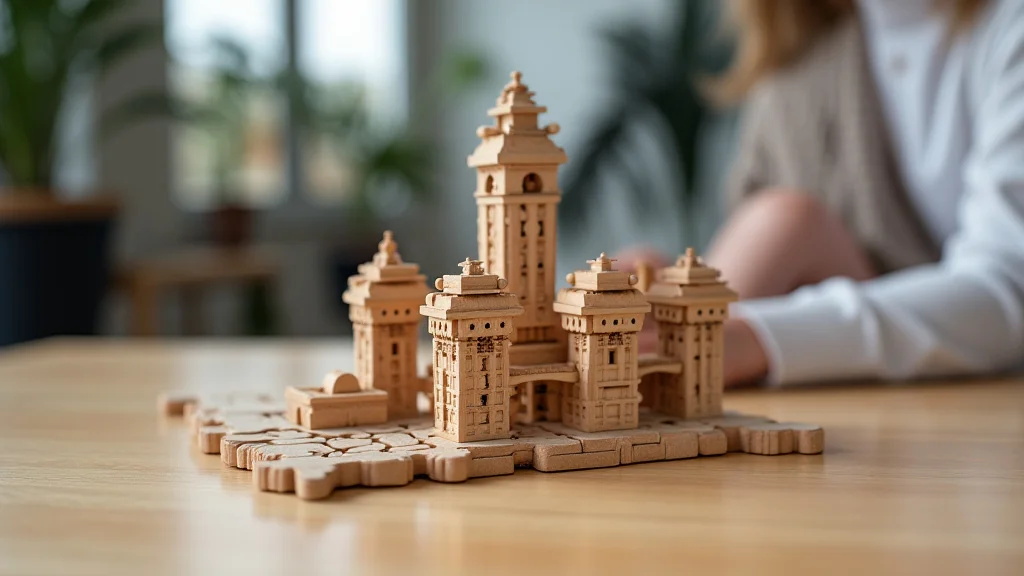
Remember that feeling of accomplishment after finishing a particularly challenging jigsaw puzzle? Now imagine that, but with gears, levers, and a satisfying click as pieces fit together. That’s the appeal of 3D mechanical puzzles for adults. We’ve all got a little inner child who loves to tinker, and these puzzles are the perfect outlet. This post explores the fascinating mechanics, benefits, and diverse range of these engaging puzzles. You’ll discover how they work, why they’re so popular, and which ones might be a perfect fit for your skill level. Get ready to explore the exciting hobby of 3D mechanical puzzles, which will boost your brainpower and provide hours of satisfying fun.
Key Takeaways
- Discover the intricate workings of 3D mechanical puzzles.
- Understand the cognitive benefits these puzzles offer.
- Learn about the diverse types and styles available.
- Find out tips for selecting the right puzzle for your level.
- Explore the materials and craftsmanship behind them.
- Gain insights into the history and evolution of mechanical puzzles.
Unveiling the Mechanics of 3D Mechanical Puzzles
At their core, 3D mechanical puzzles are three-dimensional models that require assembly, often without glue or adhesives. They utilize gears, cranks, levers, and other mechanical components that interlock to create movement and functionality. These puzzles range from simple models with a few dozen pieces to complex creations containing hundreds of components. The fun lies not only in the final product but in the process of putting it together. You’re not just assembling; you’re exploring how each part interacts with the others, learning about mechanical principles and appreciating the beauty of engineering. Building these puzzles gives a hands-on experience of physical interaction that keeps you engaged.
Gear Systems and Interlocking Components
The cornerstone of many 3D mechanical puzzles is the gear system. Gears are toothed wheels that mesh together, transmitting rotational motion. Different gear sizes result in varying speeds and torque. Smaller gears rotate faster, and larger gears provide more power. Levers, another important component, amplify force, allowing the user to overcome resistance or lift heavier objects. These systems are carefully designed to create a specific output, from simple rotation to complex movements. The interlocking aspect is critical. Pieces are precisely cut to fit together, often using dovetail joints, ensuring stability and a smooth operational process. The puzzles are constructed with precision, showcasing the beauty of the design process.
- Gear Ratios: The relationship between the size and number of teeth on meshing gears dictates the output speed and torque. A larger gear turning a smaller gear will increase the speed but reduce the torque.
- Leverage: Levers amplify force. A long lever can move a heavy object with less effort than a short lever.
- Cam Mechanisms: Cams are rotating discs or other shaped components that convert rotational motion into linear motion.
- Crank Mechanisms: Cranks convert rotational movement into linear motion, and vice versa.
Understanding gear ratios allows you to predict how quickly a mechanism will move or how much force it can generate. For example, in a puzzle that lifts a small platform, the gear ratio will affect how smoothly and easily the platform rises.
Think of the puzzle that uses a lever to open a hidden compartment. The placement of the fulcrum (the pivot point) will impact how much force is required. The ability to use levers allows for complex mechanical movements in small spaces.
A cam might lift a small figure or trigger a switch. These systems add an extra layer of complexity and allow for innovative and engaging designs.
Cranks allow for pushing and pulling motions in the mechanical puzzles, making the assembly more interesting.
Materials and Craftsmanship
The materials used in 3D mechanical puzzles vary, impacting the final product’s look, durability, and feel. Wood is a common choice, valued for its warmth, natural aesthetic, and ease of cutting and assembly. Laser-cut plywood is a favorite, producing precise parts that fit together with minimal effort. Metal puzzles often feature stainless steel or other alloys, resulting in a more industrial and durable feel. The craftsmanship also contributes to the puzzle’s appeal. Precise laser cutting, intricate designs, and smooth finishing demonstrate attention to detail and a commitment to quality. The quality of the materials and production plays a major role in the overall enjoyment of the puzzle, and also its longevity.
- Wood: Laser-cut plywood is a favorite due to its precision. It is also environmentally friendly.
- Metal: Often stainless steel or other alloys. Metal often gives a robust, industrial feel.
- Plastic: Some puzzles use high-quality plastics for certain components.
- Craftsmanship: Precise cutting, finishing, and attention to detail enhance the user experience.
Wood provides a classic feel and can be easily stained or painted. The smell of the wood is also pleasant to many.
Metal provides a more industrial and robust feel and can be used for more intricate designs. They are durable, and sometimes a bit more challenging to put together.
Plastic allows for intricate shapes and colors, and can be used to add detail to models. Plastic adds a modern touch.
The quality of the cutting, finishing, and packaging will impact the overall satisfaction. A well-crafted puzzle is always a pleasure to assemble.
Design Principles and Aesthetic Appeal
The design of 3D mechanical puzzles often balances functionality with visual appeal. Designers think about the user’s experience, providing clear instructions and intuitive assembly processes. The goal is to make the process engaging, and not frustrating. Aesthetics are also very important; many puzzles are designed to be beautiful objects that can be displayed after completion. The aesthetics will affect the whole experience of a puzzle and the satisfaction of building it. This combination of engineering and artistry makes these puzzles more than just toys; they are works of art that also provide hours of fun.
- Functionality: Clear instructions, intuitive assembly, and smooth operation are important.
- Aesthetics: Many puzzles are designed to be visually appealing, offering beautiful end products.
- Theme and Concept: Puzzles often follow themes, from classic vehicles to complex clock mechanisms.
- Interactivity: Engaging mechanisms that showcase the movement add to the fun.
A well-designed puzzle should be easy to follow, with each step making sense. This is essential for user engagement.
The appearance of the puzzle is important to a lot of people. It can be a reflection of craftsmanship.
The theme of the puzzle makes the whole experience immersive. It can be historical or futuristic.
Puzzles that incorporate interaction such as moving parts keep the user entertained. This will also create a more immersive experience.
Cognitive Benefits of Working with 3D Mechanical Puzzles
Beyond the fun, 3D mechanical puzzles offer several cognitive advantages. They’re like a workout for your brain, exercising different mental muscles and enhancing specific cognitive functions. Building a puzzle demands focus and attention, improving concentration and minimizing distractions. They foster problem-solving skills, requiring the user to explore, evaluate options, and devise strategies to accomplish the assembly. These puzzles also promote spatial reasoning, helping the user to visualize three-dimensional objects and how they interact. The ability to concentrate, problem-solve, and think spatially makes 3D mechanical puzzles for adults a fulfilling experience.
Improving Concentration and Focus
The assembly process demands complete focus. You must carefully read instructions, examine parts, and avoid distractions. This consistent attention to detail enhances your ability to concentrate, which can be useful in other areas of life. The need to maintain focus for long periods can improve your attention span and reduce the tendency to be distracted. The act of concentrating will create a feeling of calmness and peace. Building a puzzle can be a meditative activity, allowing the user to lose themselves in the task and quiet their inner world.
- Minimize Distractions: The need for a quiet environment helps in cultivating focus.
- Sustained Attention: The process requires sustained concentration throughout the assembly.
- Mental Endurance: Puzzles will improve mental endurance, helping you to stay focused even when facing difficulties.
- Improved Memory: Remembering steps and part configurations improves short-term memory.
The quiet and focused environment can help to improve attention span. Minimizing distractions will improve the overall assembly experience.
You can improve your ability to focus for an extended period of time. This will improve your ability to concentrate in any situation.
You can learn to maintain focus over long periods. This skill can be useful in any area of your life.
You can improve memory and make it easier to recall details. This can also increase short-term memory.
Enhancing Problem-Solving Skills
Each puzzle presents a unique challenge, forcing the user to develop effective strategies. You’ll encounter obstacles such as parts that don’t fit, unclear instructions, or unclear mechanisms. The process of overcoming these hurdles strengthens your problem-solving abilities. You learn to break down complex issues into smaller, manageable steps. You also learn to experiment, adapt, and refine your approach until you find the solution. The repeated cycles of challenges and solutions will create a feeling of accomplishment and increase your resilience when dealing with challenges.
- Breaking Down Problems: The need to dissect a complex problem into smaller parts.
- Strategic Thinking: Careful planning and assessing each step increases the ability to think ahead.
- Experimentation: You can learn to experiment with different approaches to find the best solutions.
- Logical Reasoning: The puzzles require understanding the relationship between the parts, which can lead to better logical reasoning skills.
You can learn to divide tasks into manageable steps. This technique can be applied to different aspects of your life.
You will learn to anticipate the implications of each action. This is useful in all areas of life.
The ability to adapt and refine your approach is important. You will become creative and resilient.
You can improve your logical thinking skills and enhance your decision-making abilities. This can also improve problem-solving.
Boosting Spatial Reasoning and Visualization
Spatial reasoning is the ability to visualize and manipulate objects in three dimensions. 3D mechanical puzzles are excellent tools for developing and improving this skill. You’ll need to envision how each piece connects with the others, how different mechanisms work together, and how the model will look when assembled. The process of rotating parts, assessing angles, and matching shapes helps sharpen your spatial abilities. The improved spatial understanding can be useful in fields like engineering, architecture, and even everyday activities like packing a car or assembling furniture. You will be able to more easily visualize three-dimensional shapes.
- Visualizing Relationships: The need to see how the pieces relate to each other in 3D space.
- Mental Rotation: Mentally rotating the parts to see if they fit in the correct places.
- Understanding Perspectives: Visualizing how an object looks from different angles to understand how it works.
- Pattern Recognition: Spotting patterns and understanding how the different pieces fit together to create the whole product.
You can learn to imagine how different components fit together, enhancing your 3D spatial skills.
You will learn to manipulate images mentally and improve your spatial visualization capabilities.
You can learn to analyze objects from various perspectives and improve your spatial understanding skills.
You can learn to identify patterns and develop improved spatial reasoning.
Diverse Types and Styles of Mechanical Puzzles
The 3D mechanical puzzle market offers a diverse range of styles, from simple models that take a few hours to complete, to complex designs that can consume days or even weeks. There’s a perfect puzzle for every interest and skill level. Whether you are interested in clocks, vehicles, or animals, there’s a model to suit your taste. Choosing the right puzzle depends on your personal preferences and the amount of time and effort you want to invest. These different types of puzzles are perfect for all, and the diversity of their style makes them enjoyable for everyone.
Clockwork Mechanisms
Clockwork mechanisms are a favorite among 3D puzzle enthusiasts. These models frequently replicate intricate clock functions, including gears, escapements, and pendulums. Assembling a clockwork puzzle will give you insight into the mechanics of timekeeping and can be a very engaging and rewarding experience. They often feature intricate designs and beautiful aesthetics, making them excellent display pieces once completed. The process involves assembling various components, carefully aligning gears, and fine-tuning mechanisms. These puzzles can range in complexity, with some models offering features like chimes or moving figures. Building a clockwork mechanism is a true challenge.
- Clockwork Gears: The primary components that transfer the mechanical movement.
- Escapements: These regulate the rate at which the gears move.
- Pendulums: Swing back and forth to maintain the timing of the clock.
- Aesthetic Design: Many models prioritize visual appeal.
The accurate arrangement of gears is essential for these puzzles. The ability to build them can provide a fulfilling experience.
Escapements help make the entire process very accurate, with proper alignment.
This will increase the accuracy and will also make the entire process more interesting.
These puzzles are often visually pleasing. This adds to the overall value of the puzzle.
Vehicles and Transportation
Vehicles, including cars, trains, airplanes, and ships, are a popular puzzle theme. These models often highlight the workings of engines, steering systems, and other mechanisms. The assembly process is very engaging. Assembling these puzzles helps you to explore the evolution of transportation and appreciate engineering skills. The models can range from simple cars with basic moving parts to complex train engines with detailed interior designs. They also often include various aesthetic features that will enhance their appeal. These puzzles are perfect for those who enjoy vehicles.
- Engines: You can assemble internal combustion engines, pistons, and other elements.
- Steering Systems: Steering wheels, linkages, and other components make the vehicle steer.
- Rolling Wheels: Wheels that spin, giving the illusion of motion.
- Detailed Designs: Some models incorporate intricate interior and exterior designs.
Assembling the engine can be the most challenging part of the entire process. This will also be the most fulfilling.
You will also learn how steering systems are created, and you can understand the way they work.
You will also enjoy the process of making these wheels roll on the surface.
The designs that replicate cars or trucks will enhance the enjoyment of the entire puzzle.
Animals and Nature-Themed Puzzles
Animal and nature-themed puzzles add a touch of whimsy and creativity to the hobby. These puzzles often depict various creatures, plants, and natural scenes. Building these puzzles gives a unique and immersive experience. The models often incorporate moving parts that add life to the scenes, such as flapping wings or swaying branches. They can provide an opportunity to explore the beauty and complexity of the natural world. These puzzles are a great way to appreciate nature, and they offer a fun and engaging activity for people who are interested in wildlife.
- Animal Anatomy: Some puzzles can showcase skeletons and muscles of animals.
- Natural Landscapes: Some models recreate trees, flowers, and natural environments.
- Moving Parts: The mechanisms can allow wings to flap or tails to wag.
- Educational Value: These puzzles provide an opportunity to learn about different types of animals and plants.
These puzzles are perfect for the people who are interested in anatomy and will enjoy them.
You can create a tranquil scene in your home with these kinds of puzzles.
The parts moving make the model more engaging and exciting. The movement makes the whole experience interactive.
This is a great chance to learn about natural life. This will be an educational experience, and it is also fun.
Selecting the Right Puzzle for Your Skill Level
Choosing the right 3D mechanical puzzle for adults depends on your skill level and experience. Beginning with easier models can help you to understand the basic mechanics and assembly processes, while more advanced puzzles offer a greater challenge. The packaging of most puzzles usually includes a difficulty rating. When selecting a puzzle, consider the number of pieces, the intricacy of the design, and the complexity of the mechanisms. Matching the puzzle to your skills helps you to have a positive experience and allows you to enjoy the process without becoming frustrated. This will ensure that the assembly process is both enjoyable and rewarding.
Beginner-Friendly Puzzles
For those new to the hobby, beginner-friendly puzzles offer a good place to start. These puzzles usually have fewer pieces, larger components, and simpler mechanisms, such as gears that easily mesh together. Clear instructions and illustrations will aid assembly. The focus is on a smooth and accessible experience, introducing you to the enjoyment of building mechanical puzzles. Starting with a less complex puzzle will allow you to build confidence and help you to build skills. This will make the puzzles more enjoyable.
- Few Pieces: Puzzles with fewer pieces are easy to assemble.
- Clear Instructions: Look for puzzles with easy-to-follow diagrams.
- Simple Mechanisms: Easy mechanisms ensure a fulfilling experience, with no frustration.
- Durable Materials: Choose models made of durable wood or metal.
A smaller number of parts will mean you complete your puzzles faster. It will be easier to manage and less overwhelming.
Clear instructions and diagrams are helpful and will help you to build your puzzle faster and more smoothly.
Simple mechanisms make the entire process easier and more fun. This will help you to build your skills and prepare you for a more complex challenge.
Durability will increase the likelihood of success and increase enjoyment of the entire process.
Intermediate Puzzles
Once you are confident with easier models, intermediate puzzles offer more complex challenges. These puzzles often include more pieces, intricate designs, and introduce you to more advanced mechanisms. This level offers a balance between challenge and satisfaction, allowing you to use your existing skills while exploring new ones. You will explore a deeper level of detail and mechanical operation. By selecting the right intermediate puzzle, you can create a more satisfying experience.
- Increased Complexity: They introduce more components.
- Intricate Designs: Models with detailed designs offer a good challenge.
- Advanced Mechanisms: Gears and levers add interest and excitement.
- Increased Time: Set aside more time for assembly.
You can expand your skill set with more complex puzzles.
More intricate and detailed designs add to the aesthetics and will also offer an engaging experience.
Intermediate models introduce more advanced features. This will provide new challenges and a rewarding experience.
Completing these puzzles requires more time and patience. It will also offer a sense of accomplishment.
Advanced Puzzles
For experienced puzzle enthusiasts, advanced puzzles offer some of the most complex challenges. These puzzles frequently feature a large number of pieces, extremely intricate designs, and very detailed mechanisms. The assembly requires a high level of precision, focus, and patience. You can experience the joy of completing a highly sophisticated mechanical creation. The complexity and attention to detail will ensure that these puzzles give a rewarding experience.
- Large Piece Count: Puzzles with many pieces will take more time and skill.
- Complex Designs: Models with intricate details will challenge your skills.
- Sophisticated Mechanisms: Advanced components will enhance interest.
- Precision and Patience: Detailed puzzles require increased focus.
A large number of parts will require more dedication and offer a rewarding experience when complete.
These complex designs will offer an aesthetic appeal. This will also showcase the creativity involved.
More sophisticated mechanics will increase the complexity. This is also a good opportunity to improve skills.
The entire assembly process requires precision. This will reward you with a sense of accomplishment.
Common Myths Debunked
Myth 1: 3D mechanical puzzles are only for engineers or those with technical experience.
In reality, anyone can enjoy these puzzles, regardless of their background. While some puzzles may have technical aspects, many are designed to be accessible to people of all skill levels. With clear instructions, step-by-step guidance, and a little patience, beginners can successfully assemble intricate models and learn about mechanics along the way. The process can create a sense of accomplishment for any person.
Myth 2: These puzzles are too difficult, and assembling them is frustrating.
While some puzzles are difficult, there are various options available for different skill levels. Many manufacturers offer beginner-friendly puzzles that provide a satisfying experience. By selecting a puzzle that matches your abilities and interests, you can avoid frustration. The experience can be fun and rewarding, and assembling these puzzles provides a great sense of achievement.
Myth 3: The puzzles are cheap and flimsy, and they break easily.
While the quality varies, many manufacturers create puzzles with durable materials, such as laser-cut wood and precision metal components. These materials are created to fit together precisely. The finished models are stable and able to withstand handling. Investing in higher-quality puzzles can result in products that last, allowing you to enjoy your creation for years. The long-term durability means you can display it or take it apart and reassemble it at a later time.
Myth 4: You need special tools or equipment to assemble them.
Most 3D mechanical puzzles come with everything you need. Many kits include all the parts and any necessary tools, like sandpaper or screwdrivers. You may want to invest in glue or other adhesives to create a robust model. Following the instructions and working carefully ensures a successful assembly. No specialized tools are required.
Myth 5: Assembling these puzzles is just a waste of time and has no real value.
This is far from the truth, as these puzzles give many benefits. These puzzles offer cognitive advantages, improving your concentration, problem-solving skills, and spatial reasoning. The experience also gives a creative outlet, and the process is entertaining and relaxing. From the joy of building a model to the feeling of accomplishment when it is complete, these puzzles are a valuable investment.
Frequently Asked Questions
Question: What materials are typically used in 3D mechanical puzzles?
Answer: Wood is a common choice, especially laser-cut plywood. Metal, such as stainless steel, is also used. Some puzzles include plastic components.
Question: How long does it usually take to assemble a 3D mechanical puzzle?
Answer: The assembly time varies greatly depending on the complexity of the puzzle. Beginners can take a few hours, while advanced puzzles can take several days or weeks.
Question: Are these puzzles suitable for children?
Answer: While some puzzles are designed for children, most 3D mechanical puzzles are designed for adults. They can be more challenging. It is important to check the recommended age for each puzzle.
Question: Where can I buy 3D mechanical puzzles?
Answer: These puzzles are available at hobby stores, online retailers (like Amazon), and specialty puzzle shops. Also check the manufacturer’s website.
Question: Do I need to use glue to assemble these puzzles?
Answer: Many puzzles don’t require glue, as the parts are designed to interlock. However, some models may suggest using glue for added stability.
Final Thoughts
3D mechanical puzzles for adults offer a perfect blend of mental stimulation and hands-on fun. From the satisfying click of a well-fitted gear to the intricate movements of a finished clockwork mechanism, these puzzles provide a fulfilling experience. They challenge your problem-solving skills, boost spatial reasoning, and help you focus your attention. The range of designs, from vehicles to animals to intricate clockwork, means there’s a puzzle that is a good fit for anyone. Embrace the challenge, explore the mechanics, and see what you can create. Take your time, enjoy the process, and take pride in your completed creation. The pleasure of building a puzzle, with the added benefit of expanding your mind, makes this a fulfilling hobby.
Leave a Reply