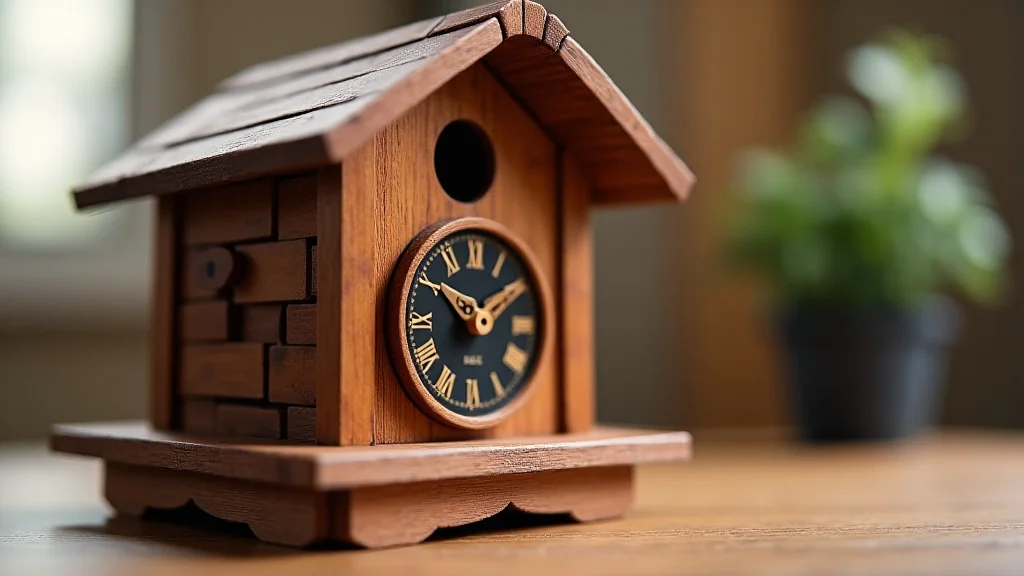
Remember that feeling of accomplishment after finishing a difficult jigsaw puzzle? Imagine that feeling multiplied, with the added satisfaction of building something truly unique. I recently stumbled upon a ROKR cuckoo clock mechanical 3d wooden puzzle and was immediately captivated. It looked challenging, intricate, and ultimately, rewarding. This post is for anyone curious about these amazing creations, from the beginner builder to the seasoned hobbyist. You will explore what makes these puzzles so special, how they function, and tips to ensure your building experience is successful. You will also get a deeper look at the ROKR cuckoo clock mechanical 3d wooden puzzle and the satisfaction of building one.
Key Takeaways
- Discover the intricate mechanics behind the ROKR cuckoo clock mechanical 3d wooden puzzle.
- Learn about the materials and tools needed for assembly.
- Find tips and tricks for a smoother building experience.
- Explore the unique features that make these puzzles stand out.
- Understand the historical context of cuckoo clocks.
- Appreciate the artistry and precision involved in these wooden puzzles.
The Allure of the ROKR Cuckoo Clock
The ROKR cuckoo clock mechanical 3d wooden puzzle offers a unique blend of artistry, engineering, and hands-on fun. It’s not just a puzzle; it’s an experience. Building one of these clocks is like taking a miniature course in mechanical engineering. You get to assemble gears, levers, and pendulums, watching them work together to tell time and chime the hours. The satisfying click of each piece fitting into place, the gradual emergence of a beautiful object, and the eventual ticking of the clock are truly gratifying. These puzzles are a way to disconnect from screens and connect with the joy of creation.
What Makes ROKR Puzzles Special
ROKR is a brand known for its commitment to detail and quality in its 3D wooden puzzles. Their designs are complex, innovative, and aesthetically pleasing. The use of laser-cut wood ensures precision and ease of assembly, reducing the frustration often associated with building models. ROKR’s puzzles are not just about the final product; they are about the process. Each piece is designed to fit perfectly, creating a seamless building experience. The company provides clear instructions and diagrams, making the construction of even the most complex models accessible to people of all skill levels. They offer a range of products, so there is something for everyone.
- High-Quality Materials: ROKR puzzles use premium, laser-cut wood, ensuring durability and precision. The wood is often sourced from sustainable forests, adding an eco-friendly element. This type of wood is easily worked, creating clean lines and smooth edges.
- Intricate Designs: ROKR puzzles feature complex designs with realistic mechanisms and decorative elements. The designs are not just aesthetically pleasing but also functional, adding to the puzzle’s play value. The level of detail in these designs is remarkable, with moving parts that mimic the real-life behavior of the clock. This realism is what attracts many builders.
- Detailed Instructions: Each ROKR puzzle comes with a comprehensive instruction manual that includes clear diagrams and step-by-step guidance. The manuals are designed to be easy to follow, even for beginners. They walk you through the assembly process, helping you avoid mistakes and ensure that all parts fit correctly. The instructions often include tips and tricks to make the building process easier.
- Educational Value: Building a ROKR puzzle can be an educational experience, helping you explore mechanical principles and learn about timekeeping. This can be especially valuable for children, as it fosters interest in STEM subjects. It requires critical thinking.
The laser-cutting process means that each part fits together accurately, and there is no need for glue or fasteners in some designs. This reduces assembly time and the need for specialized tools. This also makes it possible to create intricate designs that would be difficult to produce using traditional methods.
The complexity of the designs provides a satisfying challenge for builders of all skill levels. You can choose a puzzle based on your experience level and gradually work your way up to the more advanced models. The puzzles also often feature artistic elements. These details, like carved faces, and miniature decorations, enhance the appeal.
The instructions are presented in a visual format, with clear illustrations that correspond to each step. They provide a precise guide on how to put the puzzle together, making it easier for people with limited building experience. The instructions also explain the workings of the mechanisms, providing a bit of education.
It helps people learn the workings of gears, levers, and pendulums, allowing people to comprehend how these components collaborate to fulfill their functions. This type of hands-on learning improves spatial reasoning and the capacity to solve problems, thereby promoting creative thinking.
Mechanical Marvel: The Inner Workings of a Cuckoo Clock
At the heart of a ROKR cuckoo clock mechanical 3d wooden puzzle lies a fascinating interplay of mechanics. Understanding these workings is key to building and appreciating these intricate devices. From the swinging pendulum to the precise gear trains, each component plays a role in keeping time and operating the charming cuckoo bird. These clocks are essentially tiny, self-contained machines.
- The Pendulum: The pendulum is the timekeeper. Its rhythmic swing determines the clock’s accuracy. The length of the pendulum influences the rate at which the clock keeps time.
- Gear Trains: The gear trains are a series of interconnected gears that transfer power from the weights or springs to the hands and the cuckoo mechanism. The gear ratios determine the clock’s timekeeping and the frequency of the cuckoo call.
- Escapement Mechanism: The escapement mechanism releases the gears in precise intervals, allowing the clock to count seconds and minutes. This is a critical element because it links the pendulum and the gear train.
- The Cuckoo Mechanism: The cuckoo mechanism is activated by the clock’s timekeeping system, which allows the bird to emerge and call at regular intervals. This system is often driven by a separate set of gears.
The pendulum regulates the escapement mechanism. The escapement is the crucial component that converts the continuous motion of the gear train into discrete ticks, the time intervals.
Gear trains consist of a variety of gears that spin at different speeds. The gears work together in a sequence. This provides the force required to keep the clock functioning and its features operating. The gears reduce the energy provided by the weights. They also amplify the time-keeping and cuckoo-calling mechanisms.
The escapement mechanism typically consists of a ‘pallet’ that engages with the escape wheel. As the escape wheel turns, it releases the pallets, which causes the pendulum to swing back and forth. The escapement mechanism provides the power to move the hands and keep time.
The cuckoo mechanism is often triggered by a pin on the minute wheel that activates a lever. This lever then releases the cuckoo from its housing and strikes small bellows to produce the distinctive cuckoo call. The clock uses a set of gears to trigger the cuckoo at the right time.
Tools and Materials You’ll Need
Assembling a ROKR cuckoo clock mechanical 3d wooden puzzle is a journey that requires a few essential tools and some patience. While the kit contains most of the necessary components, having the right tools on hand will make the building process smoother and more enjoyable. The wood pieces are laser-cut. This ensures precision and ease of assembly.
- Cutting Mat: A self-healing cutting mat is crucial for protecting your work surface and providing a stable base for cutting. This prevents damage to both your work surface and the puzzle pieces. The mat should have a grid to make accurate measurements and cuts.
- Hobby Knife: A sharp hobby knife with a fine tip is essential for removing small tabs and trimming excess material. This ensures that the parts fit together perfectly. Keep extra blades on hand as the sharpness of the knife will make the job much easier.
- Sandpaper: Fine-grit sandpaper is needed to smooth rough edges and ensure a snug fit between parts. Sandpaper also helps to remove splinters and create a smooth finish. Fine-grit sandpaper is best to prevent removing too much material.
- Tweezers: Tweezers are handy for handling small parts, especially gears and springs. They help to grasp and position delicate components accurately. Consider investing in high-quality tweezers that offer a comfortable grip.
- Wood Glue (Optional): While many ROKR puzzles don’t require glue, having a small bottle of wood glue can be useful for reinforcing joints. This can also provide extra stability for specific components. Use it sparingly to avoid overflow.
A cutting mat is a must-have for people who work with ROKR puzzles. It serves as a protective surface, which prevents scratches, dents, and other damage to the work area. A quality cutting mat will last a long time and make it easier to complete your puzzles.
A hobby knife allows people to make clean and precise cuts. It is useful for removing small tabs and trimming excess material from the wooden pieces. Using a sharp knife will ensure that each part fits together accurately.
Sandpaper is used to make sure that the pieces fit properly and to take off any rough edges. Sanding is a good way to get rid of rough edges and make it easier to attach them to the frame. Having a variety of grit sandpaper will enable you to refine the cuts.
Tweezers are a helpful tool for picking up and positioning the tiny parts. They make it easier to manage delicate and hard-to-reach components, ensuring they’re correctly placed. Using quality tweezers makes the process more efficient.
Although glue is not always required for ROKR puzzles, a small bottle of wood glue can assist in securing some of the joints. This can add strength to the model. Use the glue carefully to avoid getting it on the parts.
Step-by-Step Building: Tips and Tricks
Successfully assembling a ROKR cuckoo clock mechanical 3d wooden puzzle requires following the instructions closely and having some patience. Here are a few tips to make the process more enjoyable and increase your chance of success. This process is rewarding when done methodically.
- Prepare Your Workspace: Before you start, clear a workspace. Good lighting is essential, as is a comfortable chair. A cutting mat and a container to hold your tools and spare parts are also helpful. Proper preparation sets the stage for a smooth process.
- Familiarize Yourself with the Instructions: Before you begin, take the time to look over the instruction manual. Identify the different sections, parts, and assembly steps. This will help you anticipate challenges. It allows you to plan your building strategy.
- Organize the Parts: Separate and organize the wooden pieces by number or type. Refer to the instruction manual to identify each part before assembly. This prevents confusion. It helps you keep track of your progress.
- Test Fit Before Gluing: Always test-fit the parts before applying glue. Make sure they align correctly and that there is a snug fit. This will help you to avoid mistakes and ensure a successful build.
- Take Breaks: Building a ROKR puzzle can be time-consuming, so take regular breaks. Step away from your workspace. This can help prevent eye strain and maintain your focus. Breaks can also help prevent mistakes.
A clean and organized work area improves concentration. Make sure there is adequate lighting so you can see all of the pieces. Ensure that your workspace has everything you need to start.
Spend some time reviewing the instruction manual to grasp the process. Recognize all the steps and learn where each part goes. This step will enable you to assemble the puzzle efficiently.
Organize all parts according to the instructions. This will make it easier to find the component. Then, it will enhance the assembly process. This will help to prevent losing track of parts.
Before using glue, check the fit of each piece. This helps you to identify potential problems. This way, you can resolve the issue before gluing. This will help to reduce errors.
Take time to rest and refresh. Then, you can return to the project with renewed focus. This reduces stress and improves your building experience.
Real-Life Example: Building a Clock
Let’s imagine you are building the ROKR cuckoo clock. You start by assembling the base. You then build the clock’s body. The laser-cut wood is of high quality, and the parts fit together perfectly. Initially, you place the components together, as instructed. The first few hours are spent carefully assembling the base. As you build, you carefully test each piece, making sure it aligns correctly. You make the minor adjustments necessary. After a day of work, you start building the clock’s body. The clock’s mechanics are the most challenging part. It takes several attempts to get the gears aligned. Eventually, the gears spin freely and the pendulum starts to swing. Finally, you carefully hang the weights and set the time.
- You begin the project by inspecting the provided parts.
- After you’ve checked the pieces, you begin the initial assembly steps.
- The gears and the cuckoo mechanism take the most time.
- After several attempts, everything works together seamlessly.
Historical Context: The Evolution of Cuckoo Clocks
The ROKR cuckoo clock mechanical 3d wooden puzzle pays homage to a rich history of horology. The history of cuckoo clocks dates back to the early 18th century in the Black Forest region of Germany. These clocks became popular throughout Europe and, eventually, the world. Their distinctive design and unique sound made them sought-after decorative pieces. The development of clockmaking is an interesting topic.
- Early Origins: The first cuckoo clocks were created in the Black Forest, Germany. The region’s woodworking tradition and the availability of resources created the perfect environment for these timepieces. These clocks used wood.
- Mechanical Innovations: The design of cuckoo clocks had evolved to improve accuracy and make timekeeping more convenient. Developments like the escapement mechanism and the pendulum were vital innovations. These developments improved their timekeeping.
- Global Spread: During the 19th and 20th centuries, cuckoo clocks became very popular. The clocks were exported across the world. The clocks were prized as decorative items.
- Modern Cuckoo Clocks: While traditional mechanical cuckoo clocks remain popular, electronic and battery-powered versions are available. These versions are created using contemporary technology while maintaining the distinctive look and functions of cuckoo clocks. The original clocks were made of wood.
The region’s isolation from the rest of the world enabled innovation in clockmaking. This fostered the growth of local craftsmanship. The initial designs were simple. The designs have advanced significantly.
One of the most noteworthy innovations was the escapement mechanism. This enabled the precise regulation of the clock’s movements. They contributed to the accuracy of the clocks. The cuckoo sound became an important feature.
Cuckoo clocks became a sought-after items. They became very fashionable in homes all across the globe. This era also saw the emergence of numerous clock-making businesses. These expanded the availability of cuckoo clocks.
Contemporary cuckoo clocks are built utilizing various materials and technical advances. These contemporary variations enable more precise and accessible clock designs. Electronic clocks offer features.
The Art of Timekeeping: Aesthetic Appeal
The ROKR cuckoo clock mechanical 3d wooden puzzle provides an experience. They are beautiful objects to display. They merge engineering with artistry. The details of the puzzle are stunning. You can create your own cuckoo clock. It’s an opportunity to create a piece of home decor.
- Intricate Design Elements: These puzzles often include intricately carved details, decorative elements, and beautiful finishes. These elements are designed to capture the eye. These details add a touch of elegance.
- Material Choices: The choice of wood and other materials also contributes to the aesthetic appeal. The wood grain, color, and finish are carefully selected. The wood is usually from sustainable forests.
- Functionality and Beauty: These clocks blend practical functionality with artistic charm. The combination of beautiful design and timekeeping ability makes them unique. These designs will capture attention.
The designs are very detailed. Each component adds to the overall aesthetic appeal of the completed clock. These intricate details often incorporate decorative elements. This adds value to the finished item.
The selection of materials is an important part of the artistic process. The look and feel of a cuckoo clock are enhanced by the wood grain and finish. Using premium, sustainable materials enhances the aesthetic appeal and enhances durability.
The blend of design and engineering is the core of their appeal. The finished clocks are useful and beautiful. You get to admire the work you’ve done, making them prized possessions.
Common Myths Debunked
Myth 1: Building ROKR Puzzles Requires a Lot of Experience
Building a ROKR cuckoo clock mechanical 3d wooden puzzle may seem difficult at first. Most ROKR puzzles are designed with the beginner in mind. The instructions and the laser-cut pieces ensure that the building process is approachable and easy to follow. It only requires a bit of patience and attention to detail, making it accessible to those with minimal experience.
Myth 2: These Puzzles Are Only for Adults
ROKR puzzles can be enjoyed by all ages. Building them is a great activity for families to share. Children can learn about mechanics and develop problem-solving skills, with the help of an adult. It’s a fun and beneficial activity. Some puzzles are created for beginners.
Myth 3: The Clocks Are Not Accurate
The timekeeping of a mechanical clock depends on several factors. The accuracy will depend on how the clock is assembled. Also, the quality of the components will impact timekeeping. If assembled properly, the clock should keep time. Ensure the pendulum swings freely to maintain accuracy.
Myth 4: ROKR Puzzles Are Expensive
While the cost of a ROKR cuckoo clock mechanical 3d wooden puzzle may be higher than a regular puzzle, the value lies in the quality of the materials. Also, you have the intricacy of the design and the educational benefit of the building process. Considering that, they offer great value. They are not as expensive as other hobby products.
Myth 5: It’s Impossible to Fix Broken Parts
While some repairs may require specialized skills, ROKR puzzles are designed for ease of maintenance. Replacing damaged components is often possible. Many users find that it is possible to use wood glue to fix parts.
Frequently Asked Questions
Question: How long does it take to build a ROKR cuckoo clock?
Answer: Building time varies depending on the complexity of the puzzle, but most clocks take between 10-20 hours to complete.
Question: What happens if I make a mistake during assembly?
Answer: Don’t worry! Review the instructions carefully. Then, check all parts for alignment. If you make a mistake, you can sometimes detach and try again.
Question: What kind of glue should I use?
Answer: Most of the ROKR cuckoo clock mechanical 3d wooden puzzle pieces fit together without glue. However, wood glue can be used to provide additional stability.
Question: Are ROKR puzzles suitable for children?
Answer: ROKR puzzles are suitable for children, with parental guidance. Some models are more appropriate for younger builders.
Question: What if the clock doesn’t work after assembly?
Answer: Review all instructions. Make sure that all components are connected correctly. If it still doesn’t work, contact customer service.
Final Thoughts
The ROKR cuckoo clock mechanical 3d wooden puzzle offers a satisfying blend of creativity, engineering, and hands-on fun. From the initial inspection of the laser-cut wooden pieces to the moment the pendulum starts swinging, the building experience is engaging and educational. You’ve explored the inner workings of the clock, the tools, the tips, and the historical context. Building a ROKR puzzle can be a fantastic way to develop your manual dexterity, learn about timekeeping, and experience the satisfaction of creating something beautiful and functional. The journey is the real reward here. With patience, the right tools, and a little bit of time, you can create your own cuckoo clock. So, find a project, follow the instructions, and enjoy the adventure. The ticking of your own handcrafted cuckoo clock will be a rewarding experience.
Leave a Reply