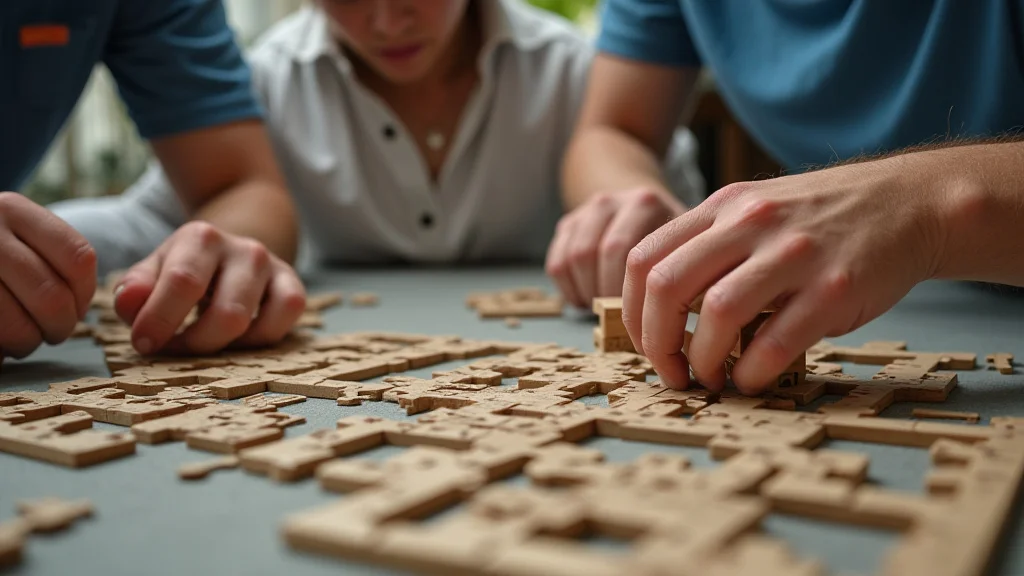
Remember that feeling of accomplishment when you finally solved that Rubik’s Cube? Or maybe you were endlessly twisting and turning, completely stumped? The allure of mechanical puzzles is undeniable. These brain-teasing contraptions have captivated people for centuries, offering a satisfying blend of challenge and reward. This post will explore different types of mechanical puzzles, how they work, and what makes them so enjoyable. You’ll also discover tips and strategies to help you tackle these delightful dilemmas. By the end, you’ll be ready to pick up a puzzle and put your mind to the test!
Key Takeaways
- Discover the history and various types of mechanical puzzles.
- Learn about the mechanisms and principles behind these puzzles.
- Understand the mental benefits of engaging with mechanical puzzles.
- Get practical strategies and tips for solving different puzzle types.
- Explore the materials and craftsmanship involved in creating puzzles.
- Find recommendations for popular and engaging mechanical puzzles.
A Look at Mechanical Puzzles
Mechanical puzzles have been around for a long time, evolving from simple wooden toys to complex metal contraptions. They represent a unique blend of artistry, engineering, and problem-solving. These puzzles challenge your spatial reasoning, logical thinking, and fine motor skills. From ancient Chinese tangrams to modern puzzle boxes, the variations are truly impressive.
A Brief History
The history of mechanical puzzles dates back centuries. Some of the earliest examples can be traced to ancient Greece and China. Early puzzles often involved hidden compartments and secret mechanisms. These were not just for entertainment; they served as intellectual exercises. They tested the skills of those who attempted to solve them. As technology advanced, so did the complexity of these puzzles. They became increasingly intricate, using different materials and designs.
-
Early examples of puzzles include the Stomachion, a puzzle attributed to Archimedes, and various Chinese puzzles that utilized wood. These were often created as intellectual games.
The Stomachion, a form of a tangram, challenges people to form different shapes from a set of pieces. Solving this puzzle stimulates the brain, improving shape recognition and problem-solving skills.
-
The 18th and 19th centuries saw a boom in puzzle popularity, especially in Europe, with the development of intricate puzzle locks and trick boxes. These were favored by royalty and the wealthy class.
Puzzle locks often featured hidden mechanisms. Opening these locks required careful manipulation of their components. This required a keen sense of observation and a good understanding of mechanics.
-
The 20th and 21st centuries have witnessed an explosion of puzzle design, ranging from the Rubik’s Cube to intricate metal puzzles. This boom has been supported by advancements in material science and manufacturing methods.
The Rubik’s Cube alone has sold hundreds of millions of units worldwide, showing the immense appeal of these intellectual challenges. These puzzles provide a continuous learning experience and a constant source of amusement.
Different Types of Mechanical Puzzles
The world of mechanical puzzles is incredibly diverse. Different puzzles cater to different skill levels and preferences. Each type has its own unique set of challenges and mechanics. They provide varying degrees of difficulty, so there’s always something for everyone.
-
Disentanglement Puzzles: These puzzles involve separating two or more intertwined pieces. The goal is to separate the pieces without breaking or forcing them. This type of puzzle is often made of metal or wood.
These puzzles require careful manipulation and understanding of how the pieces interlock. Success hinges on a thoughtful approach. The goal is to identify the crucial steps needed to separate the objects.
-
Assembly Puzzles: These puzzles require you to assemble several pieces to form a specific shape or object. These can range from simple wooden blocks to complex, multi-piece constructions.
Examples include the Soma Cube and tangrams. Assembly puzzles are good for visualizing shapes and understanding spatial relationships. They can boost spatial reasoning skills and improve cognitive functions.
-
Sequential Movement Puzzles: These puzzles involve a series of steps to achieve a specific goal. This often involves moving pieces or objects within a confined space.
The Rubik’s Cube is a prime example, requiring a sequence of turns to align the colors. Other examples include sliding block puzzles and peg solitaire. Success in these puzzles hinges on sequence and logic.
-
Packing Puzzles: Packing puzzles challenge you to fit all the pieces into a given space. These puzzles often have a fixed boundary.
These puzzles test your spatial reasoning abilities. They will require thinking about how best to arrange the pieces to fill the space. They often involve non-intuitive solutions.
-
Trick Locks and Puzzle Boxes: These items are designed to conceal something. They require a sequence of moves to unlock or reveal the contents.
These require discovering a series of hidden mechanisms. These puzzles may include secret compartments. They are often crafted with precision. These puzzles will challenge your problem-solving skills.
Understanding How Mechanical Puzzles Work
At their core, mechanical puzzles rely on fundamental principles of physics and mechanics. From the simplest interlocking pieces to the most complex gears and levers, each puzzle has a specific set of rules. The puzzle’s design and mechanics often provide clues about its solution.
Principles of Mechanics
Mechanical puzzles operate based on basic principles, such as leverage, friction, and the transfer of force. These forces drive the mechanisms within the puzzles. Understanding these principles is key to solving the puzzles.
-
Leverage: Leverage involves using a lever to amplify force. This allows you to move heavy objects with less effort.
A simple lever amplifies force. Levers are used in many puzzles, allowing you to move or manipulate components.
-
Friction: Friction resists motion between two surfaces. This can be a factor in many puzzles. Some puzzles will involve overcoming friction.
Friction can be both a hindrance and a tool. It prevents pieces from sliding without control. Careful design is required to manage friction.
-
Gears: Gears are toothed wheels that transmit rotational motion. Gears allow you to change the speed or direction of motion.
Gears are common in mechanical puzzles. They allow for intricate movements and a variety of functional changes. They increase the degree of complexity.
-
Cams: Cams are rotating components that transform rotational motion into linear motion. They help to create specific movements.
Cams are useful in creating intricate movements and actions. They also often allow for hidden functions and operations.
Materials and Construction
The materials used in mechanical puzzles influence their durability and aesthetic appeal. Wood, metal, and plastic are all used. Each material offers its own characteristics regarding the puzzle’s function, feel, and appearance.
-
Wood: Wooden puzzles are often crafted with intricate detail, using techniques like interlocking joinery and precision cutting. They have a classic look.
Wood is often chosen for its warmth and ease of manipulation. Wooden puzzles can vary greatly in complexity.
-
Metal: Metal puzzles often involve intricate mechanisms and precise tolerances. They offer a more robust feel.
Metal provides a different aesthetic and greater precision. Metal puzzles can provide a higher degree of complexity.
-
Plastic: Plastic is frequently used in modern puzzles. It is cost-effective and allows for a wide range of designs and colors.
Plastic puzzles are also durable and can be mass-produced. They offer an array of design options.
-
Craftsmanship: The level of craftsmanship has a direct influence on a puzzle’s quality. This includes the precision of the cuts and the finish.
High-quality puzzles demonstrate a commitment to precision. They provide a more satisfying solving experience.
The Mental Benefits of Mechanical Puzzles
Solving mechanical puzzles is more than just a pastime; it’s a valuable form of mental exercise. It boosts cognitive functions. They improve critical thinking skills. These activities also provide a fun way to improve your brain health.
Cognitive Skills
Engaging with mechanical puzzles actively stimulates several brain functions. It encourages analytical thinking. These puzzles challenge your problem-solving capabilities. These activities can boost your overall brain health.
-
Problem-Solving: Puzzles require you to analyze a situation, identify patterns, and find solutions. They will also improve your ability to devise and test solutions.
Mechanical puzzles strengthen the ability to approach complex problems. They involve analyzing, planning, and executing solutions.
-
Spatial Reasoning: Many puzzles depend on your ability to visualize and manipulate objects in 3D space. They help to develop your visualization skills.
Spatial reasoning skills are crucial for many types of puzzles. It involves recognizing shapes and seeing how pieces fit together.
-
Memory and Focus: Solving puzzles requires you to retain information. Puzzles may require you to remember steps and develop a plan.
Puzzles improve your ability to concentrate. This skill is critical for any intellectual task. They require sustained attention.
-
Logical Thinking: Puzzles help you to follow logical sequences. They develop your skills in deductive reasoning.
Mechanical puzzles often provide step-by-step logic. This type of practice can improve your critical thinking skills.
Stress Relief and Relaxation
Beyond their cognitive benefits, mechanical puzzles offer a way to destress. They provide a focused activity that can help reduce anxiety. They can promote relaxation.
-
Mindfulness: The concentrated effort involved in solving a puzzle can act as a form of mindfulness. This can lead to increased well-being.
Focusing on a puzzle can help you forget about distractions. This is a very beneficial aspect of puzzles.
-
Reduced Anxiety: Engaging in a puzzle provides a welcome distraction from worries. This helps to reduce anxiety.
Solving puzzles can lower stress levels. It creates a sense of accomplishment.
-
Improved Mood: Successfully completing a puzzle offers a sense of accomplishment. This can boost your mood.
Finishing a puzzle can be rewarding. It offers a natural release of feel-good chemicals in your brain.
Strategies for Solving Mechanical Puzzles
While some people seem to have a natural talent for solving puzzles, anyone can improve their skills. Developing strategic approaches and acquiring the right techniques will take you from a novice to a puzzle solver.
General Tips
Regardless of the type of puzzle, a few general tips can help you get started. Developing a strategy can make solving a puzzle more manageable. Using a methodical approach will increase your chances of success.
-
Start by examining the puzzle carefully. Take the time to understand its mechanism. Identify the parts and how they interact with each other.
Observation is key. This initial inspection can give you valuable clues.
-
Break down the problem into smaller, more manageable steps. This can make the puzzle seem less overwhelming.
This approach allows you to focus on the key components. It can greatly simplify the process.
-
Take notes and make sketches as you work. This can help you keep track of your progress. This will prevent you from repeating actions.
Documenting your steps allows you to look back and trace your actions. This is especially helpful in complex puzzles.
-
Don’t be afraid to experiment. Try different approaches and see what works. Persistence is key to solving mechanical puzzles.
Trial and error is a valid method. Don’t worry if your initial attempts fail.
Puzzle-Specific Techniques
Different types of puzzles call for different strategies. Knowing the right approach can make a huge difference in your solving time and the likelihood of success.
-
For Disentanglement Puzzles: Carefully examine how the pieces are interlocked. Pay attention to how the pieces move. Try to identify the sequence of actions needed to separate them.
Observe the key contact points. This will help you identify the areas of movement.
-
For Assembly Puzzles: Analyze the pieces and the overall shape. Decide which pieces must go where. Start with a few crucial pieces.
Visualize the final shape. It will make the process more manageable.
-
For Sequential Movement Puzzles: Identify the goal. Plan the sequence. Break down the sequence.
Start with the initial setup and the end goal. This will help you map out the steps.
-
For Packing Puzzles: Experiment with different arrangements. Try to fit the pieces in a way that will utilize all of the space.
Experimentation is critical. Be creative in your approach.
-
For Trick Locks and Puzzle Boxes: Examine the box carefully. Look for hidden buttons, secret compartments, and special instructions.
Take note of the overall construction. This approach will reveal the clues needed for success.
Popular Mechanical Puzzles and Recommendations
The variety of mechanical puzzles available is extensive, and each offers a unique challenge. Here are some popular options and some that will make a great starting point, categorized by type, with a few notes on why they’re popular. Choosing the right puzzle depends on your interests and skill level.
Disentanglement Puzzles
Disentanglement puzzles are the simplest of the puzzles. They are a good starting point for beginners. They come in many sizes and levels of difficulty.
-
The Chinese Ring Puzzle (also known as the “Nine Rings”): This classic puzzle involves removing a ring from a loop. The solution involves a series of very specific steps.
This puzzle is deceptively simple. It provides a rewarding test of logical thinking.
-
Metal Wire Puzzles: These puzzles involve separating two pieces of metal wire. They range in difficulty.
Metal wire puzzles are good for developing patience and understanding spatial relationships.
Assembly Puzzles
Assembly puzzles are the second type of puzzles. They offer a good opportunity to develop visualization skills. They are also available at different levels of complexity.
-
Soma Cube: The Soma Cube is a 3D puzzle made up of seven pieces. It can be formed into various shapes.
It’s excellent for improving spatial reasoning.
-
Wooden Burr Puzzles: These puzzles involve fitting multiple interlocking wooden pieces together to form a solid shape. The design ranges from easy to complex.
Wooden burr puzzles provide a hands-on learning experience.
Sequential Movement Puzzles
These puzzles offer a great mental workout. They often present a familiar challenge. They are often a good starting point for people who want to understand these puzzles.
-
The Rubik’s Cube: This popular puzzle needs no introduction. It is one of the most recognizable puzzles in the world.
This puzzle improves your spatial reasoning. It also increases your ability to focus.
-
Sliding Block Puzzles: These puzzles require moving blocks in a confined space. You have to move them to reach the goal.
Sliding block puzzles are good for developing planning skills and strategic thinking.
Common Myths Debunked
Many misconceptions surround mechanical puzzles. These myths can create a barrier for people to enjoy these challenges. The facts will help to address these misunderstandings.
Myth 1: Mechanical Puzzles Are Just for Geniuses
The reality is that anyone can enjoy and benefit from mechanical puzzles. While some puzzles can be extremely challenging, a wide range of puzzles are specifically designed for beginners and intermediate solvers. The key is to start with simpler puzzles and work your way up. With practice and persistence, anyone can develop the skills needed to solve increasingly complex puzzles.
Myth 2: Solving Puzzles Requires Innate Talent
Solving mechanical puzzles is more about technique and practice than natural ability. While some people may have a natural aptitude for spatial reasoning, anyone can learn the skills needed to solve puzzles. Developing problem-solving skills is similar to learning a new skill. With practice and persistence, your skills will improve over time.
Myth 3: Puzzles Are a Waste of Time
Mechanical puzzles offer many cognitive and psychological benefits. While they can be a leisure activity, they provide a valuable workout for your brain. Playing can improve memory, focus, and strategic thinking. Additionally, solving puzzles can be a relaxing and meditative activity that can help to reduce stress and improve your mood.
Myth 4: Complex Puzzles Are Too Difficult
Many complex puzzles come with detailed instructions or online resources to help you. These are also designed to be broken down into steps. You can develop your skills to handle the more complex puzzles. Start with easier puzzles and then work your way up to more difficult ones.
Myth 5: Puzzles Are Only for Children
Mechanical puzzles have a wide appeal for people of all ages. Many of the puzzles are also designed for adults. They are great tools for improving brain health. They will improve cognitive skills and provide opportunities to learn and develop.
Frequently Asked Questions
Question: How do I know where to start?
Answer: Begin with puzzles that match your skill level. Look for puzzles marked as “beginner” or “easy.” There are many online resources and reviews that offer advice.
Question: What do I do if I get stuck?
Answer: Take a break and come back to the puzzle later. There are many walkthroughs and guides online that can help you.
Question: Are mechanical puzzles good for children?
Answer: Yes, mechanical puzzles provide many educational benefits. They will help children develop problem-solving and critical thinking skills.
Question: What materials are used to make mechanical puzzles?
Answer: Common materials include wood, metal, and plastic. The choice of materials affects the puzzle’s complexity, durability, and appearance.
Question: How can I improve my puzzle-solving skills?
Answer: Practice regularly. Try different puzzle types, and don’t be afraid to try out different strategies. The more you play, the better you will get.
Final Thoughts
Mechanical puzzles provide a fantastic and engaging way to challenge your mind. These puzzles have a wide appeal. Solving these challenges can be incredibly rewarding. You have seen how these puzzles work, from the basic principles of mechanics to their different types. Now is the time to explore and start solving! There is a puzzle for every interest. Whether you choose to try a classic Rubik’s Cube or one of the many other options, the mental benefits are undeniable. With patience and persistence, anyone can enjoy the satisfaction of completing these fun and stimulating challenges. So go ahead, pick a puzzle, and discover the joy of the mechanical puzzle experience!
Leave a Reply