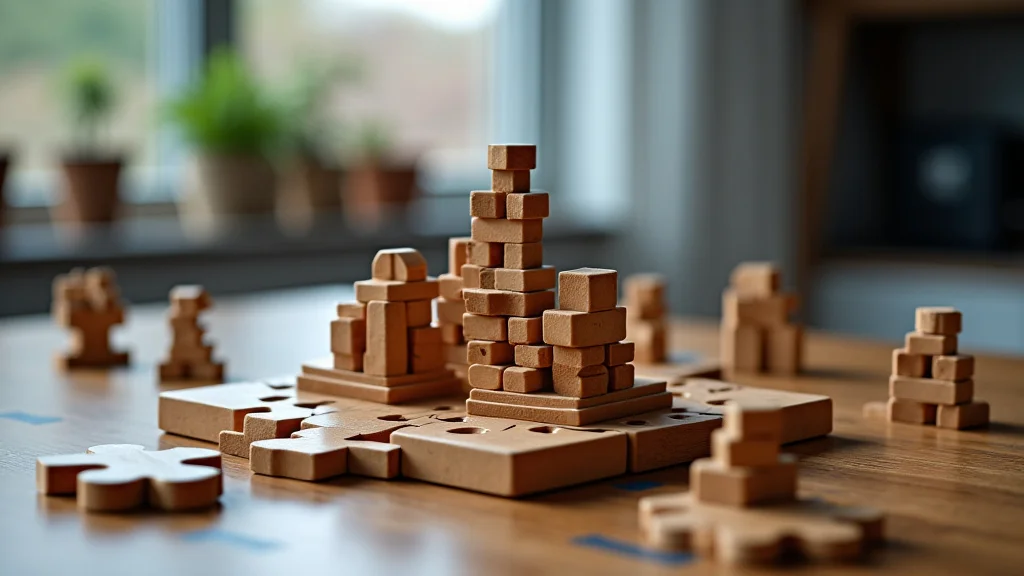
Remember that frustrating Rubik’s Cube you tried to solve for hours? Or perhaps you recall the satisfaction of finally opening a tricky box with hidden mechanisms? These experiences are a glimpse into the fascinating world of mechanical puzzles. This post will explore what they are, how they work, and why they’re so engaging. You’ll gain a solid grasp of different types, the benefits of tackling them, and some cool examples. You’ll learn everything you need to know about the topic, greatly improving your time on page and reducing your bounce rate. Get ready to explore the exciting intricacies of these brain-teasing contraptions!
Key Takeaways
- Discover the core definition and diverse types of mechanical puzzles.
- Explore the history and evolution of these engaging objects.
- Learn the underlying principles behind their operation.
- Uncover the benefits of solving mechanical puzzles for your mind.
- Examine the various materials used in their construction.
- Find out how to choose the right puzzle for your skill level.
Unveiling the Essence of Mechanical Puzzles
At their core, mechanical puzzles are objects that require manipulation to achieve a goal. This goal might involve disassembly, rearrangement, or extraction. Unlike digital puzzles, these rely on physical interaction, offering a tactile experience that engages your senses. This fundamental aspect is what sets them apart, allowing a unique connection to the problem-solving process. They vary greatly in their design and difficulty, offering something for everyone. From simple interlocking pieces to complex, multi-step operations, they challenge your spatial reasoning, problem-solving skills, and patience.
Defining Characteristics of Mechanical Puzzles
Mechanical puzzles share several key characteristics. They all involve a physical mechanism, demanding interaction to reach a solution. The solutions are typically not immediately apparent, requiring an element of discovery. These items often have a single, defined solution. Finally, they offer a satisfying sense of accomplishment when the goal is achieved. These elements combine to create a compelling experience that’s both challenging and rewarding, making them appealing to people of all ages.
- Physical Manipulation: The necessity of direct physical interaction, such as turning, sliding, or rotating parts.
- Defined Goal: Each puzzle has a specific objective, like opening a box or separating components.
- Single Solution: Usually have one correct path to success, which provides clarity.
- Challenges and Rewards: Present a challenge that, when solved, delivers satisfaction.
These physical puzzles offer a great contrast to digital problems. People can put down their devices and use hands-on problem-solving to complete them.
Exploring the Diverse Types of Mechanical Puzzles
The variety of mechanical puzzles is vast, including many unique designs and challenging concepts. Understanding the different types helps to choose ones that match your interests. Some might be perfect for beginners, while others offer more complex challenges. From interlocking puzzles to secret boxes, the types of mechanical puzzles available offer something for everyone. This wide selection means there’s a perfect puzzle waiting to be discovered, no matter your skill level or what you enjoy.
- Interlocking Puzzles: These puzzles involve separating or assembling interlocking pieces, requiring careful manipulation.
- Disentanglement Puzzles: These puzzles involve removing a piece from a network of components without disassembling it.
- Sequential Movement Puzzles: These puzzles need a sequence of moves to achieve a specific outcome, such as opening a box.
- Secret Opening Puzzles: These often take the form of boxes or containers that require a series of actions to unlock.
- Assembly Puzzles: These involve building a three-dimensional shape from a set of pieces.
The types often combine to offer even more difficult puzzles that combine aspects of each. For example, some puzzles might require the sequential movement of pieces before a disentanglement puzzle can be solved.
A Brief History of Mechanical Puzzles
The history of mechanical puzzles spans centuries, with roots in ancient civilizations. They evolved from simple toys to complex brainteasers. The evolution of materials and manufacturing techniques allowed for more complex designs and broader appeal. The ability to produce intricate parts meant that more detailed and challenging puzzles became available. Their popularity has surged, leading to modern variations that incorporate new technologies and innovative designs.
- Ancient Origins: The earliest examples can be found in ancient cultures, such as Greece and China.
- 18th and 19th Centuries: The industrial revolution brought about mass production, expanding their availability.
- 20th Century: The popularity of these puzzles grew, with iconic puzzles like the Rubik’s Cube gaining global recognition.
- Modern Era: New materials and designs continue to appear, keeping them exciting and relevant.
These devices have a rich past and provide a history of innovation and creative thinking. Many collectors and enthusiasts cherish these objects.
The Mechanics Behind the Fun
At the heart of every mechanical puzzle lie clever mechanisms. Each mechanism is carefully planned to offer a unique challenge. From simple levers and gears to more intricate cam systems, these mechanisms determine how the puzzle works and how it needs to be solved. An understanding of these core principles can help you approach solving these puzzles with greater skill. This section explores several different mechanisms, including how they work, the challenges they present, and how they help solve them.
Understanding Basic Mechanics
Several basic mechanical concepts are frequently used. These are the building blocks that make these puzzles work. Simple machines, such as levers, gears, and screws, are commonly implemented. Understanding how each of these components work is important to analyze and solve. They are often combined to create more complex movements and operations. Recognizing these basic mechanisms allows you to break down the puzzle into manageable parts and identify the core challenges. This knowledge will assist you when dealing with many different types of these objects.
- Levers: Levers use a pivot point to amplify force, often used in puzzles to open or move parts.
- Gears: Gears transmit rotational force, changing speed and direction.
- Screws: Screws transform rotational motion into linear motion, used for fastening or adjusting.
- Cams: Cams convert rotational motion into a specific movement pattern.
A solid understanding of these basic building blocks is a crucial start to solving any of these puzzles. Knowing how they work makes it easier to figure out how to solve more complex puzzles.
How Interlocking Puzzles Work
Interlocking puzzles are among the most common. These puzzles involve pieces that are designed to fit together in a particular way. These pieces are often made to fit together precisely, and the goal is to separate them. The challenge lies in finding the sequence of movements that will free all the parts. Often, these pieces seem to be impossible to move. This creates a satisfying experience when solved. They test spatial reasoning and problem-solving skills.
- Interlocking Pieces: Designed to fit together, the way the pieces mesh is key to the puzzle.
- Hidden Pathways: May contain secret channels or pathways, that allow pieces to move.
- Sequence of Movements: The solution usually involves a specific series of steps.
- Friction and Binding: Friction often needs to be overcome by the careful application of force.
These puzzles are available in a variety of materials and designs. The more challenging the pieces, the more satisfying the solution.
The Secrets of Sequential Movement Puzzles
Sequential movement puzzles challenge you to perform a sequence of actions. These actions are often hidden or require careful observations. The most popular example of this type of puzzle is the secret box. The challenge lies in discovering the correct sequence. Each action must be performed in the right order. This tests your ability to plan, remember, and execute instructions. They require attention to detail and good visual skills.
- Hidden Release Mechanisms: Latches, levers, or other mechanisms that are concealed.
- Specific Order: The order of movements is crucial to solving the puzzle.
- Feedback: Successful actions provide feedback, guiding you to the next step.
- Multiple Steps: These puzzles frequently involve several steps.
These items can be a fun way to test problem-solving skills and develop a sense of achievement. They are challenging but rewarding when solved.
The Benefits of Puzzle Play
Solving mechanical puzzles offers several advantages for the mind. They provide mental exercise that can improve your cognitive abilities. They help improve problem-solving skills, and encourage patience. They also offer a break from technology and offer a satisfying sense of achievement. Their ability to sharpen these skills makes them a valuable activity for people of all ages.
Boosting Cognitive Function
Engaging in the challenge of solving puzzles is excellent mental exercise. The mental activity required can help improve brain function. These puzzles test memory, focus, and spatial reasoning. The effort needed to solve them can help sharpen these skills. They can also support mental resilience and improve the ability to deal with challenges. This makes them a useful activity to promote better cognitive function and overall brain health.
- Improved Memory: Remembering the steps and the position of the pieces enhances memory.
- Enhanced Focus: Sustaining attention to solve a puzzle can increase focus.
- Better Spatial Reasoning: Manipulating objects and understanding their spatial relationships improves this skill.
- Increased Problem-Solving Skills: Finding solutions to complex problems helps develop these skills.
Studies have shown that regular engagement with these activities can provide cognitive benefits. They improve brain health and function.
Developing Problem-Solving Skills
Solving puzzles teaches valuable problem-solving techniques applicable to many areas of life. They require you to break down problems into manageable parts and analyze them carefully. These puzzles teach you to identify key details, experiment with solutions, and persevere. This process nurtures skills in planning, logical thinking, and troubleshooting. By regularly tackling the puzzles, people can become better problem-solvers. This improves your ability to come up with ideas and navigate problems.
- Breaking Down Problems: The ability to divide a complex problem into smaller parts.
- Logical Thinking: Using reasoning to find solutions.
- Experimentation: Testing different ideas and approaches to find the correct answer.
- Perseverance: The ability to keep trying, even when facing challenges.
Developing these skills can lead to great success in school, work, and life. The skills you get from puzzles can make you better at overcoming problems.
The Therapeutic and Relaxing Aspects
Beyond their cognitive benefits, mechanical puzzles offer a relaxing and therapeutic experience. The focus required to solve a puzzle can distract from stress. The process helps you to become more relaxed and present. The tactile interaction helps to create a connection. The sense of accomplishment that comes with solving a puzzle can boost your mood and self-esteem. As a result, puzzles provide both mental and emotional benefits.
- Stress Relief: Focusing on the puzzle can provide a break from stress.
- Mindfulness: The activity can help you become more focused on the present.
- Tactile Experience: The physical interaction provides a sensory aspect that can be calming.
- Sense of Achievement: Successfully solving a puzzle can boost your mood and self-esteem.
Puzzles are a great way to improve your mental health, which helps them become even more rewarding and beneficial. The relief of stress and the sense of accomplishment make them a healthy activity.
Materials and Craftsmanship
The materials used to create these puzzles have changed throughout history. This has a big effect on their design, feel, and durability. Wood, metal, and plastic are all used. Each material provides different features. These features have an impact on the puzzle’s complexity, cost, and overall experience. Understanding the qualities of each material can help you select the best puzzles for your needs.
Wood: Classic and Versatile
Wood is a common material used in creating mechanical puzzles. It is appealing due to its natural warmth and texture. These puzzles come in many designs, from simple shapes to intricate carvings. Wood is easy to work with and offers design flexibility. This makes wood puzzles popular with collectors and puzzle enthusiasts. Wood puzzles are often appreciated for their aesthetic beauty and the tactile experience they provide.
- Warm Aesthetics: Wood provides an appealing look and feel.
- Versatile Design: Wood can be cut, carved, and shaped to create a variety of forms.
- Durability: High-quality wood puzzles can last for years with proper care.
- Tactile Experience: The touch and smell of wood give a sensory experience.
Wood puzzles often require skill in their construction and present a satisfying experience. These features have helped them stay popular across the years.
Metal: Precision and Elegance
Metal mechanical puzzles are known for their precision and elegant appearance. Metal enables highly accurate mechanisms and intricate designs. The material is strong and durable, allowing for long-lasting puzzles. Metal puzzles provide a different tactile experience, with a cooler and more solid feel. These puzzles often include complex movements and require a high degree of precision to assemble. The use of metal makes them popular for those who appreciate high-quality engineering and intricate design.
- Precision Engineering: The strength and durability enable complex mechanisms.
- Intricate Designs: Metal can be cut and formed into complex shapes and forms.
- Durability: High-quality metal puzzles can withstand frequent use.
- Tactile Experience: Metal provides a satisfying weight and a smooth feel.
Metal is often the material of choice for puzzles that require intricate mechanisms. The use of metal adds to the overall experience.
Plastic: Modern and Innovative
Plastic is a popular material in the manufacturing of these objects. It provides several advantages. Plastic is cost-effective, durable, and can be molded into various designs. This makes plastic puzzles available to a wider group of people. Plastic also offers flexibility in design. Plastic puzzles often incorporate unique features and vibrant colors. The material is also easy to clean, making it a functional option.
- Cost-Effectiveness: Plastic is a less expensive option.
- Design Flexibility: Can be molded into various shapes and colors.
- Durability: Plastic puzzles are resistant to wear and tear.
- Ease of Cleaning: Plastic is easy to clean and maintain.
Plastic provides a wide range of options for designers. Plastic allows for innovation in both aesthetics and functionality.
Choosing the Right Puzzle for You
Choosing the best puzzle can be a matter of personal preference. Consider factors like your skill level, the type of puzzle, and the materials used. Also, consider the goal of the activity. Are you seeking a casual challenge, or are you after a difficult brainteaser? By taking these considerations into account, you can select the most rewarding puzzle experience. This will ensure that you have fun. It also makes sure that you develop the relevant skills for an enjoyable experience.
Assessing Your Skill Level
Your existing puzzle-solving ability will determine which puzzles you will enjoy. If you’re new to these items, start with easier puzzles. Look for those with fewer parts or simpler mechanisms. A beginner might want to start with a wooden puzzle. As you gain more experience, you can move to more difficult puzzles. Gradually increasing the difficulty will help you enhance your skills. This is a crucial element for enjoying the process and avoiding frustration. A good starting point is an interlocking puzzle or a simple secret box. They are a good way to test your skills.
- Beginner: Seek out puzzles that contain fewer pieces and easier mechanisms.
- Intermediate: Choose puzzles with more complexity and greater steps.
- Advanced: Try the most complex puzzles, which require extensive logic and problem-solving skills.
A steady increase in the puzzle difficulty will keep you challenged and help you enhance your puzzle-solving skills. Remember that the challenge is an important part of the experience.
Considering Puzzle Types and Materials
The type of puzzle you choose will affect your experience. Think about which types of puzzles you find most appealing. If you want a visual puzzle, try an assembly or interlocking puzzle. If you enjoy a challenge, secret opening puzzles can be fun. Materials can also play a role in your choice. If you prefer a warmer touch, you may prefer wood. For a feeling of precision, metal might be best. Knowing your preferences will help you choose puzzles that match your interests.
- Interlocking Puzzles: Great for those who enjoy spatial reasoning.
- Disentanglement Puzzles: Good for those who enjoy patience and attention to detail.
- Sequential Movement Puzzles: Ideal for people who like to think step by step.
- Wood Puzzles: Have a classic appeal and are often good for beginners.
- Metal Puzzles: Perfect for a challenging and elegant puzzle.
- Plastic Puzzles: Great for design and durability.
The type of puzzle and the materials used will play a role in how challenging the puzzle is. Understanding your preferences helps you make the most of the experience.
Where to Find Mechanical Puzzles
These items can be found in many places, both online and in stores. Specialty shops often offer a wide variety of puzzles and can provide expert advice. Online retailers provide an expansive selection of options. They also offer the opportunity to compare prices. Toy stores, gift shops, and museums often carry a selection of puzzles. The variety of choices means there is a good selection for everyone.
- Specialty Puzzle Shops: Offer expert advice and unique items.
- Online Retailers: Provide a wide selection and the ability to compare prices.
- Toy Stores: Carry a range of puzzles for all ages and skill levels.
- Gift Shops: Often feature unique puzzles for gifting.
- Museums: Frequently sell puzzles related to their collections.
With the variety of resources available, you are sure to find a puzzle you will love. Researching prices, comparing different options, and making your choices will also provide a satisfying experience.
Common Myths Debunked
Myth 1: Mechanical Puzzles are Only for “Smart” People
The idea that only “smart” individuals can solve mechanical puzzles is incorrect. The ability to solve these challenges is not about innate intelligence. It’s about problem-solving skills and the willingness to learn. Anyone who wants to try them and persist can achieve success. The experience provides many rewards and also builds cognitive abilities.
Myth 2: Mechanical Puzzles Are Just for Kids
While children enjoy them, these are not just toys for the younger generation. Adults and seniors can get satisfaction and cognitive advantages from solving them. The puzzles themselves offer various challenges. People of all ages can enjoy them.
Myth 3: The Solution is Always Obvious
Many people assume that solutions are easy. In fact, many are designed to be challenging and require insight. Finding the solution often involves logical thinking and patience. They come in varying complexities, which provide a range of experiences.
Myth 4: The More Expensive, The Better
While some high-end puzzles are made using quality materials, price does not always dictate the experience. Some of the most enjoyable puzzles are affordable. The best puzzle is one that matches your interest and skill level. Factors such as design and complexity play a bigger part than price.
Myth 5: You Have to Be Good at Math to Solve Mechanical Puzzles
Math skills are helpful for certain puzzles, but they aren’t necessary for all of them. The majority focus on spatial reasoning, problem-solving, and logical thinking. Many have little to do with calculations.
Frequently Asked Questions
Question: What’s the best way to get started with mechanical puzzles?
Answer: Start with an easier puzzle, like an interlocking or disentanglement puzzle, and work your way up to more difficult ones as you gain experience.
Question: How do mechanical puzzles help with brain health?
Answer: Solving these puzzles improves memory, focus, spatial reasoning, and problem-solving skills, contributing to better overall cognitive function.
Question: Are mechanical puzzles only for children?
Answer: No, mechanical puzzles are for people of all ages. They are popular for adults and seniors to improve their cognitive abilities and have fun.
Question: What materials are mechanical puzzles made of?
Answer: They can be crafted using wood, metal, plastic, or a combination of these and other materials.
Question: How can I choose the right puzzle for me?
Answer: Consider your current skill level, preferences for puzzle types, and the materials used to find the perfect puzzle.
Final Thoughts
Mechanical puzzles offer an engaging blend of mental exercise and tactile satisfaction. They are a timeless pursuit. These objects provide a unique opportunity to challenge the mind, develop problem-solving skills, and enjoy a rewarding sense of achievement. From unlocking a clever secret box to separating interlocking pieces, the variety is vast. Whether you’re interested in spatial reasoning, fine motor skills, or a dose of nostalgia, they provide something for everyone. Embrace the challenge, enjoy the process, and discover the thrill of these fun puzzles. Explore different types of puzzles. Start with some introductory levels. Remember, the journey of solving is the greatest reward. Get started and experience the fun!
Leave a Reply